Arab Press

بالشعب و للشعب
Wednesday, Aug 05, 2026

International Space Station to crash down to Earth in 2031

International Space Station to crash down to Earth in 2031

The International Space Station (ISS) will continue working until 2030, before plunging into the Pacific Ocean in early 2031, according to Nasa.

In a report this week, the US space agency said the ISS would crash into a part of the ocean known as Point Nemo.

This is the point furthest from land on planet Earth, also known as the spacecraft cemetery.

Many old satellites and other space debris have crashed there, including the Russian space station Mir in 2001.

Nasa said that in the future space activities close to Earth would be led by the commercial sector.

The ISS - a joint project involving five space agencies - has been in orbit since 1998 and has been continuously crewed since 2000. More than 3,000 research investigations have taken place in its microgravity laboratory.

However, it is only approved to operate until 2024 and any extension must be agreed by all partners.

Nasa said the plan to retire the ISS marked a transition to the commercial sector for activities in low-Earth orbit - the area of space close to Earth.

"The private sector is technically and financially capable of developing and operating commercial low-Earth orbit destinations, with Nasa's assistance," said Phil McAlister, director of commercial space at Nasa Headquarters.

In 2020, Nasa awarded a contract to Texas-based company Axiom Space to build at least one habitable module to be attached to the ISS. It has also provided funding to to three companies to develop designs for space stations and other commercial destinations in orbit.

It is hoped that these new projects will be in at least partial operation before the ISS is retired.

Nasa said it wanted to create a "robust, American-led commercial economy in low-Earth orbit".
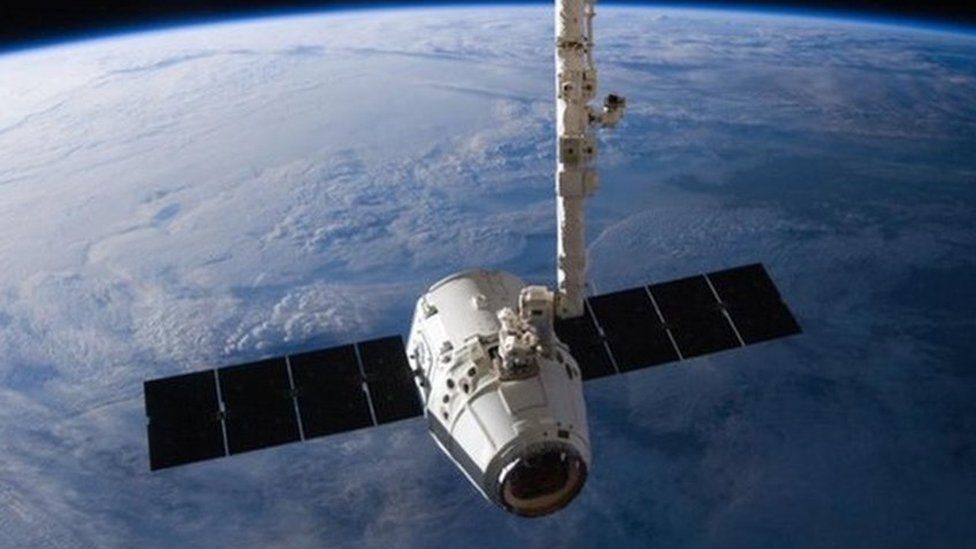
Elon Musk's SpaceX spacecraft carry crew and cargo to the ISS


The commercial sector is already an important part of the US space programme, with private companies responsible for delivering crew and cargo. Russia's Soyuz and Progress spacecraft are also used.

According to Nasa, it will save $1.3bn (£956m) by transitioning to the private sector for activities in low-Earth orbit, money which instead can be spent on deep-space exploration.

The savings are anticipated because Nasa will only be paying for the services it needs, rather than for the maintenance and operations of the ISS. Nasa also points out that the private sector space stations will be newer and should require fewer spare parts.

Nasa said it had analysed its ISS budget on an annual basis and that it would continue to refine its savings estimates.

The transition report published by Nasa this week comes after the administration of US President Joe Biden said it had committed to extend the space station's activities until 2030.

However, the extension still requires the support of international partners, including Russia, and funding for the ISS is currently only approved by US Congress until 2024.

In an interview with the Russian news agency Interfax in December 2021, the head of Russia's space programme, Dmitry Rogozin, indicated a willingness to work with Nasa beyond 2024.

"Actions speak louder than words," he said. "This year we sent a new Nauka module to the ISS, which is expected to last at least 10 years."

The head of Roscosmos also complained that US sanctions on Russia were hurting the Russian space industry, and he has previously said Russia could end its participation in the ISS programme if the sanctions are not lifted.

The US and its Western partners have threatened further sanctions on Russia if it invades Ukraine, although the exact nature of those sanctions is not yet known.

Russia has previously said that structural fatigue meant the ISS would not be capable of working beyond 2030, and warned that outdated equipment could lead to "irreparable" failures.

Newsletter

Related Articles

Arab Press
0:00
0:00
Close
AI Is Remaking the US Economy, From GDP Growth to iPhone Prices
FIFA’s Retreat Leaves a Larger Question Over Who Guards the Game
Finland Deploys Commercial-Scale Thermal Batteries Using Crushed Rock to Store Renewable Grid Energy
Valued at $109 Million: F-35B Fighter Jet Crashes in Southern California
US Says It Has Carried Out Heavy Strikes on Iran After Attempted Attacks on Its Forces
Over 24 Hours in the Air: Qantas Airbus Completes Record-Breaking Test Flight
Arrest Warrant Issued in Lebanon for Tycoon Spotted Meeting Netanyahu in Washington
Trump says Israel ‘would not survive’ without US
Nvidia Reportedly Takes Vast Texas Data-Centre Lease to Underwrite AI Expansion
FIFA’s Private-Investment Plan for World Cup Rights Draws European Revolt
Following OpenAI's Cyberattack: 'Most Companies Still Do Not Understand What Is Coming'
OpenAI Sued After ChatGPT Allegedly Discouraged Emergency Care Before Near-Fatal Embolism
Miliband Sets Climate and International Law at Centre of UK Diplomacy
Pentagon Discloses Nearly 100 US Troop Injuries During Renewed Iran Fighting
Trump Readies New Tariffs as Temporary Global Levy Nears Expiry
High Prices Push Coffee Drinkers Toward Whole Beans and Home Brewing
Trump Draws Boos and Podium Scrutiny at Spain’s World Cup Triumph
Spain Defeats Argentina in Extra Time to Win Second World Cup
Turkey Explores S-400 Transfer to UAE in Bid to Rejoin F-35 Program
US Retaliates Against Iran After Two American Troops Killed in Jordan
Proposed U.S.-Saudi Nuclear Pact Could Permit Limited Uranium Enrichment Under International Safeguards
Why Kentucky Fried Chicken Became KFC—and Why the False Explanations Persist
Iran Claims It Destroyed Bahrain’s Main Artificial Intelligence Center in Missile and Drone Strike
Ukrainian Drones Strike Wildberries Warehouses Deep Inside Russia
Reported CIA Mission Helped Clear the UAE’s Path to Advanced US AI Chips
Artificial Intelligence Capital Fuels Markets While Governments and Regulators Face Mounting Strategic Tests
China’s Moonshot’s Kimi K3 Narrows the Gap With Anthropic Through Scale, Openness and Lower Cost
The Ledger Will Not Trust on Faith
Passenger Bound for Germany Refused to Sit Beside a Woman on a Plane — Then Slapped a Flight Attendant
Ukraine’s Leadership Rift Spills Into the Streets as Protesters Target Army Chief
The Ten World Cup Finals That Defined Football History
Smartphones Are Getting More Expensive, Sales Are Collapsing, and Even Apple Admits: "Prices Will Rise"
Leadership Change and Strategic Rivalry Redraw the Political Map
The AI Race Enters Its Infrastructure Era
Britain Nationalises British Steel to Protect Scunthorpe Production and Strategic Supply
Thomas Tuchel Faces Fierce Backlash After Tactical Retreat Costs England World Cup Final Berth
A Quiet Bastille Day: France Grapples with World Cup Heartbreak and Leftover Fireworks
Spain in Ecstasy: "We Feel Unbeatable, We Taught the Whole World a Lesson"
Harvard Astrophysicist to Lead U.S. Scientific Advisory on Unidentified Aerial Phenomena
Emergency Sirens Activated Across Bahrain as Interior Ministry Issues Shelter Directives
World Cup Visitors Turn American Big-Box Stores Into Souvenir Stops
Netflix Weighs Always-On Channels, Bundles and Short-Form Video
The AI Invoice Shock: Layoffs Didn't Save Managers Money — They Cost Them More
Concern: Sexually Transmitted Bacterium Among Men Develops Antibiotic Resistance
Passenger Partially Pulled Out of Ryanair Jet After Cabin Window Fails Mid-Flight
Severe Heatwave Drives Dangerous Ground-Level Ozone Pollution Across Two Thirds of European Union
The Physical and Electronic Barriers Disrupting Domestic Wireless Networks
France and Morocco Open World Cup Quarter-Finals as Collina Defends Refereeing
Tech Pulse: The Future of AI and Screen Culture
Global News Briefing: Escalating Geopolitical Tensions and Corporate Shakeups
×