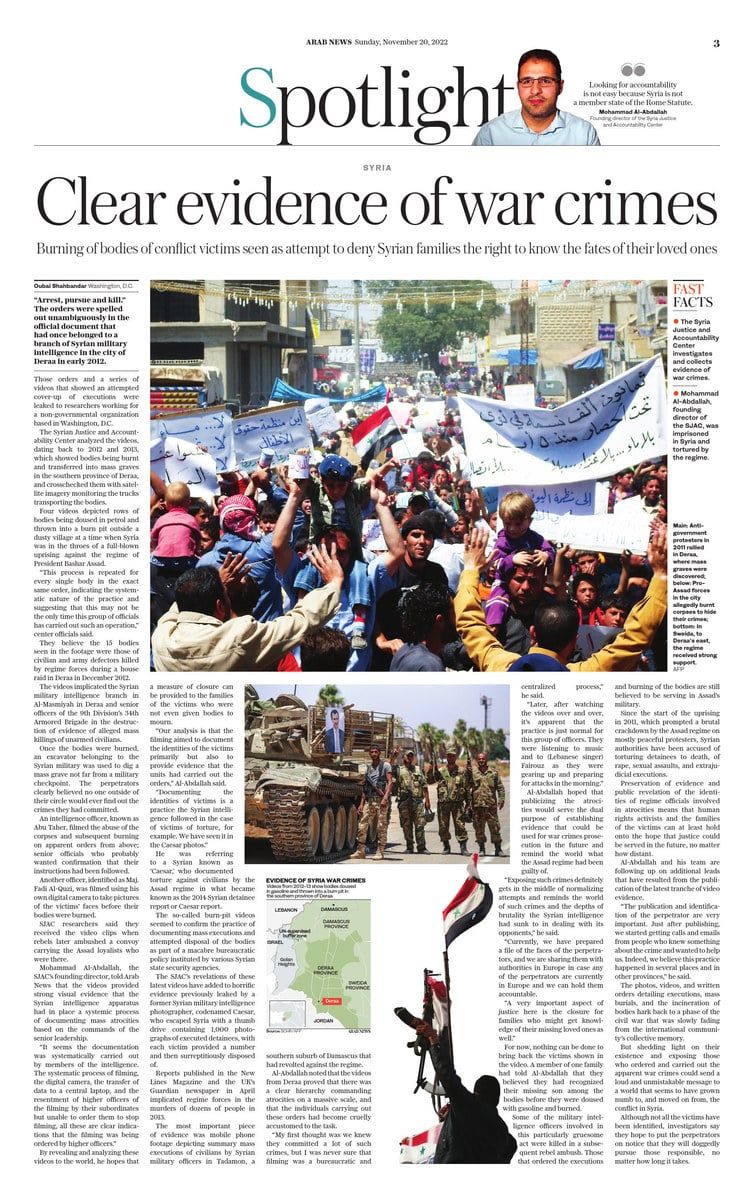
Leaked execution videos strengthen case for Syrian war crimes prosecutions
Those orders and a series of videos that showed an attempted cover-up of executions were leaked to researchers working for a non-governmental organization based in Washington, D.C.
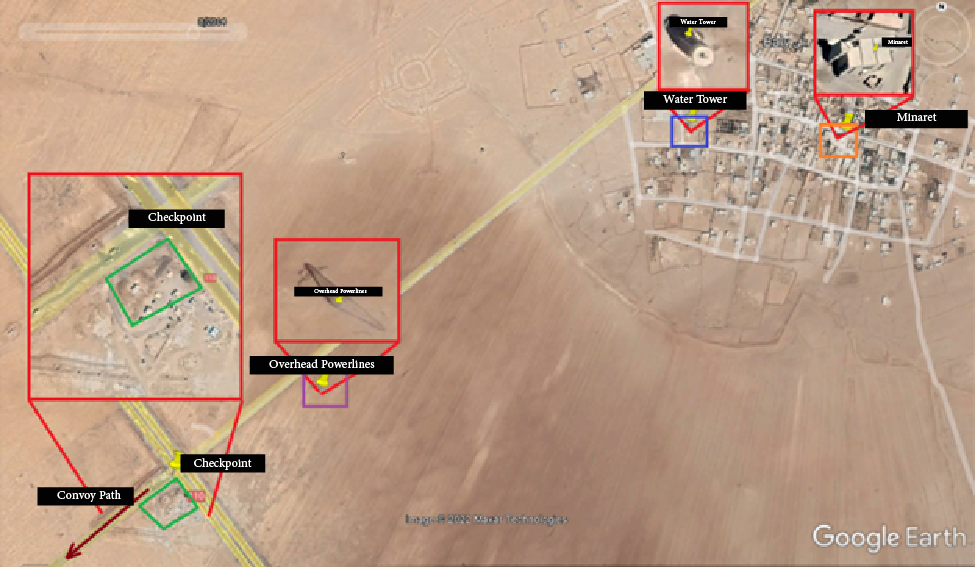
The Syrian Justice and Accountability Center analyzed the videos, dating back to 2012 and 2013, which showed bodies being burnt and transferred into mass graves in the southern province of Deraa, and crosschecked them with satellite imagery monitoring the trucks transporting the bodies.
Four videos depicted rows of bodies being doused in petrol and thrown into a burn pit outside a dusty village at a time when Syria was in the throes of a full-blown uprising against the regime of President Bashar Assad.
“This process is repeated for every single body in the exact same order, indicating the systematic nature of the practice and suggesting that this may not be the only time this group of officials has carried out such an operation,” center officials said.
They believe the 15 bodies seen in the footage were those of civilian and army defectors killed by regime forces during a house raid in Deraa in December 2012.
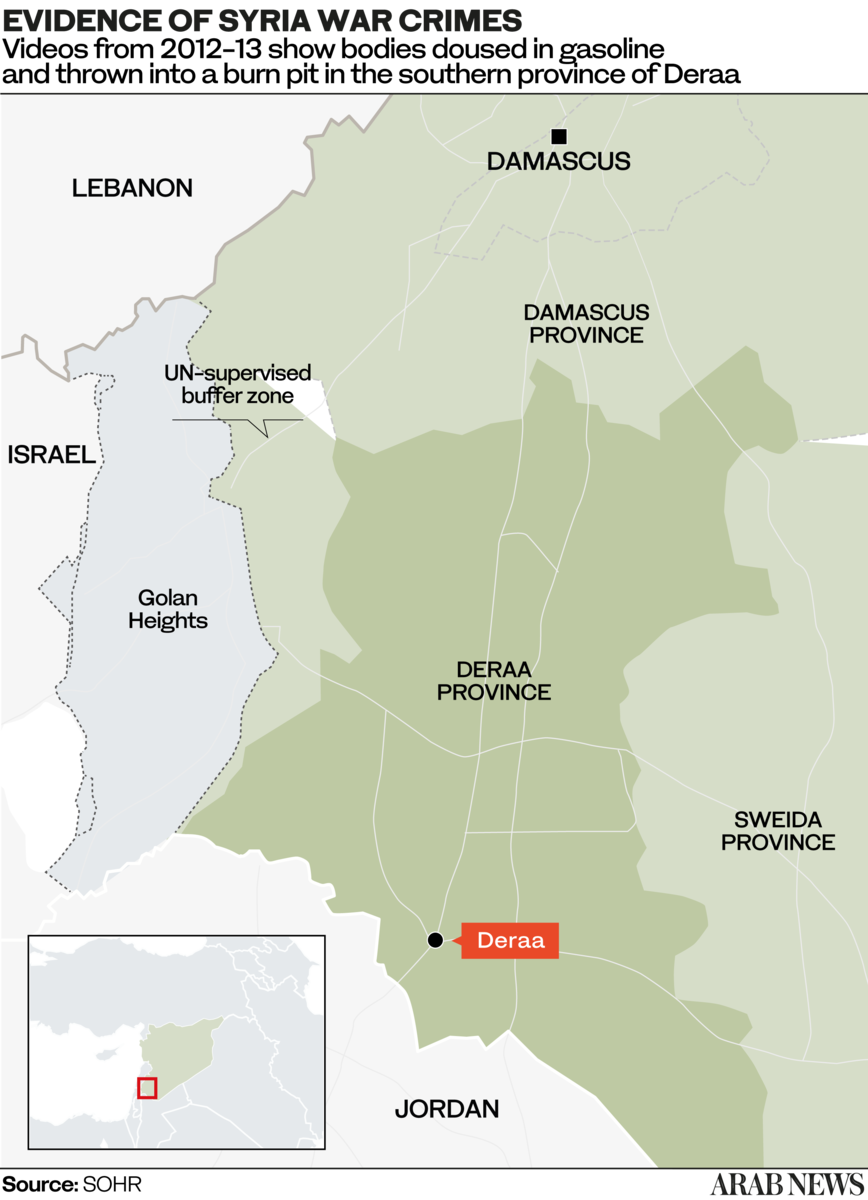
Once the bodies were burned, an excavator belonging to the Syrian military was used to dig a mass grave not far from a military checkpoint. The perpetrators clearly believed no one outside of their circle would ever find out the crimes they had committed.
An intelligence officer, known as Abu Taher, filmed the abuse of the corpses and subsequent burning on apparent orders from above; senior officials who probably wanted confirmation that their instructions had been followed.
Another officer, identified as Maj. Fadi Al-Quzi, was filmed using his own digital camera to take pictures of the victims’ faces before their bodies were burned.
SJAC researchers said they received the video clips when rebels later ambushed a convoy carrying the Assad loyalists who were there.
Mohammad Al-Abdallah, the SJAC’s founding director, told Arab News that the videos provided strong visual evidence that the Syrian intelligence apparatus had in place a systemic process of documenting mass atrocities based on the commands of the senior leadership.
“It seems the documentation was systematically carried out by members of the intelligence. The systematic process of filming, the digital camera, the transfer of data to a central laptop, and the resentment of higher officers of the filming by their subordinates but unable to order them to stop filming, all these are clear indications that the filming was being ordered by higher officers.”
By revealing and analyzing these videos to the world, he hopes that a measure of closure can be provided to the families of the victims who were not even given bodies to mourn.
“Our analysis is that the filming aimed to document the identities of the victims primarily but also to provide evidence that the units had carried out the orders,” Al-Abdallah said.
“Documenting the identities of victims is a practice the Syrian intelligence followed in the case of victims of torture, for example. We have seen it in the Caesar photos.”
 Burning of bodies of conflict victims has been seen as an attempt to
deny Syrian families the right to know the fates of their loved ones.
Burning of bodies of conflict victims has been seen as an attempt to
deny Syrian families the right to know the fates of their loved ones.
He was referring to a Syrian known as “Caesar,” who documented torture against civilians by the Assad regime in what became known as the 2014 Syrian detainee report or Caesar report.
The so-called burn-pit videos seemed to confirm the practice of documenting mass executions and attempted disposal of the bodies as part of a macabre bureaucratic policy instituted by various Syrian state security agencies.
The SJAC’s revelations of these latest videos have added to horrific evidence previously leaked by a former Syrian military intelligence photographer, codenamed Caesar, who escaped Syria with a thumb drive containing 1,000 photographs of executed detainees, with each victim provided a number and then surreptitiously disposed of.
Reports published in the New Lines Magazine and the UK’s Guardian newspaper in April implicated regime forces in the murders of dozens of people in 2013.
The most important piece of evidence was mobile phone footage depicting summary mass executions of civilians by Syrian military officers in Tadamon, a southern suburb of Damascus that had revolted against the regime.
Al-Abdallah noted that the videos from Deraa proved that there was a clear hierarchy commanding atrocities on a massive scale, and that the individuals carrying out these orders had become cruelly accustomed to the task.
“My first thought was we knew they committed a lot of such crimes, but I was never sure that filming was a bureaucratic and centralized process,” he said.
“Later, after watching the videos over and over, it’s apparent that the practice is just normal for this group of officers. They were listening to music and to (Lebanese singer) Fairouz as they were gearing up and preparing for attacks in the morning.”
Al-Abdallah hoped that publicizing the atrocities would serve the dual purpose of establishing evidence that could be used for war crimes prosecution in the future and remind the world what the Assad regime had been guilty of.
“Exposing such crimes definitely gets in the middle of normalizing attempts and reminds the world of such crimes and the depths of brutality the Syrian intelligence had sunk to in dealing with its opponents,” he said.
“Currently, we have prepared a file of the faces of the perpetrators, and we are sharing them with authorities in Europe in case any of the perpetrators are currently in Europe and we can hold them accountable.
“A very important aspect of justice here is the closure for families who might get knowledge of their missing loved ones as well.”
For now, nothing can be done to bring back the victims shown in the video. A member of one family had told Al-Abdallah that they believed they had recognized their missing son among the bodies before they were doused with gasoline and burned.
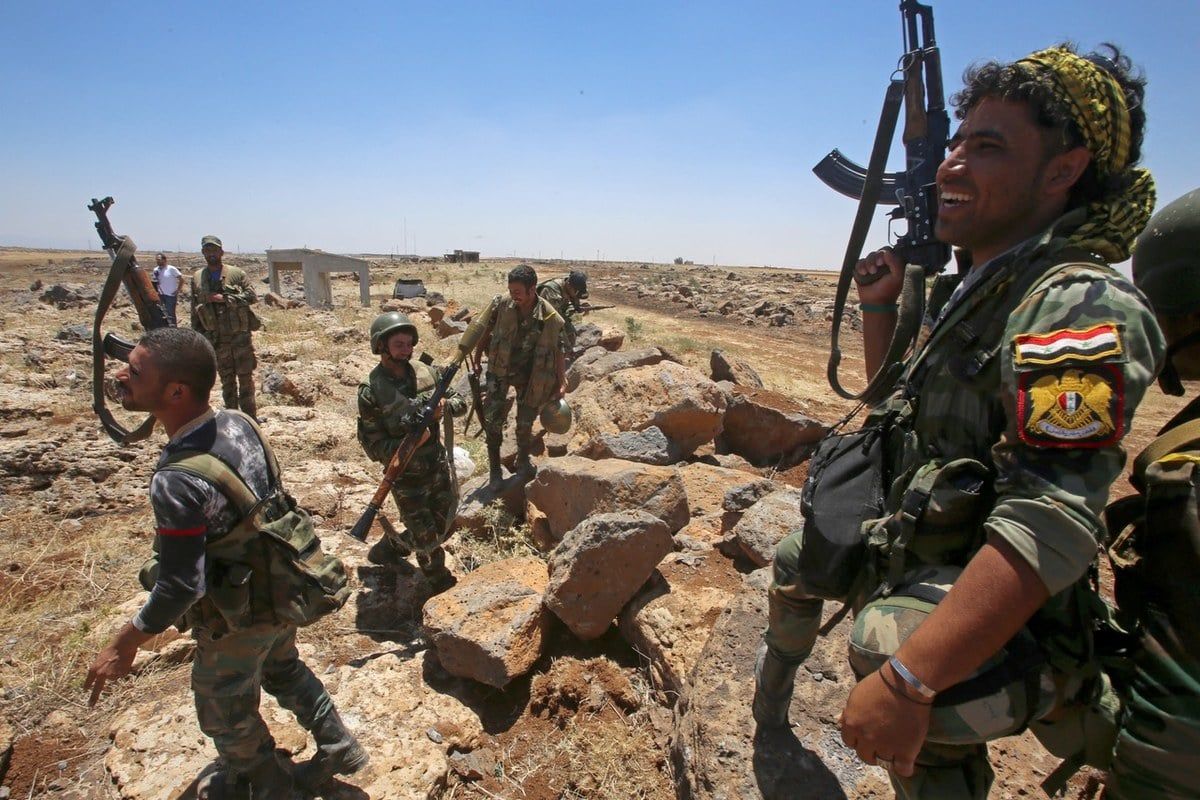
Some of the military intelligence officers involved in this particularly gruesome act were killed in a subsequent rebel ambush. Those that ordered the executions and burning of the bodies are still believed to be serving in Assad’s military.
Since the start of the uprising in 2011, which prompted a brutal crackdown by the Assad regime on mostly peaceful protesters, Syrian authorities have been accused of torturing detainees to death, of rape, sexual assaults, and extrajudicial executions.
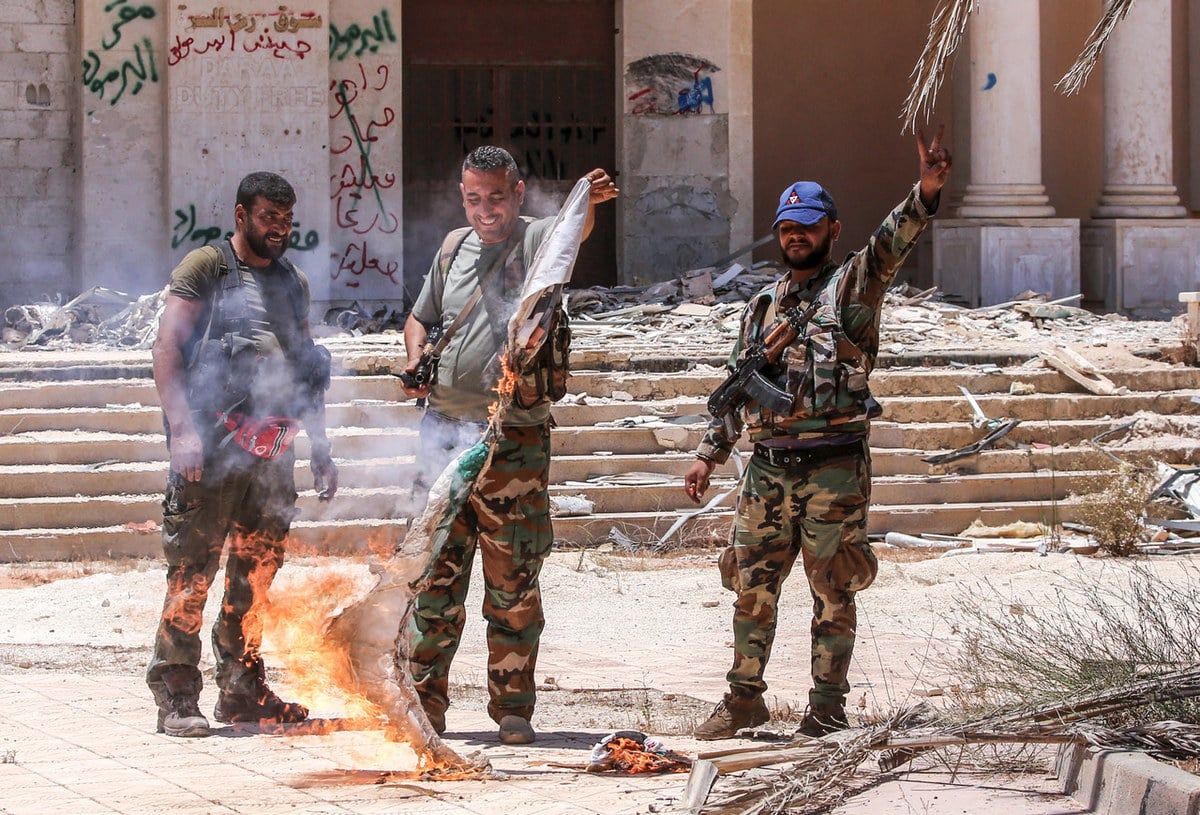 The Syria Justice and Accountability Center investigates and collects evidence of war crimes.
Preservation of evidence and public revelation of the identities of regime officials involved in atrocities means that human rights activists and the families of the victims can at least hold onto the hope that justice could be served in the future, no matter how distant.
Al-Abdallah and his team are following up on additional leads that have resulted from the publication of the latest tranche of video evidence.
“The publication and identification of the perpetrator are very important. Just after publishing, we started getting calls and emails from people who knew something about the crime and wanted to help us. Indeed, we believe this practice happened in several places and in other provinces,” he said.
The photos, videos, and written orders detailing executions, mass burials, and the incineration of bodies hark back to a phase of the civil war that was slowly fading from the international community’s collective memory.
But shedding light on their existence and exposing those who ordered and carried out the apparent war crimes could send a loud and unmistakable message to a world that seems to have grown numb to, and moved on from, the conflict in Syria.
Although not all the victims have been identified, investigators say they hope to put the perpetrators on notice that they will doggedly pursue those responsible, no matter how long it takes.