

Mohammad Reza Shajarian, Iranian Master Singer and Dissident, Dies
The Persian classical music singer Mohammad Reza Shajarian, a towering figure to Iranians for both his artistry and his public stand with protesters against the government, died in Tehran on Thursday. He was 80 years old, and had battled kidney cancer for more than a decade.
His son, Homayoun Shajarian, also a classical singer, announced the news on his Instagram page with one line that captured the singular place Mr. Shajarian held in the hearts of Iranians, and also his humility: “The dust beneath the feet of the people flew home to meet his true love.”
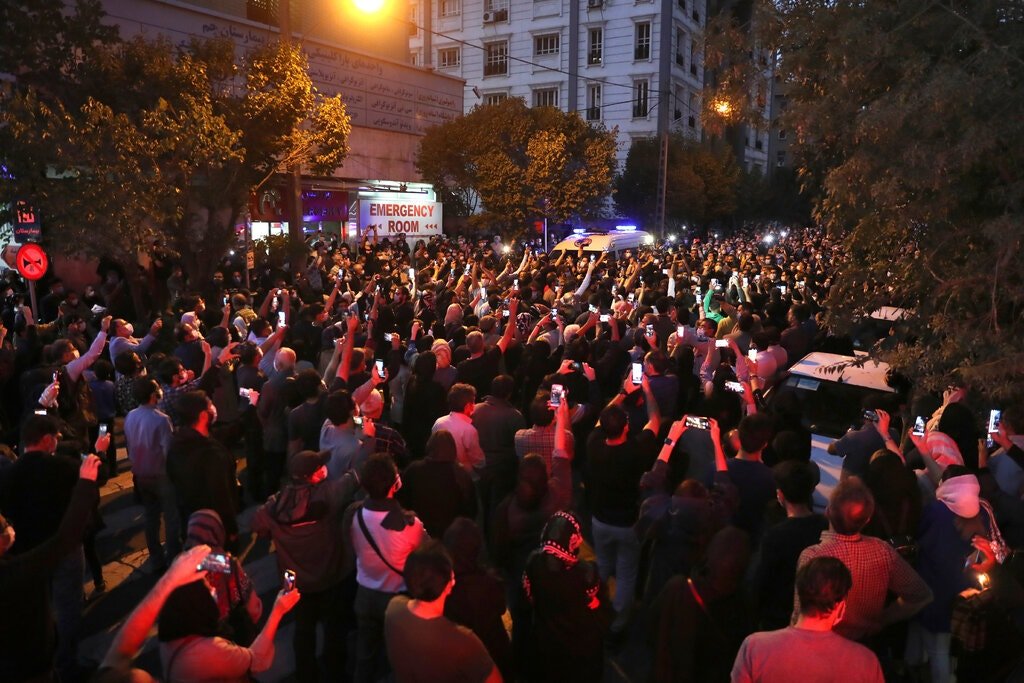
Mr. Shajarian’s appeal crossed generations and political factions, and the news of his death spurred an outpouring of grief from Iranians the world over. In Tehran, thousands of fans packed the streets outside the hospital where he died — people of all ages, wearing masks due to the pandemic, weeping openly and singing some of his most famous songs, derived from Persian poetry and cloaked in political metaphor.
“Bird of freedom sing for me, renew my grief,” the crowd sang in unison. “Oh God, oh sky, oh nature, turn our night of darkness into dawn.”
President Hassan Rouhani tweeted that “the grateful people of Iran will forever remember this beloved artist and his work.”
Iranians in many countries took to social media to post Mr. Shajarian’s music and photos with messages of condolences to an entire people.
The internationally renowned artist Shirin Neshat said in a statement to The New York Times, “The voice of Iran has died, a man who didn’t only touch the hearts of every Iranian with the power of his music but became the healing force in a country drowned in political injustice.”In 2009, as protests erupted across Iran in the aftermath of a presidential election that many people considered fraudulent, Mr. Shajarian broke with tradition and took the side of the demonstrators. The government retaliated by trying to block the public from hearing his music, but instead he became more popular.
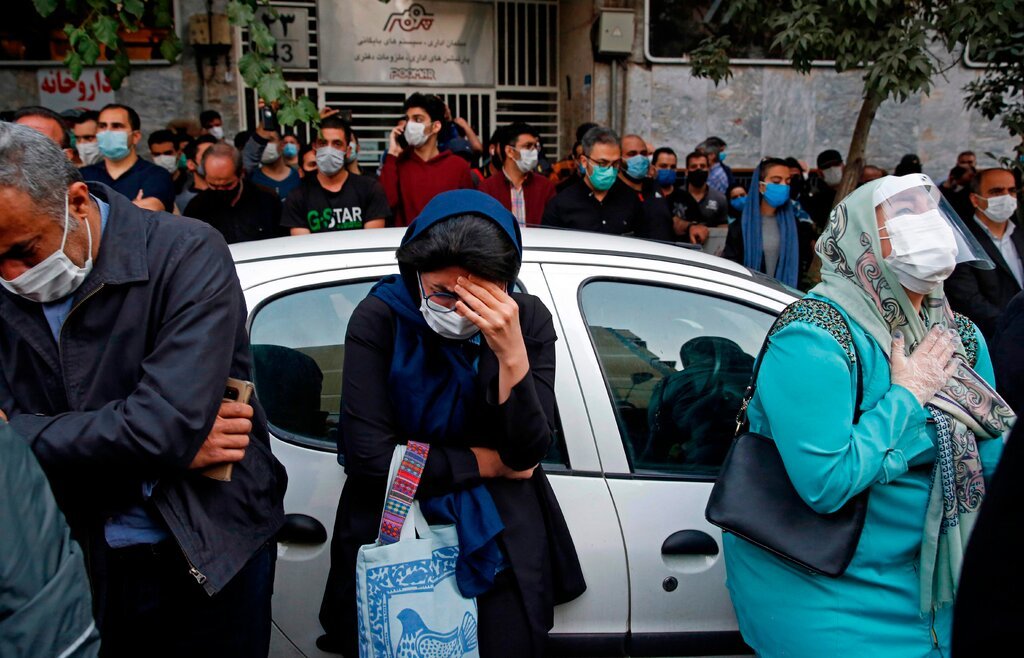
In today’s politically charged environment, with discontent in Iran running high over a failing economy, mismanagement of the pandemic and the recent execution of a wrestler, the memorial gathering in Tehran quickly turned into an anti-government protest.
People in the crowd chanted, “Death to the dictator,” “May the dictator die, Shajarian will never die,” and “State TV is our national disgrace.”
Videos posted on social media showed security forces deployed to the area on motorcycles to disperse the crowd and beat them with batons. A woman is heard screaming, “don’t hit me, don’t hit me,” as a security officer chases her shouting, “Get lost, get lost.”
Mr. Shajarian was born in 1940 in the northeastern city of Mashhad. As a child he was trained to recite the Quran with melody, sparking his interest in music. He moved to Tehran as a young man, briefly worked as a teacher and began studying music with well-known masters of classical Persian music.
He started his career singing ballads on the radio. In the aftermath of the 1979 Islamic revolution, Iran’s ruling clerics banned all forms of music except traditional Persian instruments and classical songs. With his unique mastery of the craft, Mr. Shajarian thrived and is widely credited with making classical music relevant and accessible to younger generations.
His many accolades include UNESCO’s Picasso Award in 1999 and its Mozart Medal in 2006 for his contributions to the world of music. National Public Radio named him in 2010 as one of the world’s “50 Great Voices,” and in 2014 he received the French National Order of the Legon of Honor.
For decades after the revolution, Mr. Shajarian was a mainstay of state television and radio. His serenade of a verse of the Quran known as “Rabena” marked the moment when millions of Iranians broke their fast at dusk during the month of Ramadan.
He refrained from commenting directly on politics, but his fans had little doubt as to where Mr. Shajarian’s political sympathies rested. During the Iran-Iraq war in the 1980s, his ballad “Bidad” spoke of gain, loss and aspirations that remained elusive.
His quintessential song “Morghe Sahar” or Bird of Freedom — the encore at his concerts, recited by fans on Thursday evening — was an ode to the lost hopes of a people who sought liberty but were caged like a bird.
During the 2009 protests, a short video of Mr. Shajarian circulated online, showing him driving his car through Tehran traffic. When a fan spots him, he flashes the sign of victory and says, “Death to the dictator.”
That year, he released a song dedicated to the people of Iran, “Put Your Gun Down,” addressing the violent crackdown by security forces against peaceful protesters. In a rare act of opposition by a famous artist, he asked state radio not to broadcast his voice.
The government tried to silence Mr. Shajarian, and for the rest of his life, he was barred from giving live performances or releasing new recordings in Iran, and banished from state media. His popularity grew anyway, and he performed and recorded abroad, but his wish to be allowed to sing publicly in Iran again was never granted.
In reporting on his death Thursday, Iranian state television broadcast his music and image for the first time in 11 years.
Mr. Shajarian’s concerts formed a rare space for Iranians, to unite and set aside differences over politics, wealth and religion. Fans showered him with rose petals after every performance.
“The way he conducted both his art and also his life, was to tread the right path and speak for the people. He himself conceived of his role as much bigger than a musician and he lived by it,” said Nahid Siamdoust, author of the book “The Soundtrack of the Revolution: The Politics of Music.”
A funeral service will take place on Saturday in Mashhad, Mr. Shajarian’s birthplace, and he will be buried at the mausoleum of the great 10th-century poet Abul Qasem Ferdowsi, who wrote the epic “Shahnameh,” or Book of Kings.
“I’m Mohammad Reza Shajarian, a child of Iran,” Mr. Shajarian said in a video clip — widely shared on social media on Thursday — from a 2016 documentary about him. “My voice is part of Iran’s ancient culture, to remind the people of the world that we have had a culture of love, peace and friendship.”