Arab Press

بالشعب و للشعب
Saturday, Mar 14, 2026

New concussion protocol in place for World Cup 2022

New concussion protocol in place for World Cup 2022

FIFA medical staff will work alongside team doctors under the credo ‘suspect and protect’ at the tournament in Qatar.

During the 2014 World Cup final, German midfielder Christoph Kramer fell to the ground after a collision with Argentina’s Ezequiel Garay.

After some lengthy medical treatment, he was allowed to continue but approached the referee Nicola Rizzoli and asked, “Ref, is this the final?”.

It would turn out that Kramer, who slumped to the ground 14 minutes later, had suffered a concussion, also known as a mild traumatic brain injury that affects the brain’s function.
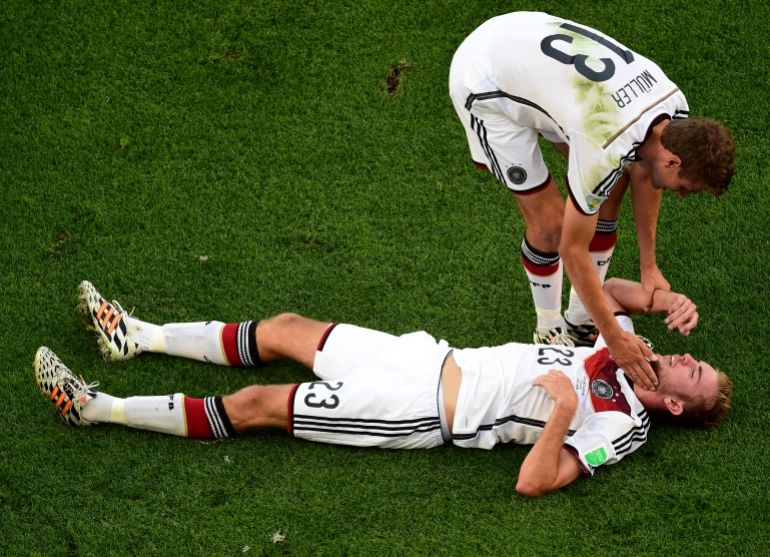
Germany’s Thomas Müller (top) helps up teammate Christoph Kramer during the 2014 World Cup final against Argentina in Brazil


‘Suspect and protect’


It is this type of incident that FIFA will look to avoid at this year’s tournament with the introduction of a series of measures to identify and treat concussive injuries.

This includes the FIFA Medical Concussion Protocol, which follows the credo “suspect and protect”. The protocol provides team doctors and medics with a step-by-step guide to dealing with concussions.

FIFA’s Medical Director, Dr Andrew Massey, says that the guide “begins with baseline screening of all players, and this gives the team doctor not only a chance to understand how an individual player’s brain normally operates but to educate that player on the gravity of concussive injuries”.

Speaking on FIFA’s Living Football magazine show, he added that the compact geographical nature of Qatar would help FIFA to work alongside team doctors: “We are able to pull a lot of our medical services into centralised locations to effectively form a polyclinic”.

Massey, who was previously Liverpool FC’s head of medical services, says that FIFA’s medical team will work closely with participating member association team doctors and medical teams; “Having that close relationship with the team doctors allows them to maybe suggest things that we haven’t thought of, or I haven’t thought of, that we can put in place that helps them to provide the best environment so that their players can flourish.”
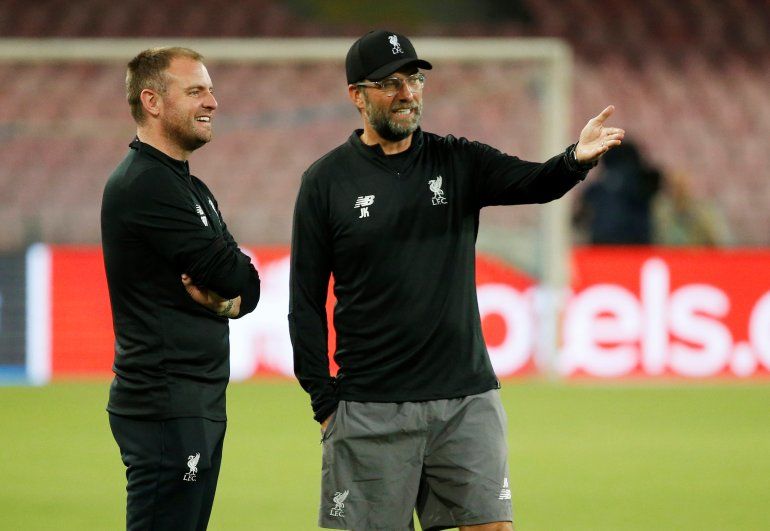
Dr Andrew Massey (left) speaks to manager Jürgen Klopp during his time at Liverpool FC


Symptoms of concussions include headaches, dizziness or general confusion and can take hours or days to appear. This places pressure on the medical staff, who have to decide whether to remove a player who has suffered a collision even if the player appears fine.


Additional permanent concussion substitution


In the event of an actual or suspected concussion, Qatar 2022 protocol allows for a single additional permanent concussion substitution (APCS). This substitution allows a team to withdraw a player who may have suffered a brain injury but does not impact the five permitted substitutions. The opposing team is granted an additional substitution with each APCS to avoid any advantage.

It will be the first time such a rule is implemented at a FIFA World Cup.

Medical staff, known as “concussion spotters”, will also review video technology for possible concussions.

Two additional permanent concussion substitutions (APCS) have been allowed in the Premier League since February 2021, when they were introduced as a trial.

The Premier League, Football Association and English Football League have since adopted the rule permanently.

Newsletter

Related Articles

Arab Press
0:00
0:00
Close
Strait of Hormuz Crisis Forces Saudi Arabia Into Major Oil Production Shut-In
Saudi Arabia Slashes Oil Output as Strait of Hormuz Crisis Cuts Deep Into Gulf Revenues
Saudi Arabia’s Cultural Scene Presses Ahead as Nation Navigates Regional War
Saudi-Pakistan Defence Pact Faces Real-World Constraints as Iran War Escalates
Saudi Arabia Offers Two Million Barrels of Crude From Red Sea as War Disrupts Gulf Exports
Formula One Faces Tens of Millions in Lost Revenue if Bahrain and Saudi Arabia Races Are Cancelled
Formula One Set to Cancel Bahrain and Saudi Arabian Grands Prix Amid Escalating Middle East War
Saudi Arabia Downs Dozens of Iranian Drones in Major Defensive Operation
Saudi Arabia Cuts Oil Output by About Twenty Percent as Iran War Disrupts Gulf Energy Flows
Formula One Set to Cancel Bahrain and Saudi Arabian Grands Prix Amid Escalating Iran War
Asian Energy Security Tested as Strait of Hormuz Disruption Threatens Oil Supplies
Iran Sets Three Conditions for Ending Regional War as Diplomatic Efforts Intensify
Saudi Arabia Launches Royal Institute of Anthropology to Examine Social Transformation
Pakistan’s Prime Minister Shehbaz Sharif Arrives in Saudi Arabia for High-Level Talks
Saudi Aramco Turns to Ukrainian Drone Interceptors to Shield Oil Infrastructure from Iranian Threats
UK Foreign Secretary Travels to Saudi Arabia to Reinforce Support for Regional Allies
Rising Iran Conflict Casts Shadow Over Saudi Arabia’s $38 Billion Gaming Industry Ambitions
Iran Launches Missile and Drone Strikes Across Gulf as Oil Prices Surge Past $100
Saudi Air Defences Destroy Three Drones Targeting Strategic Shaybah Oil Field
Debate Grows Over Saudi Arabia’s Role in Sudan War Amid US Alliance Questions
Pakistan’s Prime Minister Travels to Saudi Arabia After Discussions With Iranian Leadership
Two Strategic Pipelines Allow Saudi Arabia and the UAE to Bypass the Strait of Hormuz
US Deploys Bunker-Buster Bombs to UK Airbase as Iran Conflict Intensifies
Iran warns of $200 oil as forces target merchant ships in Gulf
Japan to Release 45 Days of Oil Reserves Amid Iran Conflict
Three Commercial Vessels Attacked Near Strait of Hormuz, Thai-Flagged Ship Damaged and Crew Evacuated
Saudi Red Sea Oil Exports Set for Record in March as Kingdom Reroutes Crude Amid Hormuz Crisis
Saudi Arabia Seeks Belgian Military Support After Iranian Missile Attacks
Saudi Arabia Welcomes US Decision to Designate Sudan’s Muslim Brotherhood as Terrorist Organisation
Saudi Aramco Plans Dual Gulf and Red Sea Export Routes as Iran Crisis Disrupts Oil Shipments
Saudi Cabinet Condemns Iranian Attacks and Reaffirms Kingdom’s Right to Defend Its Sovereignty
Ukraine Deploys Counter-Drone Teams to Gulf States as Iranian Drone Threat Expands
Bahrain Grand Prix Faces Uncertainty as Saudi Arabia Works to Keep Formula One Race on Track
Saudi Arabia Faces New Strategic Dilemma in Yemen as Regional War Reshapes Calculations
OPEC Confirms Saudi-Led Oil Output Increase as Iran War Disrupts Global Energy Markets
Pakistan Pledges Rapid Support for Saudi Arabia Amid Escalating Middle East Tensions
Global Energy Agency Announces Record Release of 400 Million Barrels to Stabilize Oil Markets Amid Hormuz Disruption
Aramco Warns Global Oil Market Faces ‘Catastrophic’ Shock if Strait of Hormuz Remains Closed
Iran Launches Drone and Missile Attacks Across Gulf Targets Including Saudi Arabia, Kuwait and Bahrain
Saudi Arabia Elevates Fahad Al-Saif as Vision 2030 Enters Crucial Implementation Phase
Saudi Aramco Expands Routes to Move Oil Without Reliance on the Strait of Hormuz
Saudi Arabia and Pakistan Reaffirm Mutual Defense Cooperation Following Iran Strike
Saudi Arabia Plans Major Ukrainian Arms Deal to Counter Iranian Drone Threat
Pentagon Signals Intensification of U.S. Air Campaign as Iran Conflict Escalates
U.S. Senator Lindsey Graham Raises Prospect of Mutual Defense Pact With Saudi Arabia Amid Iran Conflict
Why Saudi Arabia Is Unlikely to Have Wanted U.S. Airstrikes on Iran
Saudi Arabia’s Red Sea Oil Exports Set to Reach Record High as Gulf Routes Face Disruption
Saudi Arabia Pushes East–West Oil Pipeline Toward Full Capacity as Hormuz Crisis Disrupts Global Energy Flows
Oil Prices Retreat From Peak as G7 Weighs Release of Strategic Reserves
×