Arab Press

بالشعب و للشعب
Tuesday, Mar 17, 2026

This entrepreneur says AI can take better care of your health

This entrepreneur says AI can take better care of your health

Dr Loubna Bouarfa, CEO of AI healthcare company, Okra, describes her vision of what our health could look like in the future with Artificial Intelligence on our side.


It’s rare to meet someone who lights up a room, but imagine someone doing so hundreds of miles away, from another country. That is what it felt like speaking to Dr. Loubna Bouarfa, CEO of AI healthcare company Okra.

COVID restrictions meant we could not travel to the UK to meet her in person, but we set up the interview exchanging via email and social media beforehand. When interview D-Day finally came, with Loubna travelling from Cambridge to a London studio, and me on our Lyon set, it felt like I was chatting to an old friend.

Part of the reason we clicked is that when we started discussing AI, I asked Loubna what inspired her. Her answer was surprising, but also created an immediate bond. Her younger brother, like my son, has autism. Her words struck a chord. Later, during our interview she told me that growing up with her brother helped her learn from an "early age that the rules and the norms that society impose on us are just generic perceptions, not representing the full spectrum of life. My fascination for AI comes from that", she revealed, "there are no rules or norms. I've learnt that you can be many things and being autistic is one of them".
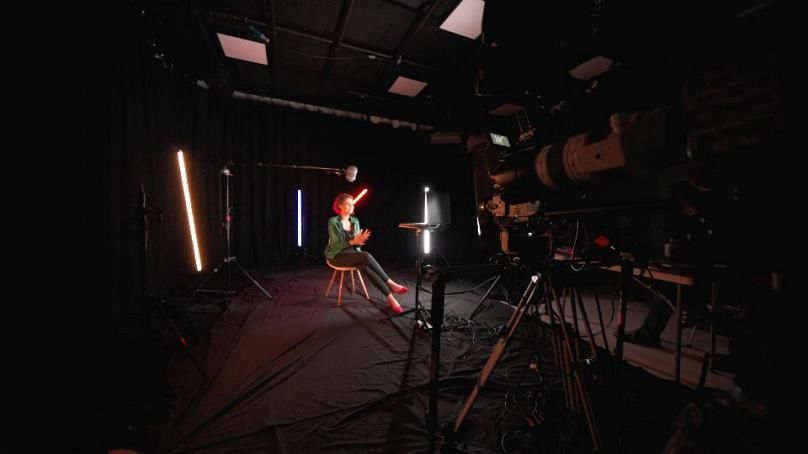
Dr. Loubna Bouarfa


Artificial intelligence is a technology that is not bound by rules, but instead, Loubna explained it "mimics the way we learn as human beings by observing, adapting and learning from our environment". It appears that healthcare is a domain of untapped potential. According to Loubna, if AI were built into healthcare systems it would allow for far more pre-emptive action from the medical community. "We don't need to wait for people to get sick. Our health care systems with AI could become more proactive and leverage this data to advise patients and to keep them healthy".


Loubna stepped into the future for us and explained how health systems could work. "So it's 2050 and someone is born. As soon as this baby is born, routine checks will be performed. Their genetic screening happens and imagine there is a mutation in important genes. So as soon as that's detected an alarm goes off". Throughout the person’s life routine checks would take place to keep track of the mutation. If one day an anomaly were detected, scans would automatically be prescribed. If it were serious "the human comes in the picture, the doctor” to speak to the patient. However, "while the doctor is performing his job, AI algorithms will be running in the back end and computing what is the best treatment for these patients. Once after treatment, we still have algorithms running on and predicting if there are any relapses and automating the whole process".

For this to work there needs to be a solid data space on health. If that were in place, Loubna told us, it would immediately help direct medical practitioners and the patient to "the best course of action and more than that, to tell you what are the best treatments that will work for you as a unique person by learning from all patients similar to you".

This would prove, it seems, nothing short of a revolution in healthcare. One of the main challenges at the moment in Europe is a lack of health data. "We don't have much of European data that fits our patient population that can help us individualise medicine here in Europe. I think that is the next important step that needs to happen before we can scale the use of AI in health care systems in Europe".
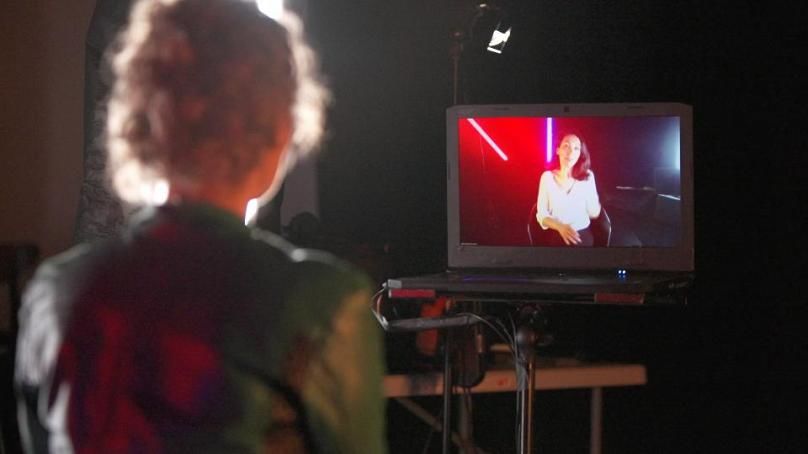
Dr. Loubna Bouarfa


There are also important issues of privacy to contend with, but Loubna said she was hopeful on that front, telling us that data can be anonymised. As part of a high-level expert group advising the European Commission, this was one of the top priorities as well as making sure data were unbiased.

Bias it appears can take many forms and is not only resolved by ensuring data from a wide range of profiles. AI, Loubna revealed, is a multi-cultural space, and to be so, it needs to be nourished by people from as many diverse backgrounds as possible. "AI is a spectrum of things. There are many aspects to AI than just the programming part. There is the design, the creativity. There is also the ethics of designing those systems, the user interface".

AI is therefore not just an intangible zone for tech wizards, in fact, it would be a door open to all of us. "Follow your passion", Loubna tells us, "and it can lead your career path to AI because we need all the genius and the experts to add value and make AI more inclusive and more beautiful".

Newsletter

Related Articles

Arab Press
0:00
0:00
Close
Saudi Arabia Targets South African Professionals in New Recruitment Drive Amid Regional Uncertainty
Formula One Faces Major Financial Hit as Bahrain and Saudi Arabian Grands Prix Cancelled Amid Middle East Conflict
U.S. and Saudi Firms Launch Local Production of Attritable Drone Systems in Saudi Arabia
Saudi Arabia and UAE Warn Rising Gulf Tensions Could Endanger Regional Security
Saudi Arabia Rejects Claims It Encouraged Prolonged War With Iran
Saudi Arabia to Host World’s Largest Single-Cell Protein Plant as Food Security Push Accelerates
Saudi Crown Prince Urges Trump to Continue Military Pressure on Iran
Iran Intensifies Drone Campaign Against Saudi Arabia as Gulf Conflict Escalates
When Is Eid al-Fitr 2026? Saudi Arabia Awaits Moon Sighting to Confirm End of Ramadan
Iranian Missile Strike Damages Five U.S. Refueling Aircraft at Saudi Air Base
Washington State Pilot Among Six U.S. Airmen Killed in Military Aircraft Crash Over Iraq
Severe Storm Threat Looms Over Washington as Tornado Risk and Damaging Winds Target Mid-Atlantic
Trump Supports FCC Warning to Broadcasters Over Iran War Reporting
Saudi Stocks Edge Lower as Tadawul All Share Index Slips Slightly at Market Close
Iranian Missile and Drone Strike Targets Saudi Arabia’s Prince Sultan Air Base Hosting US Aircraft
Saudi Air Defenses Intercept Drone Over Eastern Province as Iranian Strike Campaign Intensifies
Middle East War Reshapes Gulf Economies as Saudi Arabia and Oman Gain Strategic Leverage While UAE Faces Economic Shock
Iranian Ambassador in Riyadh Blames ‘Enemies’ for Attacks Across the Gulf
Israeli Envoy Ron Dermer Reportedly Visits Saudi Arabia for Discussions on Potential Lebanon Talks
Formula One Cancels Bahrain and Saudi Arabian Grands Prix Scheduled for April
Iran’s Ambassador in Riyadh Rejects Claims Tehran Targeted Saudi Oil Facilities
Saudi Arabia Declares 2026 ‘Year of Artificial Intelligence’ in Major Push for Data-Driven Economy
Saudi Arabia’s 2018 Budget Signals Strong Push for Non-Oil Economic Growth
Pakistan Envoy in Riyadh Says Regional Diplomacy Intensifying to Prevent Wider Middle East War
Saudi Arabia Intercepts Dozens of Drones as Regional Strikes Kill Two in Oman
Saudi Arabia Redirects Oil Exports to Red Sea Ports as Strait of Hormuz Tensions Escalate
Saudi Arabia Intercepts Missile and Drone Barrage as Regional Conflict Intensifies
Iran Expands Drone and Missile Campaign Across Gulf as Conflict With US and Israel Intensifies
Muslims Worldwide Await Saudi Moon Sighting to Confirm Eid al-Fitr 2026 Date
F1 Calendar Faces Major Disruption as Middle East Conflict Threatens Bahrain and Saudi Races
Trump Says Most US Aircraft Hit in Saudi Base Attack Suffered Minimal Damage
Strait of Hormuz Crisis Forces Saudi Arabia Into Major Oil Production Shut-In
Saudi Arabia Slashes Oil Output as Strait of Hormuz Crisis Cuts Deep Into Gulf Revenues
Saudi Arabia’s Cultural Scene Presses Ahead as Nation Navigates Regional War
Saudi-Pakistan Defence Pact Faces Real-World Constraints as Iran War Escalates
Saudi Arabia Offers Two Million Barrels of Crude From Red Sea as War Disrupts Gulf Exports
Formula One Faces Tens of Millions in Lost Revenue if Bahrain and Saudi Arabia Races Are Cancelled
Formula One Set to Cancel Bahrain and Saudi Arabian Grands Prix Amid Escalating Middle East War
Saudi Arabia Downs Dozens of Iranian Drones in Major Defensive Operation
Saudi Arabia Cuts Oil Output by About Twenty Percent as Iran War Disrupts Gulf Energy Flows
Formula One Set to Cancel Bahrain and Saudi Arabian Grands Prix Amid Escalating Iran War
Asian Energy Security Tested as Strait of Hormuz Disruption Threatens Oil Supplies
Iran Sets Three Conditions for Ending Regional War as Diplomatic Efforts Intensify
Saudi Arabia Launches Royal Institute of Anthropology to Examine Social Transformation
Pakistan’s Prime Minister Shehbaz Sharif Arrives in Saudi Arabia for High-Level Talks
×