Arab Press

بالشعب و للشعب
Friday, Jan 23, 2026

Wikipedia blames pro-China infiltration for bans

Wikipedia blames pro-China infiltration for bans

Wikipedia has suffered an "infiltration" that sought to advance the aims of China, the US non-profit organisation that owns the volunteer-edited encyclopaedia has said.

The Wikimedia Foundation told BBC News the infiltration had threatened the "very foundations of Wikipedia".

The foundation banned seven editors linked to a mainland China group.

Wikimedians of Mainland China accused the foundation of "baselessly slandering a small group of people".

'Rapid response'


"This case is unprecedented in scope," foundation vice-president Maggie Dennis said, in a note to volunteers.

And she told BBC News the foundation had been investigating the infiltration of Chinese-language Wikipedia for nearly a year.

But this summer, "credible threats" to volunteers' safety had "led us to prioritise rapid response".

The foundation was battling against "capture", where a group gains control of the editing of the Wikipedia to favour a particular viewpoint, Ms Dennis wrote.

And it has recently set up a disinformation team.

'Controlling content'


In this case, the infiltrators had tried to promote "the aims of China, as interpreted through whatever filters they may bring to bear", Ms Dennis told BBC News.

"Controlling content was an aim," she said.

But she also said: "I am not in position to point fingers at the Chinese state nor in possession of information that would lead me to do so."
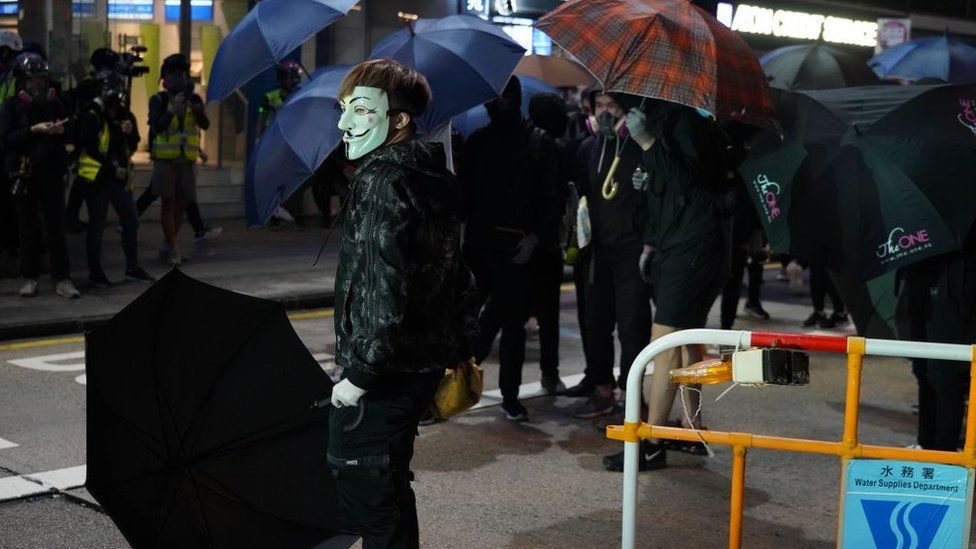
Edit battles have contested Wikipedia articles about political events in Hong Kong

However, "long and deep investigations" into Wikimedians of Mainland China, a group claiming to have about 300 members, had resulted in the banning of seven users and the removal of administrator privileges from a further 12, Wikipedia said.

And there had been concern elections for powerful administrator roles were being manipulated and the process of editing risked being overwhelmed.

Other editors have also been asked to modify their behaviour.

In a post in response to the bans, Wikimedians of Mainland China accused the foundation of acting contrary to the "feelings and opinions of the community".

But Ms Dennis said the foundation had acted in awareness of conflict between mainland China based Wikimedians and volunteers in Hong Kong.

In July, the Hong Kong Free Press reported "battles between competing editors" over articles describing political events.

And the situation worsened after the closure of Hong Kong's Apple Daily newspaper and the arrest of its top executives,

Mainland editors were increasingly "pushing for the use of Chinese state media as reliable news sources" in Wikipedia articles, the Hong Kong Free Press alleged.
People queue to buy the last edition of Apple Daily
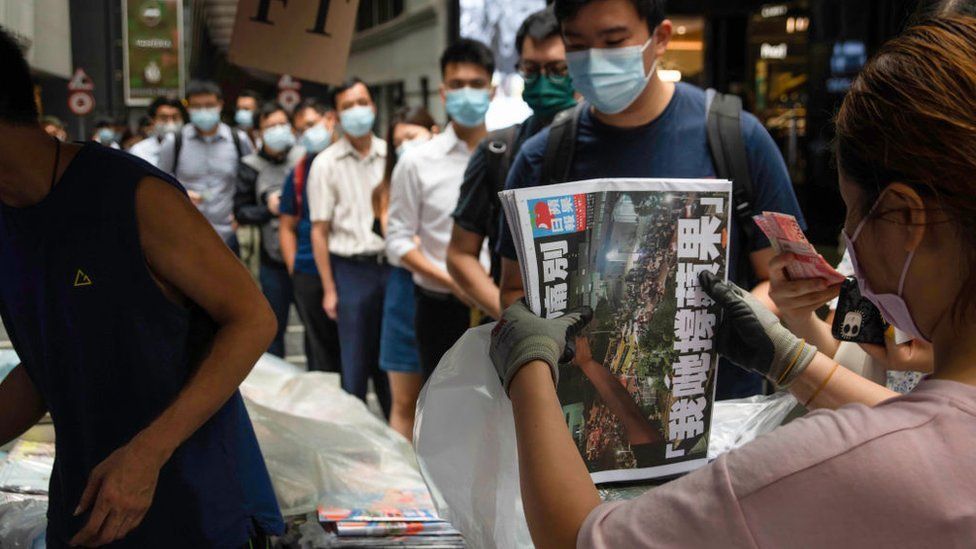
People queue to buy the last edition of Apple Daily

And it revealed some had discussed reporting Hong Kong editors to the city's national security police hotline, in online chat groups.

Some members of the Hong Kong Wikipedia community were now fearful of "commenting on politically sensitive articles", Hong Kong Free Press reporter Selina Cheng told BBC News.

"Hong Kong users feared they may be targeted as a result of their identities being known," she said.

And they asked the Wikimedia Foundation's Trust and Safety team to help them.

'Biasing information'


Weeks earlier, the foundation, responding to a security warning, had restricted access to personally identifiable information in two jurisdictions where access to Wikipedia was blocked - including China.

It had feared volunteers - some of whom are young - could be exploited or compelled to share personal data by "state actors or others with an interest in biasing information".

Ms Dennis said the "software" showed the foundation's actions had worked and no data had been misused.

But the latest action to counter infiltration had been necessary because individuals had inadvertently put themselves at risk by sharing information about themselves, "such as attending local meetings or sharing personal email addresses" with other users.

'Risked harm'


"When the foundation has credible information that some volunteers may not be interacting in good faith - and in this case, there was plenty - we may feel it necessary to protect the community by removing those individuals from access," she said.

"In such cases, users are banned."

Ms Dennis said she was keen none of the steps taken to protect Wikipedia should discourage Chinese-speakers from joining the community - or volunteers in China who had worked "for free and open knowledge" and may have risked harm by doing so.

To the 4,000 Chinese language Wikimedians she wrote: "We are committed to supporting you in doing this work into the future, with the tools you need to succeed in a safe, secure,and productive environment."

Newsletter

Related Articles

Arab Press
0:00
0:00
Close
Saudi Arabia’s Careful Balancing Act in Relations with Israel Amid Regional and Domestic Pressures
Greenland, Gaza, and Global Leverage: Today’s 10 Power Stories Shaping Markets and Security
America’s Venezuela Oil Grip Meets China’s Demand: Market Power, Legal Shockwaves, and the New Rules of Energy Leverage
Trump’s Board of Peace: Breakthrough Diplomacy or a Hostile Takeover of Global Order?
Prince William to Make Official Visit to Saudi Arabia in February
Saudi Arabia Advances Ambitious Artificial River Mega-Project to Transform Water Security
Saudi Crown Prince and Syrian President Discuss Stabilisation, Reconstruction and Regional Ties in Riyadh Talks
Mohammed bin Salman Confronts the ‘Iranian Moment’ as Saudi Leadership Faces Regional Test
Cybercrime, Inc.: When Crime Becomes an Economy. How the World Accidentally Built a Twenty-Trillion-Dollar Criminal Economy
Strategic Restraint, Credible Force, and the Discipline of Power
Donald Trump Organization Unveils Championship Golf Course and Luxury Resort Project in Saudi Arabia
Inside Diriyah: Saudi Arabia’s $63.2 Billion Vision to Transform Its Historic Heart into a Global Tourism Powerhouse
Trump Designates Saudi Arabia a Major Non-NATO Ally, Elevating US–Riyadh Defense Partnership
Trump Organization Deepens Saudi Property Focus with $10 Billion Luxury Developments
There is no sovereign immunity for poisoning millions with drugs.
Mohammed bin Salman’s Global Standing: Strategic Partner in Transition Amid Debate Over His Role
Saudi Arabia Opens Property Market to Foreign Buyers in Landmark Reform
The U.S. State Department’s account in Persian: “President Trump is a man of action. If you didn’t know it until now, now you do—do not play games with President Trump.”
CNN’s Ranking of Israel’s Women’s Rights Sparks Debate After Misleading Global Index Comparison
Saudi Arabia’s Shifting Regional Alignment Raises Strategic Concerns in Jerusalem
OPEC+ Holds Oil Output Steady Amid Member Tensions and Market Oversupply
Iranian Protests Intensify as Another Revolutionary Guard Member Is Killed and Khamenei Blames the West
President Trump Says United States Will Administer Venezuela Until a Secure Leadership Transition
Delta Force Identified as Unit Behind U.S. Operation That Captured Venezuela’s President
Saudi-UAE Rift Adds Complexity to Middle East Diplomacy as Trump Signals Firm Leadership
OPEC+ to Keep Oil Output Policy Unchanged Despite Saudi-UAE Tensions Over Yemen
Saudi Arabia and UAE at Odds in Yemen Conflict as Southern Offensive Deepens Gulf Rift
Abu Dhabi ‘Capital of Capital’: How Abu Dhabi Rose as a Sovereign Wealth Power
Diamonds Are Powering a New Quantum Revolution
Trump Threatens Strikes Against Iran if Nuclear Programme Is Restarted
Why Saudi Arabia May Recalibrate Its US Spending Commitments Amid Rising China–America Rivalry
Riyadh Air’s First Boeing 787-9 Dreamliner Completes Initial Test Flight, Advancing Saudi Carrier’s Launch
Saudi Arabia’s 2025: A Pivotal Year of Global Engagement and Domestic Transformation
Saudi Arabia to Introduce Sugar-Content Based Tax on Sweetened Drinks from January 2026
Saudi Hotels Prepare for New Hospitality Roles as Alcohol Curbs Ease
Global Airports Forum Highlights Saudi Arabia’s Emergence as a Leading Aviation Powerhouse
Saudi Arabia Weighs Strategic Choice on Iran Amid Regional Turbulence
Saudi Arabia Condemns Sydney Bondi Beach Shooting and Expresses Solidarity with Australia
Washington Watches Beijing–Riyadh Rapprochement as Strategic Balance Shifts
Saudi Arabia’s Vision 2030 Drives Measurable Lift in Global Reputation and Influence
Alcohol Policies Vary Widely Across Muslim-Majority Countries, With Many Permitting Consumption Under Specific Rules
Saudi Arabia Clarifies No Formal Ban on Photography at Holy Mosques for Hajj 2026
Libya and Saudi Arabia Sign Strategic MoU to Boost Telecommunications Cooperation
Elon Musk’s xAI Announces Landmark 500-Megawatt AI Data Center in Saudi Arabia
Israel Moves to Safeguard Regional Stability as F-35 Sales Debate Intensifies
Cardi B to Make Historic Saudi Arabia Debut at Soundstorm 2025 Festival
U.S. Democratic Lawmakers Raise National Security and Influence Concerns Over Paramount’s Hostile Bid for Warner Bros. Discovery
×