Mass Flight Disruptions Across Asia Spark Confusion as Cancellations and Delays Hit Major Hubs
Reports of hundreds of cancellations and over a thousand delays across Malaysia, Singapore, Pakistan, China, and Saudi Arabia reflect a broader pattern of regional aviation strain driven by cascading operational bottlenecks rather than a single unified cause.
The aviation disruption spreading across parts of Asia reflects an event-driven breakdown in regional air traffic reliability, where tightly connected airline schedules, weather volatility, and cascading operational delays combine to produce widespread cancellations and knock-on effects across multiple countries.
What is confirmed in recent operational reporting is that Asian aviation networks have experienced repeated surges of delays and cancellations affecting major hubs in China, Singapore, Malaysia, Pakistan, and Saudi Arabia.
In the most recent pattern, flight-tracking summaries indicate that disruptions have included several hundred cancellations alongside more than a thousand delayed flights in a single operational window, with effects concentrated at busy transfer airports such as Kuala Lumpur, Singapore Changi, Beijing, Shanghai, Jeddah, and Islamabad.
These disruptions are not isolated to one airline or one country.
Instead, they reflect a systemic vulnerability in how modern airline networks operate: aircraft are scheduled in tight rotation loops, meaning that a delay in one city rapidly cascades across multiple downstream flights.
Low-cost carriers and high-frequency operators are especially exposed because they rely on minimal ground time between flights to maintain profitability and schedule density.
The specific airlines repeatedly affected in recent disruption waves include major regional and international carriers operating dense Asia–Middle East–East Asia corridors.
These routes are particularly sensitive because they combine long-haul scheduling, congested airspace corridors, and heavy reliance on connecting traffic through hub airports.
One structural driver behind recurring disruption patterns is congestion in air traffic control systems combined with intermittent airspace constraints in the broader Middle East and South Asian corridor.
When routing adjustments occur, aircraft and crew positioning becomes misaligned, forcing airlines to cancel flights not because of demand but because aircraft are no longer in the correct location to operate scheduled services.
Weather systems have also played a recurring role, particularly seasonal storm activity across Southeast Asia that reduces airport throughput and forces air traffic flow management restrictions.
Even short-term reductions in runway capacity can generate ripple effects that persist for days due to backlog accumulation.
What makes the current pattern notable is not a single catastrophic event, but the persistence of repeated disruption clusters across consecutive weeks.
In multiple recent cycles, aviation data has shown thousands of delayed flights and triple-digit cancellations occurring across overlapping hubs, indicating a stressed system operating near its scheduling limits.
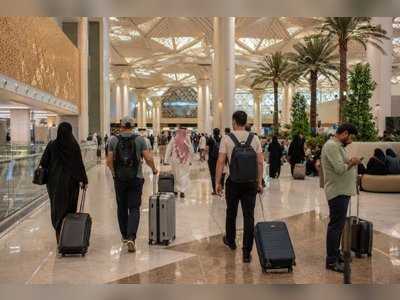
For passengers, the impact is immediate and operational rather than abstract.
Missed connections, overnight layovers, and rebooking bottlenecks are common, especially for itineraries involving multiple carriers or separate tickets, where protection and rerouting options are limited.
Airlines, meanwhile, face a compounding recovery problem.
Once schedules break, restoring normal operations requires repositioning aircraft, stabilizing crew duty rotations, and clearing backlog passengers — a process that can take several days even after the initial cause of disruption has passed.
The broader implication is that Asia’s aviation network is increasingly behaving like a tightly coupled system under stress: efficient during normal operations, but highly sensitive to small disruptions that propagate quickly across borders, carriers, and time zones.
This structural fragility is now shaping how airlines adjust schedules and how regulators assess regional air traffic resilience.
What is confirmed in recent operational reporting is that Asian aviation networks have experienced repeated surges of delays and cancellations affecting major hubs in China, Singapore, Malaysia, Pakistan, and Saudi Arabia.
In the most recent pattern, flight-tracking summaries indicate that disruptions have included several hundred cancellations alongside more than a thousand delayed flights in a single operational window, with effects concentrated at busy transfer airports such as Kuala Lumpur, Singapore Changi, Beijing, Shanghai, Jeddah, and Islamabad.
These disruptions are not isolated to one airline or one country.
Instead, they reflect a systemic vulnerability in how modern airline networks operate: aircraft are scheduled in tight rotation loops, meaning that a delay in one city rapidly cascades across multiple downstream flights.
Low-cost carriers and high-frequency operators are especially exposed because they rely on minimal ground time between flights to maintain profitability and schedule density.
The specific airlines repeatedly affected in recent disruption waves include major regional and international carriers operating dense Asia–Middle East–East Asia corridors.
These routes are particularly sensitive because they combine long-haul scheduling, congested airspace corridors, and heavy reliance on connecting traffic through hub airports.
One structural driver behind recurring disruption patterns is congestion in air traffic control systems combined with intermittent airspace constraints in the broader Middle East and South Asian corridor.
When routing adjustments occur, aircraft and crew positioning becomes misaligned, forcing airlines to cancel flights not because of demand but because aircraft are no longer in the correct location to operate scheduled services.
Weather systems have also played a recurring role, particularly seasonal storm activity across Southeast Asia that reduces airport throughput and forces air traffic flow management restrictions.
Even short-term reductions in runway capacity can generate ripple effects that persist for days due to backlog accumulation.
What makes the current pattern notable is not a single catastrophic event, but the persistence of repeated disruption clusters across consecutive weeks.
In multiple recent cycles, aviation data has shown thousands of delayed flights and triple-digit cancellations occurring across overlapping hubs, indicating a stressed system operating near its scheduling limits.
For passengers, the impact is immediate and operational rather than abstract.
Missed connections, overnight layovers, and rebooking bottlenecks are common, especially for itineraries involving multiple carriers or separate tickets, where protection and rerouting options are limited.
Airlines, meanwhile, face a compounding recovery problem.
Once schedules break, restoring normal operations requires repositioning aircraft, stabilizing crew duty rotations, and clearing backlog passengers — a process that can take several days even after the initial cause of disruption has passed.
The broader implication is that Asia’s aviation network is increasingly behaving like a tightly coupled system under stress: efficient during normal operations, but highly sensitive to small disruptions that propagate quickly across borders, carriers, and time zones.
This structural fragility is now shaping how airlines adjust schedules and how regulators assess regional air traffic resilience.