Saudi Arabia Finalizes Hajj Transport System as Authorities Urge Strict Schedule Compliance
With millions expected for the annual pilgrimage, Saudi officials have completed transport preparations across Mecca and surrounding holy sites, emphasizing crowd control and timing discipline to prevent congestion and safety risks.
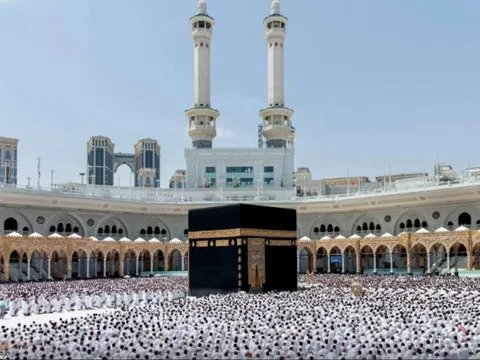
The organization of mass religious mobility during the Hajj pilgrimage is a system-driven logistical operation in which transport infrastructure, crowd management protocols, and tightly regulated scheduling converge to move millions of pilgrims across a restricted set of sacred sites within a fixed time window.
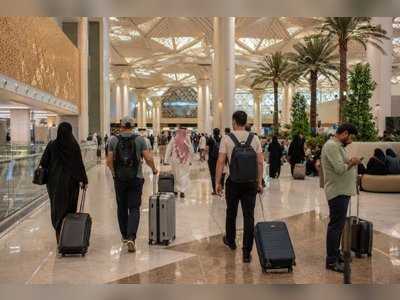
Saudi authorities have confirmed that preparations for the Hajj transport network have been completed ahead of the pilgrimage period, with a focus on coordinating buses, rail systems, and pedestrian flow management across Mecca, Mina, Arafat, and Muzdalifah.
The system is designed to handle one of the largest annual human movements in the world within a compressed timeframe of several days.
What is confirmed is that officials are urging pilgrims to strictly follow assigned transport schedules, as timing adherence is central to preventing overcrowding and ensuring safe movement between ritual sites.
The Hajj is structured around precise ritual phases that must be performed in specific locations at specific times, meaning delays in transport can create cascading congestion across the entire system.
The transport framework includes a combination of high-capacity bus fleets, controlled pedestrian corridors, and the Al Mashaaer Al Mugaddassah Metro, a dedicated rail line built to move pilgrims between key holy sites.
These systems are integrated through centralized scheduling to reduce bottlenecks during peak movement periods, particularly during the Day of Arafat and the subsequent overnight movement to Muzdalifah.
The scale of coordination required is unusually high because all pilgrims must pass through the same geographic corridor within a narrow time window.
Even small deviations from schedule compliance can create large-scale crowd density spikes, which have historically posed safety risks during Hajj seasons in past decades.
In recent years, Saudi Arabia has expanded infrastructure capacity and introduced digital tracking systems to better manage pilgrim flows, including electronic identification and real-time transport allocation.
These measures are intended to reduce uncertainty in movement patterns and improve response times in case of congestion.
The emphasis on schedule adherence reflects a broader operational principle: the Hajj system functions less like conventional transport and more like a controlled mass flow network, where individual flexibility is limited in favor of collective safety.
Authorities coordinate departures, arrivals, and walking routes to ensure that density thresholds are not exceeded in any single zone.
The consequences of non-compliance are primarily operational rather than punitive.
Delays or deviations can lead to missed transport windows, increased waiting times in high-heat conditions, and greater strain on emergency response systems.
In extreme scenarios, crowd clustering can slow evacuation or movement across key junctions.
For Saudi Arabia, the successful execution of Hajj logistics is both a religious obligation and a national operational benchmark, reflecting the capacity of state infrastructure to manage one of the world’s most complex recurring mass gatherings.
The completion of transport preparations signals that the system has entered its active management phase, where real-time coordination becomes the dominant operational requirement.
The next phase will be the execution of controlled pilgrim movement across the holy sites, with transport schedules serving as the central mechanism to maintain safety, order, and continuity throughout the pilgrimage period.
Saudi authorities have confirmed that preparations for the Hajj transport network have been completed ahead of the pilgrimage period, with a focus on coordinating buses, rail systems, and pedestrian flow management across Mecca, Mina, Arafat, and Muzdalifah.
The system is designed to handle one of the largest annual human movements in the world within a compressed timeframe of several days.
What is confirmed is that officials are urging pilgrims to strictly follow assigned transport schedules, as timing adherence is central to preventing overcrowding and ensuring safe movement between ritual sites.
The Hajj is structured around precise ritual phases that must be performed in specific locations at specific times, meaning delays in transport can create cascading congestion across the entire system.
The transport framework includes a combination of high-capacity bus fleets, controlled pedestrian corridors, and the Al Mashaaer Al Mugaddassah Metro, a dedicated rail line built to move pilgrims between key holy sites.
These systems are integrated through centralized scheduling to reduce bottlenecks during peak movement periods, particularly during the Day of Arafat and the subsequent overnight movement to Muzdalifah.
The scale of coordination required is unusually high because all pilgrims must pass through the same geographic corridor within a narrow time window.
Even small deviations from schedule compliance can create large-scale crowd density spikes, which have historically posed safety risks during Hajj seasons in past decades.
In recent years, Saudi Arabia has expanded infrastructure capacity and introduced digital tracking systems to better manage pilgrim flows, including electronic identification and real-time transport allocation.
These measures are intended to reduce uncertainty in movement patterns and improve response times in case of congestion.
The emphasis on schedule adherence reflects a broader operational principle: the Hajj system functions less like conventional transport and more like a controlled mass flow network, where individual flexibility is limited in favor of collective safety.
Authorities coordinate departures, arrivals, and walking routes to ensure that density thresholds are not exceeded in any single zone.
The consequences of non-compliance are primarily operational rather than punitive.
Delays or deviations can lead to missed transport windows, increased waiting times in high-heat conditions, and greater strain on emergency response systems.
In extreme scenarios, crowd clustering can slow evacuation or movement across key junctions.
For Saudi Arabia, the successful execution of Hajj logistics is both a religious obligation and a national operational benchmark, reflecting the capacity of state infrastructure to manage one of the world’s most complex recurring mass gatherings.
The completion of transport preparations signals that the system has entered its active management phase, where real-time coordination becomes the dominant operational requirement.
The next phase will be the execution of controlled pilgrim movement across the holy sites, with transport schedules serving as the central mechanism to maintain safety, order, and continuity throughout the pilgrimage period.