Foreign Visitors Return to Jewish Pilgrimage in Tunisia Under Tight Security
Modest but notable return of international visitors attending the annual pilgrimage to the 26-century-old El-Ghriba Synagogue in Tunisia, with security measures in place after a deadly 2023 attack.
The annual Jewish pilgrimage to the ancient El-Ghriba Synagogue in Tunisia saw a modest yet significant influx of foreign visitors this year.
The event took place from April 30 to May 6 on the Mediterranean island of Djerba, coinciding with the Lag B’Omer Jewish holiday.
This year’s gathering marks a cautious resurgence after a deadly attack in 2023 disrupted the festivities.
Participants came from various countries, including France, China, Ivory Coast, and Italy.
Notably, France’s ambassador to Tunisia attended, symbolizing solidarity following the loss of two French citizens in the previous year’s violence.
The pilgrimage holds deep significance for Tunisia's small but established Jewish community, which has existed since Roman times.
Security was tight throughout the event, reflecting concern over past incidents.
A 2023 attack saw a national guardsman kill five people at the synagogue shortly after the festival.
The current year’s gathering included about 500 attendees, an encouraging sign despite overall reduced numbers compared to previous years.
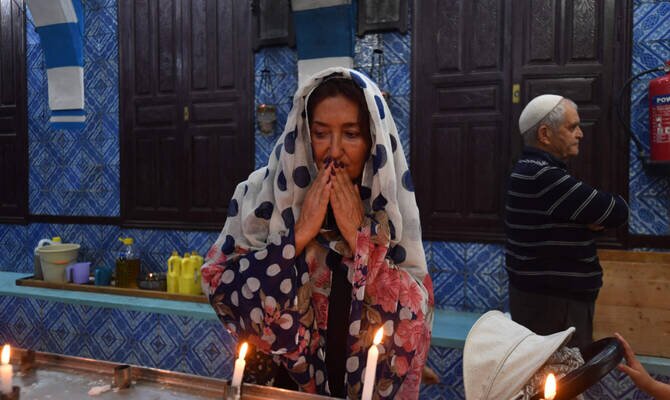
Activities within the synagogue were predominantly solemn and spiritual, accompanied by social interactions among worshippers.
Traditional practices such as lighting candles, reading sacred texts, and writing wishes on eggs were observed.
These eggs are later placed in a sacred cave integral to the complex, believed to invoke blessings.
Redj Cahen, a Tunisian Italian pilgrim who missed last year’s event, expressed pride in returning: “We are back, and we are proud to be Tunisian Jews,” he said, reflecting the deep-seated connection shared by attendees.
The pilgrimage is notable for fostering coexistence, attracting both Jewish and Muslim visitors.
A visible security presence surrounded the synagogue, with increased measures at entry points to Djerba Island.
Police checkpoints and barricades controlled access, with vehicles being searched and identification documents meticulously inspected.
Security was particularly concentrated in Hara Seghira and Hara Kebira, the island’s main Jewish quarters.
The Minara procession made a long-awaited return this year, signaling a gradual easing of restrictions.
The Minara, a pyramid-shaped tower adorned with gold and silver, is draped by women with colorful scarves symbolizing good fortune, fertility, and marriage.
Following a traditional fundraiser auction for the synagogue’s maintenance, the Minara is paraded through the streets to the sound of drumming and singing, with candy thrown to spectators.
The pilgrimage, one of Africa's oldest, historically draws thousands globally but saw a sharp decline following a 2023 shooting that killed two pilgrims and three security officers.
The El-Ghriba Synagogue also faced an Al-Qaeda truck bombing in 2002, resulting in around 20 fatalities.
René Trabelsi, a former Tourism Minister, highlighted the event’s significance: “This year’s Ghriba pilgrimage marks a gradual return,” he noted.
Tunisian authorities have been instrumental in maintaining the pilgrimage despite challenges, recognizing its economic impact and importance to the local community.
Khedir Hnaia, who has worked at the synagogue for over three decades, welcomed back long-time visitors: “We would like to reflect a good image to the world, to bring back the glory of Ghriba and make it even better than how it used to be,” he said, encapsulating the collective aspiration for revitalization.
Overall, the 2023 pilgrimage demonstrates resilience in the face of adversity, reflecting both the spiritual significance of the event and its importance as a symbol of coexistence and cultural heritage.
The event took place from April 30 to May 6 on the Mediterranean island of Djerba, coinciding with the Lag B’Omer Jewish holiday.
This year’s gathering marks a cautious resurgence after a deadly attack in 2023 disrupted the festivities.
Participants came from various countries, including France, China, Ivory Coast, and Italy.
Notably, France’s ambassador to Tunisia attended, symbolizing solidarity following the loss of two French citizens in the previous year’s violence.
The pilgrimage holds deep significance for Tunisia's small but established Jewish community, which has existed since Roman times.
Security was tight throughout the event, reflecting concern over past incidents.
A 2023 attack saw a national guardsman kill five people at the synagogue shortly after the festival.
The current year’s gathering included about 500 attendees, an encouraging sign despite overall reduced numbers compared to previous years.
Activities within the synagogue were predominantly solemn and spiritual, accompanied by social interactions among worshippers.
Traditional practices such as lighting candles, reading sacred texts, and writing wishes on eggs were observed.
These eggs are later placed in a sacred cave integral to the complex, believed to invoke blessings.
Redj Cahen, a Tunisian Italian pilgrim who missed last year’s event, expressed pride in returning: “We are back, and we are proud to be Tunisian Jews,” he said, reflecting the deep-seated connection shared by attendees.
The pilgrimage is notable for fostering coexistence, attracting both Jewish and Muslim visitors.
A visible security presence surrounded the synagogue, with increased measures at entry points to Djerba Island.
Police checkpoints and barricades controlled access, with vehicles being searched and identification documents meticulously inspected.
Security was particularly concentrated in Hara Seghira and Hara Kebira, the island’s main Jewish quarters.
The Minara procession made a long-awaited return this year, signaling a gradual easing of restrictions.
The Minara, a pyramid-shaped tower adorned with gold and silver, is draped by women with colorful scarves symbolizing good fortune, fertility, and marriage.
Following a traditional fundraiser auction for the synagogue’s maintenance, the Minara is paraded through the streets to the sound of drumming and singing, with candy thrown to spectators.
The pilgrimage, one of Africa's oldest, historically draws thousands globally but saw a sharp decline following a 2023 shooting that killed two pilgrims and three security officers.
The El-Ghriba Synagogue also faced an Al-Qaeda truck bombing in 2002, resulting in around 20 fatalities.
René Trabelsi, a former Tourism Minister, highlighted the event’s significance: “This year’s Ghriba pilgrimage marks a gradual return,” he noted.
Tunisian authorities have been instrumental in maintaining the pilgrimage despite challenges, recognizing its economic impact and importance to the local community.
Khedir Hnaia, who has worked at the synagogue for over three decades, welcomed back long-time visitors: “We would like to reflect a good image to the world, to bring back the glory of Ghriba and make it even better than how it used to be,” he said, encapsulating the collective aspiration for revitalization.
Overall, the 2023 pilgrimage demonstrates resilience in the face of adversity, reflecting both the spiritual significance of the event and its importance as a symbol of coexistence and cultural heritage.