
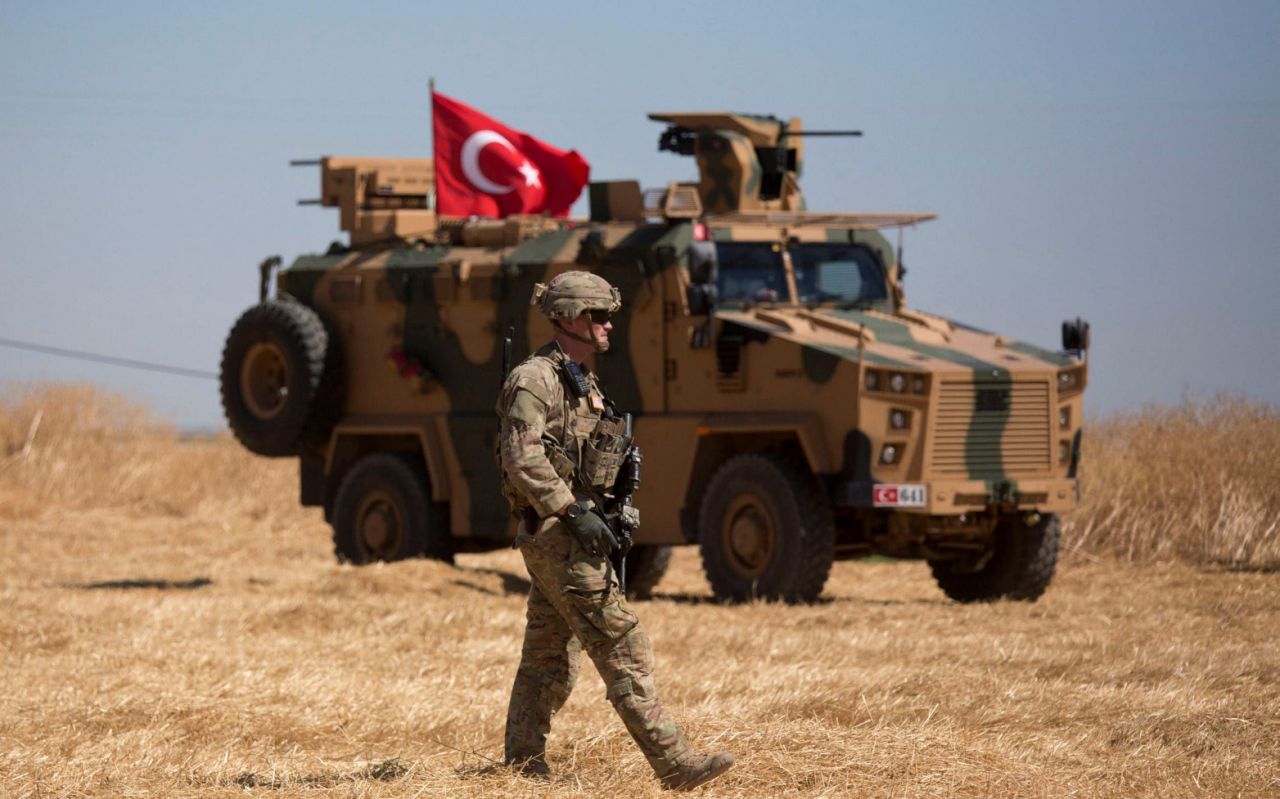


Donald Trump threatens to 'obliterate' Turkish economy if it goes too far with Syria invasion
US President Donald Trump warned Turkey against going too far in Syria, after giving Ankara a green light to invade its southern neighbour.
Mr Trump said on Monday he was done with "ridiculous endless war" as he stood aside to allow a long-threatened Turkish assault on Kurdish-held Syria, effectively abandoning its allies who fought Islamic State of Iraq and the Levant (Isil).
The US had for months been working with Turkey to try to create a buffer zone along its border with northern Syria between the Turkish military and Kurdish forces which Ankara sees as terrorists.
But amid an outcry from the region and strong opposition at home from both Democratic and Republican lawmakers, the US leader appeared to reverse himself, though without drawing any specific red lines that might protect Kurdish allies.
"If Turkey does anything that I, in my great and unmatched wisdom, consider to be off limits, I will totally destroy and obliterate the Economy of Turkey (I've done before!)," Mr Trump tweeted.
Other US officials, apparently surprised by Trump's Sunday announcement, stressed that Washington will not actively support the long-threated Turkish action, warning of destabilizing blowback to the region.
"The Department of Defense made clear to Turkey - as did the president - that we do not endorse a Turkish operation in Northern Syria," said Pentagon spokesperson Jonathan Hoffman.
Turkey has repeatedly criticised the slow implementation of the buffer zone and threatened a unilateral assault, but until Monday the US had refused to stand aside.
"The Kurds fought with us, but were paid massive amounts of money and equipment to do so. They have been fighting Turkey for decades," Mr Trump said in an earlier series of tweets.
"Turkey, Europe, Syria, Iran, Iraq, Russia and the Kurds will now have to figure the situation out."
US Republican and Democrats had warned such an offensive on the Kurdish People’s Protection Units (YPG), which lost 11,000 troops in the battle against Isil, could lead to a massacre of Kurds and send a worrying message to American allies across the world.
The US began pulling back some of its 1,000 troops from border towns Tel Abyad and Ras al-Ayn on Monday, and has said it will potentially depart the country should widespread fighting break out.
The announcement, first made by the White House overnight on Sunday, appeared to take both the Kurds and US coalition forces, which had been carrying out joint patrols with Turkey on the ground, completely by surprise.
Kurdish sources say they were acting in good faith trying to establish a security mechanism with the US to placate Turkey, but now felt that Ankara had been using it as a cover for reconnaisance.
Mustafa Bali, spokesman for the Kurdish-led Syrian Democratic Forces (SDF), tweeted: "We are not expecting the US to protect NE #Syria. But people here are owed an explanation regarding security mechanism deal, destruction of fortifications and failure of US to fulfill their commitments."
The White House statement was released after a phonecall between US President Donald Trump and Turkish President Recep Tayyip Erdogan on Sunday night.
Mr Erdogan had reportedly assured the US president that Ankara would take over the detention of Isil militants captured by the SDF, on the battlefield.
The Kurds have been holding thousands of Syrian and thousands more foreign Isil suspects in prisons and camps across the north of the country.
Mr Trump has repeatedly asked countries under the US-led coalition against Isil to repatriate their citizens. However, the UK, France, Germany, and other allies have so far refused.
“The United States will not hold them for what could be many years and great cost to the United States taxpayer,” the White House statement said. “Turkey will now be responsible for all ISIS fighters in the area captured over the past two years in the wake of the defeat of the territorial “Caliphate” by the United States.”
The decision is a massive blow to the Kurds, who not only helped hold back Isil but have for years been building an autonomous statelet in the northeast of Syria.
Turkey claims its planned “safe zone” is to purge the border of YPG forces, which it sees as a terrorist offshoot of the Kurdistan Workers’ Party (PKK), which has fought an insurgency inside its territory for the past 35 years.
The proposed corridor would have an initial depth of 18 miles and a length of 300 miles and includes the Kurds’ biggest urban centres, including the city of Qamishli which has an estimated 250,000 population.
Turkey on Monday night carried out air strikes on the Iraqi side of the Iraq-Syria border crossing, in what was thought to be an attack on the YPG's supply line.
Western diplomats told the Telegraph they are working on the theory that Mr Erdogan will begin by attempting to take a smaller sliver between the towns of Tel Abyad and Ras al-Ain on the border, but the Turkish president himself has previously hinted at much wider ambitions.
Mr Erdogan has said he wants to return two million of the mostly Sunni Arab Syrian refugees Turkey is hosting to the buffer zone, which some have said would amount to an ethnic repopulation.
The Kurds fear many of the Syrians that might be placed in the zone are not native to north-east Syria, and might displace the Kurdish culture and rights.
The UN said that it was "preparing for the worst", fearing an assault would send large numbers of civilians fleeing.
“This Turkish military operation in northern and eastern Syria will have a significant negative impact on our war on ISIS and will destroy everything that has been achieved from the state of stability over the past years,” the Kurdish-led Syrian Democratic Forces said in a statement.
They said they would defend themselves against “Turkish aggression” and called on all sects, including Kurds, Arabs, Syriacs and Assyrians to join them.
Defending its Kurdish allies would have seen the US come against its Nato partner Turkey, which Washington was keen to avoid.
President Donald Trump has since taking office attempted to disentangle the US from drawn-out wars in the Middle East.
His goal of swift withdrawals in Syria, Iraq and Afghanistan have been stymied by concerns from US officials and American allies about the dangerous voids that would remain.
The US had for months been working with Turkey to try to create a buffer zone along its border with northern Syria between the Turkish military and Kurdish forces which Ankara sees as terrorists.
But amid an outcry from the region and strong opposition at home from both Democratic and Republican lawmakers, the US leader appeared to reverse himself, though without drawing any specific red lines that might protect Kurdish allies.
"If Turkey does anything that I, in my great and unmatched wisdom, consider to be off limits, I will totally destroy and obliterate the Economy of Turkey (I've done before!)," Mr Trump tweeted.
Other US officials, apparently surprised by Trump's Sunday announcement, stressed that Washington will not actively support the long-threated Turkish action, warning of destabilizing blowback to the region.
"The Department of Defense made clear to Turkey - as did the president - that we do not endorse a Turkish operation in Northern Syria," said Pentagon spokesperson Jonathan Hoffman.
Turkey has repeatedly criticised the slow implementation of the buffer zone and threatened a unilateral assault, but until Monday the US had refused to stand aside.
"The Kurds fought with us, but were paid massive amounts of money and equipment to do so. They have been fighting Turkey for decades," Mr Trump said in an earlier series of tweets.
"Turkey, Europe, Syria, Iran, Iraq, Russia and the Kurds will now have to figure the situation out."
US Republican and Democrats had warned such an offensive on the Kurdish People’s Protection Units (YPG), which lost 11,000 troops in the battle against Isil, could lead to a massacre of Kurds and send a worrying message to American allies across the world.
The US began pulling back some of its 1,000 troops from border towns Tel Abyad and Ras al-Ayn on Monday, and has said it will potentially depart the country should widespread fighting break out.
The announcement, first made by the White House overnight on Sunday, appeared to take both the Kurds and US coalition forces, which had been carrying out joint patrols with Turkey on the ground, completely by surprise.
Kurdish sources say they were acting in good faith trying to establish a security mechanism with the US to placate Turkey, but now felt that Ankara had been using it as a cover for reconnaisance.
Mustafa Bali, spokesman for the Kurdish-led Syrian Democratic Forces (SDF), tweeted: "We are not expecting the US to protect NE #Syria. But people here are owed an explanation regarding security mechanism deal, destruction of fortifications and failure of US to fulfill their commitments."
The White House statement was released after a phonecall between US President Donald Trump and Turkish President Recep Tayyip Erdogan on Sunday night.
Mr Erdogan had reportedly assured the US president that Ankara would take over the detention of Isil militants captured by the SDF, on the battlefield.
The Kurds have been holding thousands of Syrian and thousands more foreign Isil suspects in prisons and camps across the north of the country.
Mr Trump has repeatedly asked countries under the US-led coalition against Isil to repatriate their citizens. However, the UK, France, Germany, and other allies have so far refused.
“The United States will not hold them for what could be many years and great cost to the United States taxpayer,” the White House statement said. “Turkey will now be responsible for all ISIS fighters in the area captured over the past two years in the wake of the defeat of the territorial “Caliphate” by the United States.”
The decision is a massive blow to the Kurds, who not only helped hold back Isil but have for years been building an autonomous statelet in the northeast of Syria.
Turkey claims its planned “safe zone” is to purge the border of YPG forces, which it sees as a terrorist offshoot of the Kurdistan Workers’ Party (PKK), which has fought an insurgency inside its territory for the past 35 years.
The proposed corridor would have an initial depth of 18 miles and a length of 300 miles and includes the Kurds’ biggest urban centres, including the city of Qamishli which has an estimated 250,000 population.
Turkey on Monday night carried out air strikes on the Iraqi side of the Iraq-Syria border crossing, in what was thought to be an attack on the YPG's supply line.
Western diplomats told the Telegraph they are working on the theory that Mr Erdogan will begin by attempting to take a smaller sliver between the towns of Tel Abyad and Ras al-Ain on the border, but the Turkish president himself has previously hinted at much wider ambitions.
Mr Erdogan has said he wants to return two million of the mostly Sunni Arab Syrian refugees Turkey is hosting to the buffer zone, which some have said would amount to an ethnic repopulation.
The Kurds fear many of the Syrians that might be placed in the zone are not native to north-east Syria, and might displace the Kurdish culture and rights.
The UN said that it was "preparing for the worst", fearing an assault would send large numbers of civilians fleeing.
“This Turkish military operation in northern and eastern Syria will have a significant negative impact on our war on ISIS and will destroy everything that has been achieved from the state of stability over the past years,” the Kurdish-led Syrian Democratic Forces said in a statement.
They said they would defend themselves against “Turkish aggression” and called on all sects, including Kurds, Arabs, Syriacs and Assyrians to join them.
Defending its Kurdish allies would have seen the US come against its Nato partner Turkey, which Washington was keen to avoid.
President Donald Trump has since taking office attempted to disentangle the US from drawn-out wars in the Middle East.
His goal of swift withdrawals in Syria, Iraq and Afghanistan have been stymied by concerns from US officials and American allies about the dangerous voids that would remain.