Arab Press

بالشعب و للشعب
Friday, Jan 23, 2026

El Salvador officially adopts Bitcoin as currency - with a few hiccups

El Salvador officially adopts Bitcoin as currency - with a few hiccups

Skepticism around Bitcoin was not dispelled when Salvadorans couldn't access the country's new digital wallet - or when its price slid.

Bitcoin's price continued to plunge on Wednesday - a day after its heaviest losses in the two and a half months since El Salvador voted to adopt the crypto asset as legal tender - causing angry protests and havoc online.

At one point on Tuesday, the digital currency fell as much as 18.6 per cent, wiping out more than $180 billion (€152 billion) from the market.

The coin last traded at $46,560 (€39,361), having endured a rocky day's trading on Tuesday which saw it hit a near four-month high of $52,956 (€44,769) before then plunging 11.1 per cent, its largest fall since June 2.

In a historic move, El Salvador became the first country on Tuesday to officially adopt the cryptocurrency as legal tender but it got off to a bumpy start.

Technological glitches hampered its use while street protests by mistrustful citizens broke out in the Central American country.

Proponents say the move will lower commission costs for billions of dollars sent from abroad but which critics warned may fuel money laundering.

The change means businesses should accept payment in Bitcoin alongside the US dollar, which has been El Salvador's official currency since 2001 and will remain legal tender.
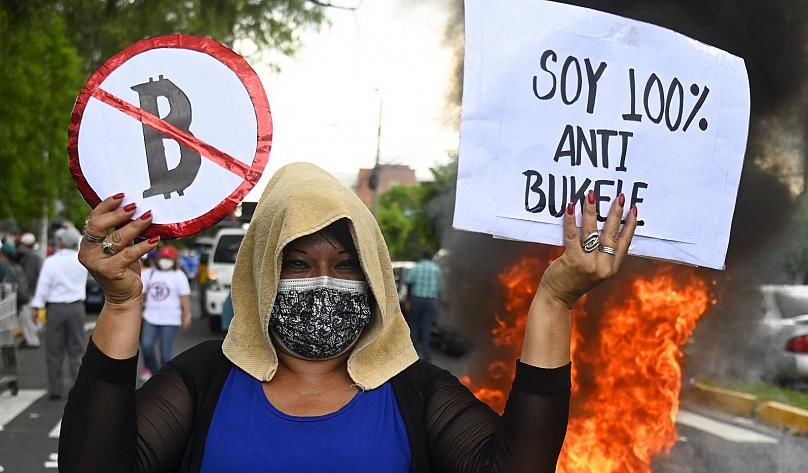
A woman protests against the circulation of Bitcoin in San Salvador on September 7, 2021.


President Nayib Bukele, who has pushed for adopting the cryptocurrency, says it will help Salvadorans save about $400 million (€338 million) the government calculates is spent annually on commissions for remittances while giving access to financial services to the unbanked.

Ahead of the launch, El Salvador bought 400 Bitcoins, Bukele said, helping drive the currency price above $52,000 (€ 44,000) for the first time since May.

But underscoring the risks, hours later on Tuesday Bitcoin weakened.

In response, Bukele confirmed in a tweet that El Salvador had bought 150 more Bitcoin in "the dip" so as to benefit more when the price rose again.


Public skeptical of Bitcoin

Doubters say Bitcoin could increase regulatory and financial risks for the Central American nation, and polls show Salvadorans are wary of the volatility of the cryptocurrency, which can shed hundreds of dollars in value in a day.

To warm up a skeptical public, Bukele has promised every citizen $30 (€25) in Bitcoin if they sign up for a government digital wallet.

In the early hours of Tuesday, El Salvador's national digital wallet, Chivo, had not appeared on Apple Inc, Google and Huawei's app download platforms, however, prompting a series of tweets from Bukele, including one with a red-faced "angry" emoticon.


"Release him! @Apple @Google and @Huawei," Bukele said. The wallet was later available from Huawei.

Some citizens were optimistic.

"It's going to be beneficial ... we have family in the United States and they can send money at no cost, whereas banks charge," said Reina Isabel Aguilar, a store owner in El Zonte Beach, some 49 km southwest of capital San Salvador.

Known as Bitcoin Beach, the town of El Zonte aims to become one of the world's first bitcoin economies. However, uptake may be slowed by low internet penetration across the country. It remains unclear whether businesses will be sanctioned if they do not adopt the new currency.

In the run-up to the launch, the government installed ATMs that will allow bitcoin to be converted into dollars and withdrawn without commission from the Chivo digital wallet.

Bukele on Monday asked for patience.

"Like all innovations, El Salvador's Bitcoin process has a learning curve," he said on Twitter. "Not everything will be achieved in a day, or in a month."
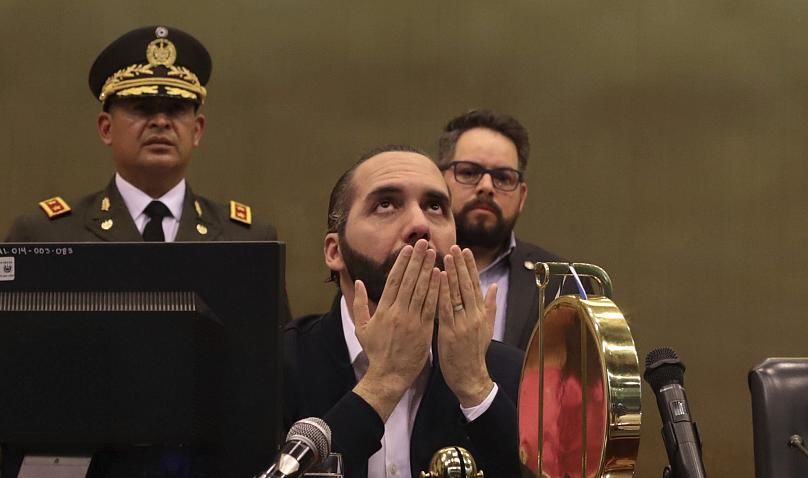
El Salvador's President Nayib Bukele offers a prayer in congress.


Bukele has taken over the levers of power


In barely two years in office, Bukele has taken control of almost all levers of power. Last week, top judges appointed by his lawmakers ruled he could serve a second term.

The 40-year-old president is popular with the public but has been accused of eroding democracy, including by the administration of US President Joe Biden.

Bukele has promised to clean up graft, but the US recently put some of his close allies on a corruption blacklist.

Analysts fear adopting the cryptocurrency could fuel money laundering.

After the bitcoin law was approved, rating agency Moody's downgraded El Salvador's creditworthiness, while the country's dollar-denominated bonds have also come under pressure.

The move has muddied the outlook for El Salvador's quest for more than $1 billion (€843.8 million) in financing from the International Monetary Fund (IMF).

But Bukele, who does not shy away from controversy, on Monday retweeted a video that showed his face superimposed on actor Jaime Foxx's in a scene from Django Unchained, a Quentin Tarantino film about American slavery. The video portrayed Bukele whipping a slave trader who had the IMF emblem emblazoned on his face.

Bukele later deleted the retweet.

In his own tweet, Bukele said: "We must break the paradigms of the past. El Salvador has the right to advance towards the first world".

Newsletter

Related Articles

Arab Press
0:00
0:00
Close
Saudi Arabia’s Careful Balancing Act in Relations with Israel Amid Regional and Domestic Pressures
Greenland, Gaza, and Global Leverage: Today’s 10 Power Stories Shaping Markets and Security
America’s Venezuela Oil Grip Meets China’s Demand: Market Power, Legal Shockwaves, and the New Rules of Energy Leverage
Trump’s Board of Peace: Breakthrough Diplomacy or a Hostile Takeover of Global Order?
Prince William to Make Official Visit to Saudi Arabia in February
Saudi Arabia Advances Ambitious Artificial River Mega-Project to Transform Water Security
Saudi Crown Prince and Syrian President Discuss Stabilisation, Reconstruction and Regional Ties in Riyadh Talks
Mohammed bin Salman Confronts the ‘Iranian Moment’ as Saudi Leadership Faces Regional Test
Cybercrime, Inc.: When Crime Becomes an Economy. How the World Accidentally Built a Twenty-Trillion-Dollar Criminal Economy
Strategic Restraint, Credible Force, and the Discipline of Power
Donald Trump Organization Unveils Championship Golf Course and Luxury Resort Project in Saudi Arabia
Inside Diriyah: Saudi Arabia’s $63.2 Billion Vision to Transform Its Historic Heart into a Global Tourism Powerhouse
Trump Designates Saudi Arabia a Major Non-NATO Ally, Elevating US–Riyadh Defense Partnership
Trump Organization Deepens Saudi Property Focus with $10 Billion Luxury Developments
There is no sovereign immunity for poisoning millions with drugs.
Mohammed bin Salman’s Global Standing: Strategic Partner in Transition Amid Debate Over His Role
Saudi Arabia Opens Property Market to Foreign Buyers in Landmark Reform
The U.S. State Department’s account in Persian: “President Trump is a man of action. If you didn’t know it until now, now you do—do not play games with President Trump.”
CNN’s Ranking of Israel’s Women’s Rights Sparks Debate After Misleading Global Index Comparison
Saudi Arabia’s Shifting Regional Alignment Raises Strategic Concerns in Jerusalem
OPEC+ Holds Oil Output Steady Amid Member Tensions and Market Oversupply
Iranian Protests Intensify as Another Revolutionary Guard Member Is Killed and Khamenei Blames the West
President Trump Says United States Will Administer Venezuela Until a Secure Leadership Transition
Delta Force Identified as Unit Behind U.S. Operation That Captured Venezuela’s President
Saudi-UAE Rift Adds Complexity to Middle East Diplomacy as Trump Signals Firm Leadership
OPEC+ to Keep Oil Output Policy Unchanged Despite Saudi-UAE Tensions Over Yemen
Saudi Arabia and UAE at Odds in Yemen Conflict as Southern Offensive Deepens Gulf Rift
Abu Dhabi ‘Capital of Capital’: How Abu Dhabi Rose as a Sovereign Wealth Power
Diamonds Are Powering a New Quantum Revolution
Trump Threatens Strikes Against Iran if Nuclear Programme Is Restarted
Why Saudi Arabia May Recalibrate Its US Spending Commitments Amid Rising China–America Rivalry
Riyadh Air’s First Boeing 787-9 Dreamliner Completes Initial Test Flight, Advancing Saudi Carrier’s Launch
Saudi Arabia’s 2025: A Pivotal Year of Global Engagement and Domestic Transformation
Saudi Arabia to Introduce Sugar-Content Based Tax on Sweetened Drinks from January 2026
Saudi Hotels Prepare for New Hospitality Roles as Alcohol Curbs Ease
Global Airports Forum Highlights Saudi Arabia’s Emergence as a Leading Aviation Powerhouse
Saudi Arabia Weighs Strategic Choice on Iran Amid Regional Turbulence
Saudi Arabia Condemns Sydney Bondi Beach Shooting and Expresses Solidarity with Australia
Washington Watches Beijing–Riyadh Rapprochement as Strategic Balance Shifts
Saudi Arabia’s Vision 2030 Drives Measurable Lift in Global Reputation and Influence
Alcohol Policies Vary Widely Across Muslim-Majority Countries, With Many Permitting Consumption Under Specific Rules
Saudi Arabia Clarifies No Formal Ban on Photography at Holy Mosques for Hajj 2026
Libya and Saudi Arabia Sign Strategic MoU to Boost Telecommunications Cooperation
Elon Musk’s xAI Announces Landmark 500-Megawatt AI Data Center in Saudi Arabia
Israel Moves to Safeguard Regional Stability as F-35 Sales Debate Intensifies
Cardi B to Make Historic Saudi Arabia Debut at Soundstorm 2025 Festival
U.S. Democratic Lawmakers Raise National Security and Influence Concerns Over Paramount’s Hostile Bid for Warner Bros. Discovery
×