

Is air-drying COVID vaccines the solution for vaccine equity?
Outbreaks of Swine Flu, Ebola, Zika and COVID-19 have plagued societies every few years for more than a decade.
Vaccinations have been key to fighting the viruses but not all countries have access to them, which is partly due to storage issues.
But science and technology are finding new ways for us to ingest medicines, which may not only help with vaccine equity in the face of epidemics and pandemics, but also convince those who are hesitant about vaccines.
One of the innovative ways that are in the works is Merck’s COVID-19 vaccine pill, which is currently awaiting the green light by health authorities.
Another could be to air-dry vaccines so that they do not even need to be refrigerated.
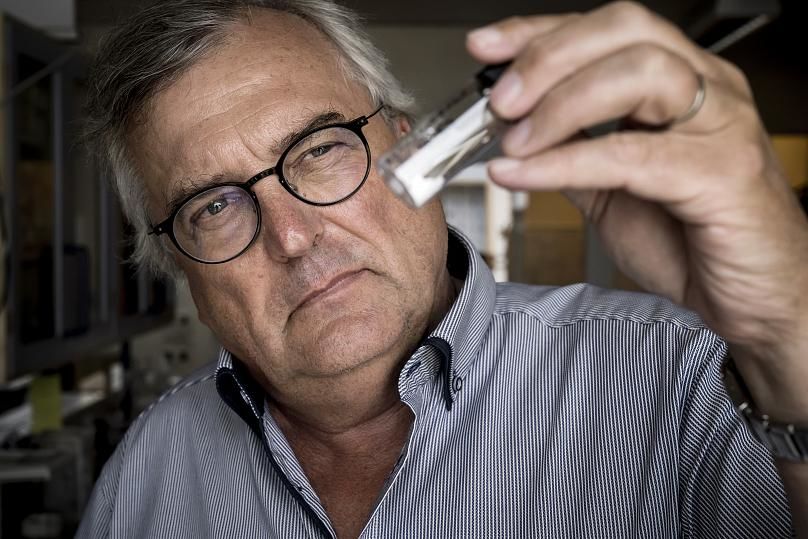
The Swedish company Ziccum is developing new dry-powder forms of the world’s most needed vaccines. It has been working on this technology since 2017 and originally started working on dry-freezing children's vaccines.
But the company really finessed the technology amid the coronavirus pandemic.
“The pandemic made us refocus from childrens’ vaccines because there is no investment going into childrens’ vaccines, which was a bit of a problem for us,” Ziccum CEO Göran Conradson told Euronews Next.
The company is developing new dry-powder versions of the world’s most urgently- needed vaccines in collaboration with pharma companies such as Johnson & Johnson.
“We have more or less focused on the COVID vaccine, there’s been a massive increase in the vaccine need but it's not being fairly distributed,” Conradson said.
The air-dried formulations can be transported easily and cost-effectively, with no costly cold storage or refrigeration required.
For poorer countries with less access to COVID-19 vaccines, this could be a vital means of saving lives.
Vaccine equity
The World Health Organization (WHO) says no one is safe until everyone is vaccinated against the virus.
The health body’s chief Dr Tedros Adhanom said in April “vaccine equity is the challenge of our time…and we are failing”.
Research suggests that enough vaccines will be produced in 2021 to cover 70 per cent of the global population of 7.8 billion. But most of the vaccines are reserved for wealthy nations.
According to United Nations Development Programme (UNDP) data, as of October 27, 2021, one in two people (or 64 per cent) of people living in high-income countries have been vaccinated with at least one dose.
In lower-income countries, only one in 21 people (almost five per cent) have received at least one dose.
But the air-drying technology could not only help with COVID-19 vaccines but for other vaccines too.
The WHO says one in five children worldwide still don’t receive even basic vaccines, and 1.5 million die every year from vaccine-preventable diseases.
The health agency also estimated that more than 50 per cent of vaccines may be wasted globally every year due to temperature control, logistics and shipment-related issues.
According to Ziccum, the complex chain of refrigerated facilities is struggling to cope with growing demand as population, poverty and temperatures increase.
The company is currently developing plans for the world’s first manufacturing plant for thermostable dry powder vaccines to be built in Lund, Sweden.
This Fill and Finish plant would be a blueprint and could be built all over the world, allowing countries to formulate and package dry-formulated vaccines at volume.
How does dry-freezing work?
Ziccum has patented technology to air-dry vaccines to create thermostable dry-powder versions of vaccines which can be stored and transported without refrigeration.
The vaccine can simply be stored and transported as a compressed powder 'plug', then mixed with sterile water prior to inoculation.
“You get the powder and we take away the water and put it basically in sugars and it becomes very stable,” said Conradson, adding the process was the same for all vaccines.
“We haven't done every test yet, but it seems to work very, very well (with many vaccines) with high yield. So we're getting there,” he said.
“But we are sort of a technology company in the sense that we require the raw material to bulk from a collaborator such as Johnson & Johnson”.
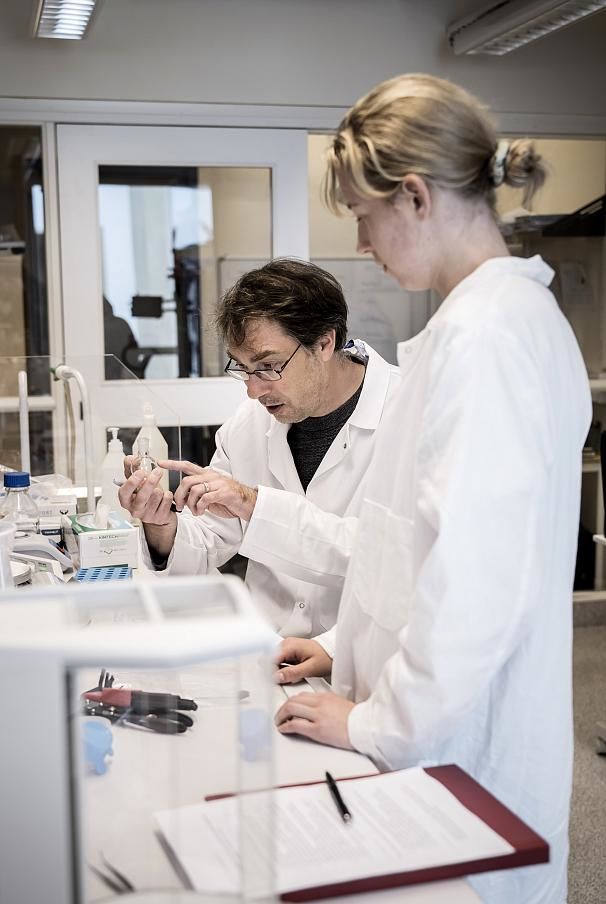
The company is currently in the development stage and says it will be around two years before it can be used.
“This goes very well in hand in hand with the ambitions from particularly European countries to really enhance and increase the vaccine manufacturing in Africa,” said Conradson.
But this technology could do even more in the future.
The future of freeze-drying
“I think in the future, maybe in 10 years, you could inhale the powder. You could actually also take it as a tablet,” said Conradson.
He argued this could also be a way to allow people who are hesitant about vaccines to take the medication.
“I think there's a big anti-vaxx movement. And so because you take a syringe and inject it into healthy people, that kind of thinking will maybe vanish because people put everything in their mouths,” Conradson said.
“Maybe in the future that could have an essential effect.”