

NYC job postings will soon include salary range
New York City will require employers to list the minimum and maximum salaries on job postings starting this spring, a mandate that is already drawing opposition from business groups.
Under a new city law that takes effect May 15, companies will need to disclose the expected salary range that an employer "in good faith" believes it would pay for each advertised job, promotion or transfer opportunity.
Nearly every employer hiring in the city would be covered by the law; only those with fewer than four employees or staffing firms hiring for temporary workers are excluded. Companies that don’t comply could be fined or face other civil penalties.
The measure, aimed at addressing gender-pay gaps and providing more transparency on pay, is the latest step in a broadening of pay-disclosure requirements that are also being implemented in states like Rhode Island and Connecticut. It comes amid a continuing labor shortage in the U.S. and could give employees even more leverage when many already have an improved position in job options and negotiations.
 Customers visit a Macy's store July 13, 2021, in New York City.
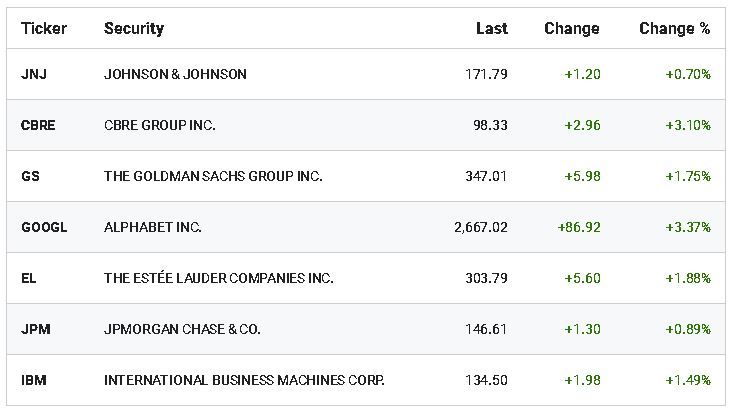
In response to a similar law in Colorado that went into effect last year, employers from Johnson & Johnson to commercial real estate giant CBRE Group Inc. specified in postings that remote jobs were closed to people living in the state, allowing the companies to sidestep disclosure requirements.
Employment specialists say New York’s law may be more significant because of the size of the city’s economy and the number of major U.S. companies operating there. Banks such as Goldman Sachs Group Inc. have hundreds of open jobs in the city, as do hedge funds, law firms, media companies and giants such as Alphabet Inc.’s Google and Estee Lauder Cos.
Besides giving job seekers a better understanding of what a role could pay, the rule would enable existing employees to compare their pay with the stated ranges in open roles while giving companies insight into the pay practices of rivals.
"It is a big deal," said Ian Carleton Schaefer, chairman of the New York employment and labor practice at the law firm Loeb & Loeb. "Companies are going to have to very quickly get very comfortable with how they’ve been making pay determinations along equity lines."
 Motion blur of a man moving boxes in a warehouse.
The new law has surprised some employers, say legal and business experts. The New York City Council passed the legislation in December, and it was enacted in January after Mayor Eric Adams declined an opportunity to veto it. It amends the city’s administrative code to make it an "unlawful discriminatory practice" to not include pay ranges in job postings.
Business groups like the Partnership for New York City, whose members include companies such as JPMorgan Chase & Co. and International Business Machines Corp. , oppose the law, even as they say they support efforts to promote greater pay transparency and gender equity.
Kathryn Wylde, chief executive of the Partnership for New York City, said the measure adds to the perception that New York is unfriendly to business. Many employers worry that the salary disclosures will be burdensome and time-consuming to implement, she said, since not all companies have pay bands for each job category.
"It’s just the wrong solution," Ms. Wylde said. "It should never have been allowed to go through."
The Partnership plans to push for the city to delay implementation of the law. A spokesperson for Mayor Adams didn’t respond to requests for comment on the measure’s timing.
New York City in 2017 banned private employers from pressing job seekers to disclose their salary history, and states such as California, Washington and Colorado have enacted similar pay-equity laws in recent years.
The New York City Commission on Human Rights, which enforces human-rights laws, said it plans to initially help businesses and employees understand the city’s new salary provision.
"Our immediate goal is not to penalize, but to educate and work together with the city’s business community, while still ensuring that individuals who have experienced discrimination are able to receive damages," said Sapna V. Raj, deputy commissioner of the commission’s law-enforcement bureau, in a statement.
The commission will take complaints from the public about whether job postings meet the law’s requirements, and will conduct its own tests and investigations to examine potential violations, Ms. Raj said.
Ms. Raj said the law requires that employers post realistic salary ranges, and that the commission could take steps to ensure they do. The law doesn’t define a realistic range.
Some employers have already begun disclosing pay to applicants. Textio Inc., a company whose software analyzes job postings and recruiting materials to make recommendations to improve them, began including compensation information in every one of its external job listings this year. The company’s employees work remotely from nine states, including New York.
The company wanted to "lead the way" on transparency internally and within its industry, said Jackye Clayton, vice president of talent acquisition and diversity, equity and inclusion at Textio, in a statement.
Some who have applied for jobs in recent years say they welcome upfront information on potential pay.
Michael Tjaden, a 26-year-old who lives in New York, said he applied for hundreds of jobs last year, and often found the process inefficient. In one case, an employer didn’t disclose salary information until the end of a multistep interview process, offering a job that paid about half of what Mr. Tjaden had expected. "Had I known the range, I would have not wasted my time, both of our times," he said.
Mr. Schaefer, the labor attorney, said he also expected existing employees to look at open positions at their companies to judge where their pay falls within a salary band. That could then put pressure on managers, with employees asking, "‘Why am I not at the high end of the range?’" he said.
Although many companies conducted pay audits in recent years, Mr. Schaefer said he expected New York’s measure and others like it to cause companies to reassess whether they feel comfortable about their pay ranges, and where people fall on them.
"It’s all out there," he said. "The curtain has been pulled back."