Arab Press

بالشعب و للشعب
Friday, Jan 09, 2026

Pre-school education in Uzbekistan goes mobile

More children are getting access to preschool education in Uzbekistan. Alternative school models are being introduced, like a bus with a teacher that arrives in some remote villages every morning, empowering children to make their own choices about how they learn.

A regular day for teacher Zilola Masharipova begins with hopping on a 'school bus'. She works at one of Uzbekistan’s mobile pre-schools. Every morning she travels to the remote village of Dashyok to teach. Dozens of these buses travel across the country and they are one of several new initiatives to give all Uzbek children access to pre-school education.

Pre-schools go mobile


We followed Zilola to discover the country’s recent innovations in pre-school education and we find out that the impact of this project is far-reaching. As Zilola says, mobile pre-schools allow children between the age of three to seven to get a "high-quality preschool education regardless of their social origin even in our country's most remote villages and rural areas." According to her, children who were not previously enrolled in preschools now have "the same opportunities as those in the cities".
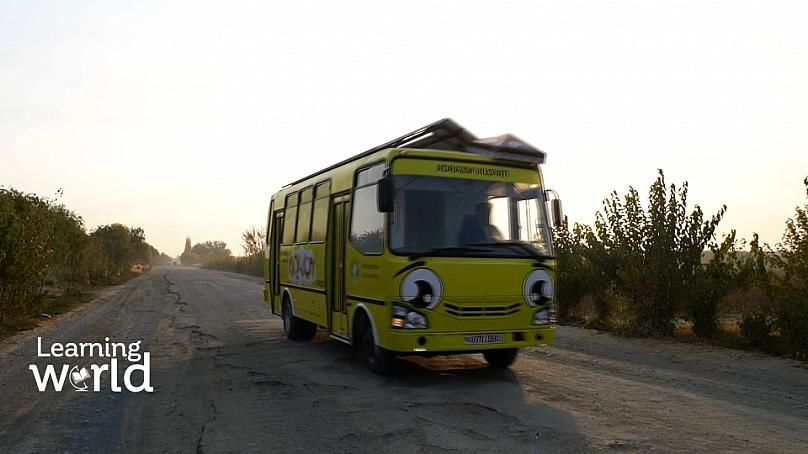
One of Uzbekistan's mobile pre-schools


The teaching is child-centred. Each child can choose their own way to learn and Zilola invites them to discover the topic of the day. This month they are studying 'the colors of autumn'.

Many parents from this village of Dashyok have dreamt of having a preschool here for years. It means a lot to mother, Ekutzhon Rusmetova, that the bus stops there because she believes it gives the children a better education and upbringing. "They learn to draw, to write, to count, to play games and get intellectual development here. For us parents, this is happiness", she adds.

Children first


In 2012, only 23% of children in Uzbekistan attended preschool. In rural areas, it was as low as 8.5%. Since 2017, there has been a significant push for reform and today over 60% of Uzbek children receive an education. The goal is to reach every child. School is now compulsory for 6-year-olds and some even offer half day free of charge classes.
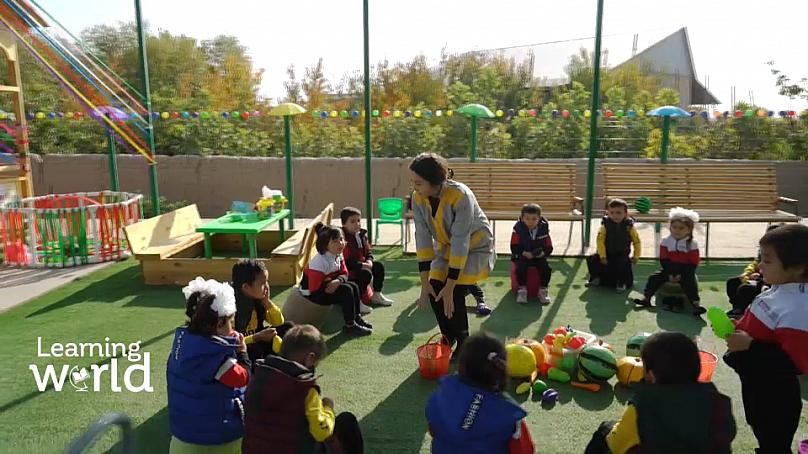
Zilola Masharipova teaching children on her pre-school route


Child-centred learning is a new approach in Uzbekistan's education system. At a recently opened pre-school in Khasian village, children are being empowered to make their own choices about how they learn. As Irina Grosheva, the Chief Specialist of the Strategic Department of Preschool Education at the Uzbek Ministry of Education says, "In the previously used model, the educator was the most important key figure. Now it is the child who plays the main role. The child has the right to choose his or her own activity". She tells us that the goal now in Uzbekistan is to develop analytical thinking and creativity in children. They believe that it is creativity that allows a child's personality to grow."

Investing in education


The World Bank is also helping Uzbekistan to develop good-quality pre-school education as well by financing various projects in the area.

Marco Mantovanelli, the World Bank country manager for Uzbekistan argues that supporting a child-centred education from an early age enables them to solve problems more easily. "Problem solving is critical to developing a better capacity to be a learner down the road", he explains.

In the small village of Shikhmakhshad, there's another alternative preschool called a playgroup. Children in mixed-aged groups there learn through play. Alongside its broader support for educational reform, UNICEF has helped to open eight such playgroups in Uzbekistan. According to Munir Mammadzade, the UNICEF representative in Uzbekistan, in these playgroup preschools, "soft skills and critical thinking skills, the ability to interact, communicate and solve problems even though they might be very basic at that age" are something they are investing in.

As a result of this new push to improve education for Uzbek children, the profession of pre-school teaching has become a popular career choice. Students of this profession are also learning how to teach creatively to adapt to the new methods. But to Madina Nabieva, a pre-school student, their main goal is to learn to "remain a child at heart, otherwise, the children will not be able to open up" and accept the new teachers into their world.

Newsletter

Related Articles

Arab Press
0:00
0:00
Close
There is no sovereign immunity for poisoning millions with drugs.
Mohammed bin Salman’s Global Standing: Strategic Partner in Transition Amid Debate Over His Role
Saudi Arabia Opens Property Market to Foreign Buyers in Landmark Reform
The U.S. State Department’s account in Persian: “President Trump is a man of action. If you didn’t know it until now, now you do—do not play games with President Trump.”
CNN’s Ranking of Israel’s Women’s Rights Sparks Debate After Misleading Global Index Comparison
Saudi Arabia’s Shifting Regional Alignment Raises Strategic Concerns in Jerusalem
OPEC+ Holds Oil Output Steady Amid Member Tensions and Market Oversupply
Iranian Protests Intensify as Another Revolutionary Guard Member Is Killed and Khamenei Blames the West
President Trump Says United States Will Administer Venezuela Until a Secure Leadership Transition
Delta Force Identified as Unit Behind U.S. Operation That Captured Venezuela’s President
Saudi-UAE Rift Adds Complexity to Middle East Diplomacy as Trump Signals Firm Leadership
OPEC+ to Keep Oil Output Policy Unchanged Despite Saudi-UAE Tensions Over Yemen
Saudi Arabia and UAE at Odds in Yemen Conflict as Southern Offensive Deepens Gulf Rift
Abu Dhabi ‘Capital of Capital’: How Abu Dhabi Rose as a Sovereign Wealth Power
Diamonds Are Powering a New Quantum Revolution
Trump Threatens Strikes Against Iran if Nuclear Programme Is Restarted
Why Saudi Arabia May Recalibrate Its US Spending Commitments Amid Rising China–America Rivalry
Riyadh Air’s First Boeing 787-9 Dreamliner Completes Initial Test Flight, Advancing Saudi Carrier’s Launch
Saudi Arabia’s 2025: A Pivotal Year of Global Engagement and Domestic Transformation
Saudi Arabia to Introduce Sugar-Content Based Tax on Sweetened Drinks from January 2026
Saudi Hotels Prepare for New Hospitality Roles as Alcohol Curbs Ease
Global Airports Forum Highlights Saudi Arabia’s Emergence as a Leading Aviation Powerhouse
Saudi Arabia Weighs Strategic Choice on Iran Amid Regional Turbulence
Saudi Arabia Condemns Sydney Bondi Beach Shooting and Expresses Solidarity with Australia
Washington Watches Beijing–Riyadh Rapprochement as Strategic Balance Shifts
Saudi Arabia’s Vision 2030 Drives Measurable Lift in Global Reputation and Influence
Alcohol Policies Vary Widely Across Muslim-Majority Countries, With Many Permitting Consumption Under Specific Rules
Saudi Arabia Clarifies No Formal Ban on Photography at Holy Mosques for Hajj 2026
Libya and Saudi Arabia Sign Strategic MoU to Boost Telecommunications Cooperation
Elon Musk’s xAI Announces Landmark 500-Megawatt AI Data Center in Saudi Arabia
Israel Moves to Safeguard Regional Stability as F-35 Sales Debate Intensifies
Cardi B to Make Historic Saudi Arabia Debut at Soundstorm 2025 Festival
U.S. Democratic Lawmakers Raise National Security and Influence Concerns Over Paramount’s Hostile Bid for Warner Bros. Discovery
Hackers Are Hiding Malware in Open-Source Tools and IDE Extensions
Traveling to USA? Homeland Security moving toward requiring foreign travelers to share social media history
Wall Street Analysts Clash With Riyadh Over Saudi Arabia’s Deficit Outlook
Trump and Saudi Crown Prince Cement $1 Trillion-Plus Deals in High-Profile White House Summit
Saudi Arabia Opens Alcohol Sales to Wealthy Non-Muslim Residents Under New Access Rules
U.S.–Saudi Rethink Deepens — Washington Moves Ahead Without Linking Riyadh to Israel Normalisation
Saudi Arabia and Israel Deprioritise Diplomacy: Normalisation No Longer a Middle-East Priority
As Trump Deepens Ties with Saudi Arabia, Push for Israel Normalization Takes a Back Seat
Thai Food Village Debuts at Saudi Feast Food Festival 2025 Under Thai Commerce Minister Suphajee’s Lead
Saudi Arabia Sharpens Its Strategic Vision as Economic Transformation Enters New Phase
Saudi Arabia Projects $44 Billion Budget Shortfall in 2026 as Economy Rebalances
OPEC+ Unveils New Capacity-Based System to Anchor Future Oil Output Levels
Hong Kong Residents Mourn Victims as 1,500 People Relocated After Devastating Tower Fire
Saudi Arabia’s SAMAI Initiative Surpasses One-Million-Citizen Milestone in National AI Upskilling Drive
Saudi Arabia’s Specialty Coffee Market Set to Surge as Demand Soars and New Exhibition Drops in December
Saudi Arabia Moves to Open Two New Alcohol Stores for Foreigners Under Vision 2030 Reform
Saudi Arabia’s AI Ambitions Gain Momentum — but Water, Talent and Infrastructure Pose Major Hurdles
×