Protests Erupt Over Saudi-Backed Bid for EA as Gaming Industry Faces Sovereign Wealth Pressure
Activists target Electronic Arts amid concerns over foreign state investment in major Western entertainment companies and its implications for content control and governance.
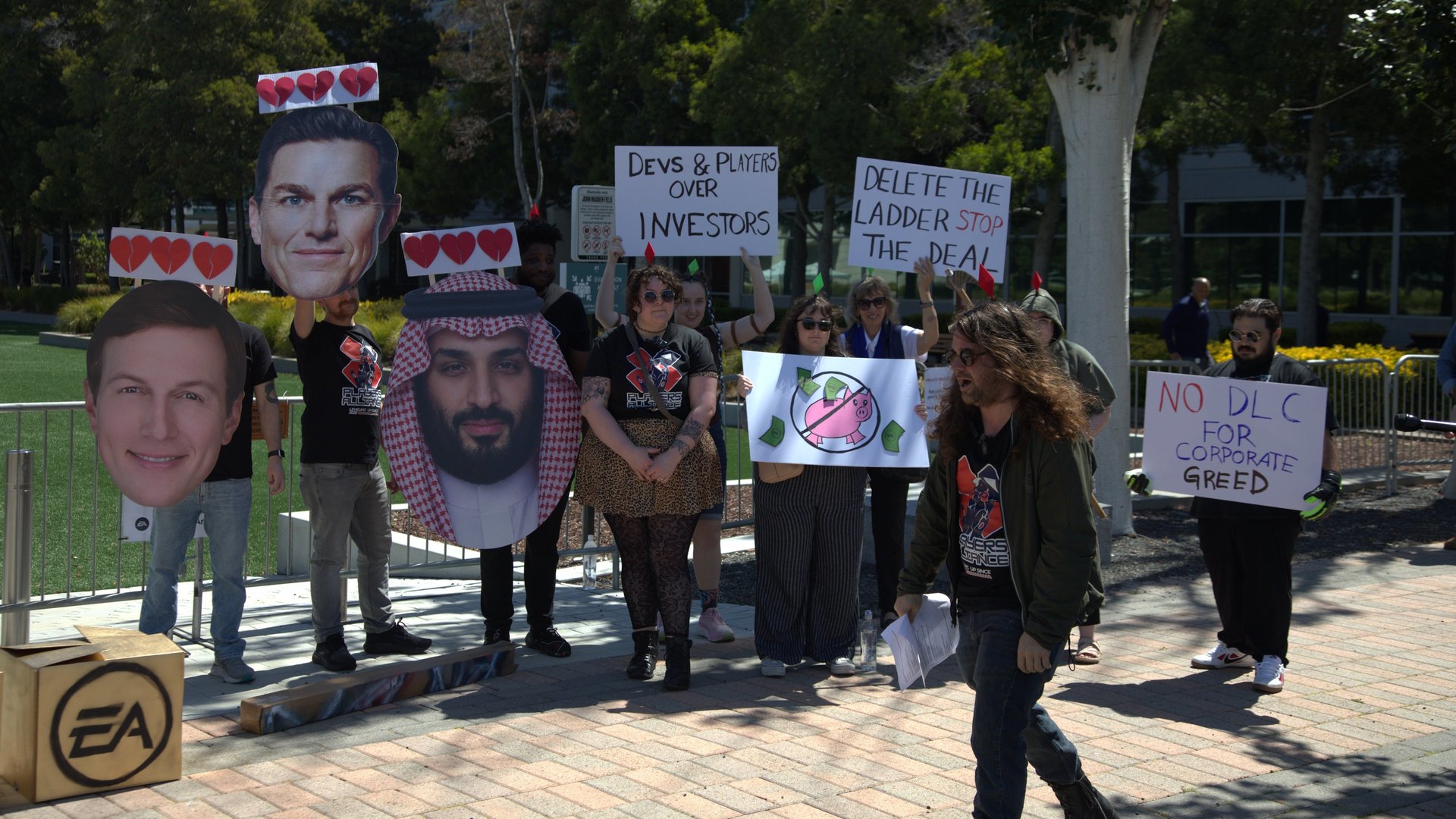
An escalating confrontation between activist groups and corporate investors has emerged after protesters reportedly targeted Electronic Arts, the US-based video game publisher, in opposition to its acquisition backed by Saudi Arabian capital.
The incident reflects growing resistance to sovereign wealth influence in the global entertainment and technology sectors, where state-linked investment funds have increasingly sought stakes in high-profile Western companies.
What is confirmed is that Electronic Arts has been the subject of sustained investor interest from large institutional and sovereign wealth sources in recent years, as global gaming has become one of the most valuable segments of the entertainment industry.
Saudi Arabia’s Public Investment Fund has expanded its international investment portfolio across gaming, sports, and technology assets as part of broader economic diversification efforts.
The reported protest activity against EA centers on concerns that state-backed ownership could influence creative direction, content policies, and corporate governance within a major cultural production company.
Activists opposing the acquisition argue that such investments raise questions about editorial independence in entertainment products, particularly in narrative-driven video games that often engage with political, military, or social themes.
Electronic Arts, one of the largest video game publishers globally, owns franchises such as sports simulations and major online multiplayer titles that generate recurring revenue through digital services.
Its scale and influence make it a strategic target for large investors seeking exposure to the gaming sector, which has outperformed many traditional media industries in growth and user engagement.
The mechanism behind sovereign wealth participation in companies like EA is typically financial rather than operational, with investment funds taking equity positions through direct purchases or consortium-led acquisitions.
However, even passive ownership by state-linked entities can generate public scrutiny, particularly when geopolitical tensions are involved or when the investor is associated with governments that face criticism over human rights or political policies.
Opposition to such deals often stems from broader concerns about the intersection of capital, culture, and influence.
In the gaming industry, where content can reach hundreds of millions of users globally, questions about ownership are increasingly tied to debates over censorship, representation, and the commercial direction of entertainment platforms.
The incident highlights a wider trend in which technology and media companies are becoming arenas for geopolitical investment competition.
Sovereign wealth funds from the Gulf region, East Asia, and other capital-rich states have significantly increased their presence in Western markets, particularly in sectors aligned with long-term structural growth such as digital entertainment and interactive media.
For Electronic Arts, any large-scale ownership change or acquisition attempt would carry implications for governance structure, strategic direction, and public perception.
The company operates in a highly competitive environment where user engagement, intellectual property development, and live-service revenue models are central to valuation.
The protest activity underscores the growing sensitivity around who controls major cultural platforms, especially as gaming continues to expand beyond entertainment into social, competitive, and even economic ecosystems.
The situation reflects a broader tension between global capital flows and public concerns over influence in cultural production industries.
The incident reflects growing resistance to sovereign wealth influence in the global entertainment and technology sectors, where state-linked investment funds have increasingly sought stakes in high-profile Western companies.
What is confirmed is that Electronic Arts has been the subject of sustained investor interest from large institutional and sovereign wealth sources in recent years, as global gaming has become one of the most valuable segments of the entertainment industry.
Saudi Arabia’s Public Investment Fund has expanded its international investment portfolio across gaming, sports, and technology assets as part of broader economic diversification efforts.
The reported protest activity against EA centers on concerns that state-backed ownership could influence creative direction, content policies, and corporate governance within a major cultural production company.
Activists opposing the acquisition argue that such investments raise questions about editorial independence in entertainment products, particularly in narrative-driven video games that often engage with political, military, or social themes.
Electronic Arts, one of the largest video game publishers globally, owns franchises such as sports simulations and major online multiplayer titles that generate recurring revenue through digital services.
Its scale and influence make it a strategic target for large investors seeking exposure to the gaming sector, which has outperformed many traditional media industries in growth and user engagement.
The mechanism behind sovereign wealth participation in companies like EA is typically financial rather than operational, with investment funds taking equity positions through direct purchases or consortium-led acquisitions.
However, even passive ownership by state-linked entities can generate public scrutiny, particularly when geopolitical tensions are involved or when the investor is associated with governments that face criticism over human rights or political policies.
Opposition to such deals often stems from broader concerns about the intersection of capital, culture, and influence.
In the gaming industry, where content can reach hundreds of millions of users globally, questions about ownership are increasingly tied to debates over censorship, representation, and the commercial direction of entertainment platforms.
The incident highlights a wider trend in which technology and media companies are becoming arenas for geopolitical investment competition.
Sovereign wealth funds from the Gulf region, East Asia, and other capital-rich states have significantly increased their presence in Western markets, particularly in sectors aligned with long-term structural growth such as digital entertainment and interactive media.
For Electronic Arts, any large-scale ownership change or acquisition attempt would carry implications for governance structure, strategic direction, and public perception.
The company operates in a highly competitive environment where user engagement, intellectual property development, and live-service revenue models are central to valuation.
The protest activity underscores the growing sensitivity around who controls major cultural platforms, especially as gaming continues to expand beyond entertainment into social, competitive, and even economic ecosystems.
The situation reflects a broader tension between global capital flows and public concerns over influence in cultural production industries.