Iranian Power Networks Reach Into Australia Through Melbourne Ties of Parliament Speaker’s Son
The son of one of Iran’s most influential political figures studied, worked, held visas and collected rental income in Australia, raising fresh scrutiny over foreign influence, sanctions exposure and immigration oversight.
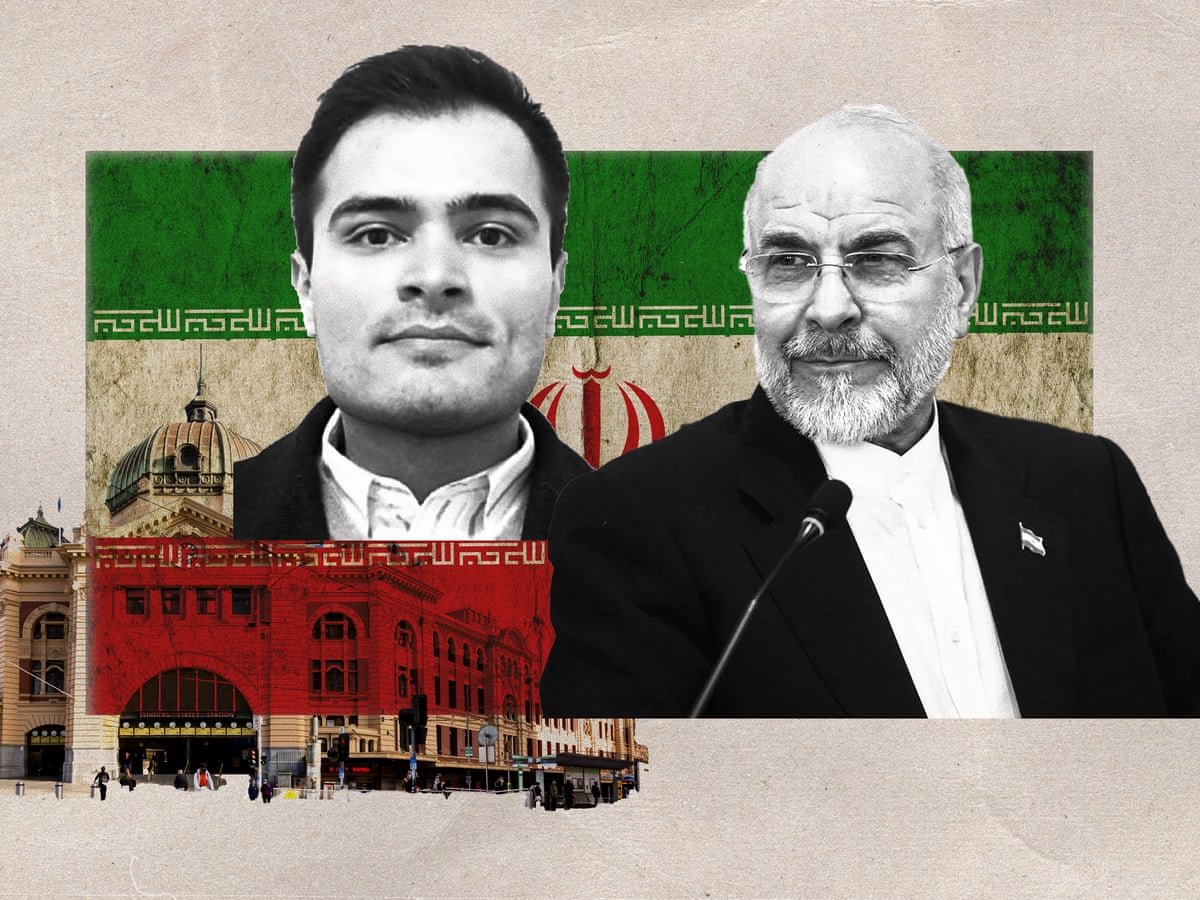
Australia’s immigration and foreign-influence systems are under renewed scrutiny after revelations that the son of Iranian parliament speaker Mohammad Bagher Ghalibaf spent years building financial, academic and residency links in Melbourne while his father remained one of the most powerful figures inside the Islamic Republic.
The case centers on Eshagh Ghalibaf, the thirty-eight-year-old son of the Iranian parliamentary speaker and former senior commander in Iran’s Islamic Revolutionary Guard Corps.
Court records filed in Canada show Eshagh lived in Melbourne for several years, studied engineering at the University of Melbourne, worked at a university-affiliated research center, maintained Australian bank accounts and received rental income linked to at least one Melbourne property.
The revelations matter because Mohammad Bagher Ghalibaf is not a peripheral Iranian official.
He has occupied senior positions across Iran’s military, police and political structures for decades.
He commanded the Revolutionary Guards’ air force, later led Iran’s national police, served as Tehran mayor and eventually became speaker of parliament.
He has also publicly defended the suppression of student protests in Iran.
That profile places the family inside the upper tier of Iran’s governing establishment at a time when Western governments have sharply increased scrutiny of individuals connected to the Revolutionary Guards and Iranian state networks.
The Australian links emerged through documents submitted during Eshagh Ghalibaf’s unsuccessful attempt to obtain permanent residency in Canada.
Those filings outlined his movements, finances and immigration history in unusual detail.
The documents show he first arrived in Melbourne in two thousand fourteen.
He studied English-language courses before enrolling in a master’s degree in engineering at the University of Melbourne between two thousand fifteen and two thousand eighteen.
During that period he lived in inner-city Melbourne addresses and worked part-time at a research institution associated with the university.
Financial records included in the filings showed recurring rental payments deposited into his Australian bank accounts.
The documents described the money as rent collected from tenants.
The ownership structure of the property or properties involved has not been publicly established.
There is no confirmed evidence that the properties violated Australian law or sanctions rules.
The more politically sensitive issue is how a close family member of a senior Iranian power broker obtained long-term residency access in Australia while Canadian authorities repeatedly denied him residency.
Canadian immigration authorities rejected Eshagh Ghalibaf’s applications multiple times over a period of years.
Court documents indicate Canadian officials cited concerns connected to the Iranian regime, including allegations involving human rights abuses, terrorism links and senior state affiliations.
The legal challenge ultimately failed.
By contrast, Australian records cited in the filings indicate he retained Australian visa status until late two thousand twenty-two, years after completing his studies.
The difference between the Australian and Canadian outcomes has triggered broader questions about how democratic states assess family members of politically exposed figures from authoritarian governments.
The issue has become particularly sensitive because Australia’s relationship with Iran deteriorated sharply over the past two years.
Australian intelligence officials publicly concluded in two thousand twenty-five that Iran’s Islamic Revolutionary Guard Corps directed at least two antisemitic attacks on Australian soil through criminal intermediaries.
Those incidents included the firebombing of a Melbourne synagogue and an attack in Sydney.
Australia subsequently expelled Iran’s ambassador and significantly downgraded diplomatic relations.
Intelligence officials described the operations as foreign-directed acts designed to intimidate Australia’s Jewish community and damage domestic social cohesion.
Against that backdrop, the discovery of longstanding Australian ties involving the son of Iran’s parliamentary speaker has intensified debate over whether Australia underestimated the national-security risks associated with elite Iranian networks operating inside the country.
Critics argue the case demonstrates weaknesses in Australia’s screening, sanctions enforcement and foreign-influence systems.
Several security analysts and former detainees of the Iranian regime have warned that relatives of senior Iranian officials can function as extensions of state influence even when they are not formally accused of criminal conduct.
Others caution against conflating family connection with illegal activity.
What is confirmed is that Eshagh Ghalibaf studied and worked in Australia legally under valid visa arrangements.
No criminal charges have been filed against him in Australia, and no public evidence has established that he personally engaged in espionage, sanctions violations or covert political activity.
The controversy nevertheless reflects a larger global pattern.
Western countries increasingly face scrutiny over how authoritarian elites move capital, family members and personal assets into foreign jurisdictions while maintaining power structures at home.
Iranian officials and their relatives have historically sought access to Western education systems, real estate markets and residency pathways even as Iran’s leadership publicly attacks Western governments.
That contradiction has become politically explosive in multiple countries, particularly after the expansion of sanctions linked to the Revolutionary Guards and Iran’s regional operations.
The Melbourne links also intersect with broader pressure inside Australia over foreign property ownership and politically exposed investors.
Housing affordability has become one of the country’s most contentious political issues, increasing public sensitivity toward overseas-linked property holdings.
Another layer of concern involves the academic sector.
Universities have become central battlegrounds in debates over foreign influence because international researchers and students often gain access to advanced technical environments, government-linked projects and sensitive intellectual networks.
There is no evidence that the University of Melbourne research work connected to Eshagh Ghalibaf breached regulations, but the case reinforces pressure on universities to tighten due diligence around politically exposed foreign affiliates.
The political timing is especially difficult for the Australian government because it coincides with heightened domestic concern over antisemitic violence, Iranian regional activity and foreign interference operations.
Security agencies are now under pressure to demonstrate that Australia’s visa and residency systems are capable of identifying risks tied to authoritarian state networks before those links become politically damaging.
For Iran, the story highlights another recurring contradiction inside the Islamic Republic’s elite structure.
Senior figures who publicly condemn Western influence often maintain deep personal, educational and financial connections to Western countries through relatives and private assets.
For Australia, the practical consequence is a likely tightening of scrutiny over politically connected foreign nationals, especially those linked to sanctioned regimes or security institutions.
The case has already intensified calls for stronger vetting rules, enhanced transparency around politically exposed property ownership and closer coordination between immigration authorities, universities and national-security agencies.
The case centers on Eshagh Ghalibaf, the thirty-eight-year-old son of the Iranian parliamentary speaker and former senior commander in Iran’s Islamic Revolutionary Guard Corps.
Court records filed in Canada show Eshagh lived in Melbourne for several years, studied engineering at the University of Melbourne, worked at a university-affiliated research center, maintained Australian bank accounts and received rental income linked to at least one Melbourne property.
The revelations matter because Mohammad Bagher Ghalibaf is not a peripheral Iranian official.
He has occupied senior positions across Iran’s military, police and political structures for decades.
He commanded the Revolutionary Guards’ air force, later led Iran’s national police, served as Tehran mayor and eventually became speaker of parliament.
He has also publicly defended the suppression of student protests in Iran.
That profile places the family inside the upper tier of Iran’s governing establishment at a time when Western governments have sharply increased scrutiny of individuals connected to the Revolutionary Guards and Iranian state networks.
The Australian links emerged through documents submitted during Eshagh Ghalibaf’s unsuccessful attempt to obtain permanent residency in Canada.
Those filings outlined his movements, finances and immigration history in unusual detail.
The documents show he first arrived in Melbourne in two thousand fourteen.
He studied English-language courses before enrolling in a master’s degree in engineering at the University of Melbourne between two thousand fifteen and two thousand eighteen.
During that period he lived in inner-city Melbourne addresses and worked part-time at a research institution associated with the university.
Financial records included in the filings showed recurring rental payments deposited into his Australian bank accounts.
The documents described the money as rent collected from tenants.
The ownership structure of the property or properties involved has not been publicly established.
There is no confirmed evidence that the properties violated Australian law or sanctions rules.
The more politically sensitive issue is how a close family member of a senior Iranian power broker obtained long-term residency access in Australia while Canadian authorities repeatedly denied him residency.
Canadian immigration authorities rejected Eshagh Ghalibaf’s applications multiple times over a period of years.
Court documents indicate Canadian officials cited concerns connected to the Iranian regime, including allegations involving human rights abuses, terrorism links and senior state affiliations.
The legal challenge ultimately failed.
By contrast, Australian records cited in the filings indicate he retained Australian visa status until late two thousand twenty-two, years after completing his studies.
The difference between the Australian and Canadian outcomes has triggered broader questions about how democratic states assess family members of politically exposed figures from authoritarian governments.
The issue has become particularly sensitive because Australia’s relationship with Iran deteriorated sharply over the past two years.
Australian intelligence officials publicly concluded in two thousand twenty-five that Iran’s Islamic Revolutionary Guard Corps directed at least two antisemitic attacks on Australian soil through criminal intermediaries.
Those incidents included the firebombing of a Melbourne synagogue and an attack in Sydney.
Australia subsequently expelled Iran’s ambassador and significantly downgraded diplomatic relations.
Intelligence officials described the operations as foreign-directed acts designed to intimidate Australia’s Jewish community and damage domestic social cohesion.
Against that backdrop, the discovery of longstanding Australian ties involving the son of Iran’s parliamentary speaker has intensified debate over whether Australia underestimated the national-security risks associated with elite Iranian networks operating inside the country.
Critics argue the case demonstrates weaknesses in Australia’s screening, sanctions enforcement and foreign-influence systems.
Several security analysts and former detainees of the Iranian regime have warned that relatives of senior Iranian officials can function as extensions of state influence even when they are not formally accused of criminal conduct.
Others caution against conflating family connection with illegal activity.
What is confirmed is that Eshagh Ghalibaf studied and worked in Australia legally under valid visa arrangements.
No criminal charges have been filed against him in Australia, and no public evidence has established that he personally engaged in espionage, sanctions violations or covert political activity.
The controversy nevertheless reflects a larger global pattern.
Western countries increasingly face scrutiny over how authoritarian elites move capital, family members and personal assets into foreign jurisdictions while maintaining power structures at home.
Iranian officials and their relatives have historically sought access to Western education systems, real estate markets and residency pathways even as Iran’s leadership publicly attacks Western governments.
That contradiction has become politically explosive in multiple countries, particularly after the expansion of sanctions linked to the Revolutionary Guards and Iran’s regional operations.
The Melbourne links also intersect with broader pressure inside Australia over foreign property ownership and politically exposed investors.
Housing affordability has become one of the country’s most contentious political issues, increasing public sensitivity toward overseas-linked property holdings.
Another layer of concern involves the academic sector.
Universities have become central battlegrounds in debates over foreign influence because international researchers and students often gain access to advanced technical environments, government-linked projects and sensitive intellectual networks.
There is no evidence that the University of Melbourne research work connected to Eshagh Ghalibaf breached regulations, but the case reinforces pressure on universities to tighten due diligence around politically exposed foreign affiliates.
The political timing is especially difficult for the Australian government because it coincides with heightened domestic concern over antisemitic violence, Iranian regional activity and foreign interference operations.
Security agencies are now under pressure to demonstrate that Australia’s visa and residency systems are capable of identifying risks tied to authoritarian state networks before those links become politically damaging.
For Iran, the story highlights another recurring contradiction inside the Islamic Republic’s elite structure.
Senior figures who publicly condemn Western influence often maintain deep personal, educational and financial connections to Western countries through relatives and private assets.
For Australia, the practical consequence is a likely tightening of scrutiny over politically connected foreign nationals, especially those linked to sanctioned regimes or security institutions.
The case has already intensified calls for stronger vetting rules, enhanced transparency around politically exposed property ownership and closer coordination between immigration authorities, universities and national-security agencies.