Inside the UAE–Saudi Arabia Rift: From Gulf Alliance to Strategic Rivalry
Once the closest partners in the Gulf, Saudi Arabia and the UAE are now locked in a widening competition over power, oil strategy, and regional influence across the Middle East.
The escalating rivalry between Saudi Arabia and the United Arab Emirates is rooted in a structural breakdown of what was once one of the closest strategic partnerships in the Middle East.
The core driver is not a single event but a SYSTEM-DRIVEN shift: two Gulf monarchies with overlapping ambitions in energy markets, regional security, and economic transformation are increasingly pursuing incompatible national strategies.
What is confirmed in recent reporting is that tensions have moved beyond quiet competition into open disagreement over regional conflicts and economic direction.
The most visible flashpoint has been Yemen, where both countries originally fought on the same side against Houthi forces but later backed different local actors with conflicting goals.
This divergence has reshaped alliances on the ground and contributed to repeated diplomatic friction.
The UAE has increasingly supported decentralized power structures and local partners in Yemen, while Saudi Arabia has prioritized preserving a unified state structure aligned with its border security interests.
These differences have led to military and political clashes by proxy, including competing support for rival factions in southern Yemen.
The result has been a fragmentation of the coalition that once defined Gulf intervention policy.
Beyond Yemen, the rivalry reflects deeper structural competition over economic leadership in the Gulf.
Saudi Arabia’s Vision 2030 strategy aims to centralize regional investment and reduce oil dependence through large-scale state-led development.
The UAE, by contrast, has pursued a more decentralized, globally integrated model focused on finance, logistics, aviation, and flexible energy policy.
These competing models increasingly overlap in areas such as tourism, aviation hubs, and foreign investment attraction, creating direct economic friction.
Another layer of tension is ideological and political influence.
Saudi Arabia has traditionally seen itself as the dominant Gulf power, while the UAE has positioned itself as a more agile and globally networked state, often acting independently in regional crises.
This has produced disagreements over relations with political Islam movements, responses to regional conflicts in Sudan and Libya, and approaches to normalization with Israel under the Abraham Accords framework.
Recent developments have intensified perceptions of a widening split.
Both states have taken actions signaling reduced trust in Gulf multilateral coordination mechanisms, while increasing emphasis on bilateral partnerships with external powers such as the United States, India, and China.
Analysts describe this as a gradual erosion of Gulf Cooperation Council cohesion, replaced by competing spheres of influence led by Riyadh and Abu Dhabi.
At the same time, personal leadership dynamics are widely seen as reinforcing the institutional rivalry.
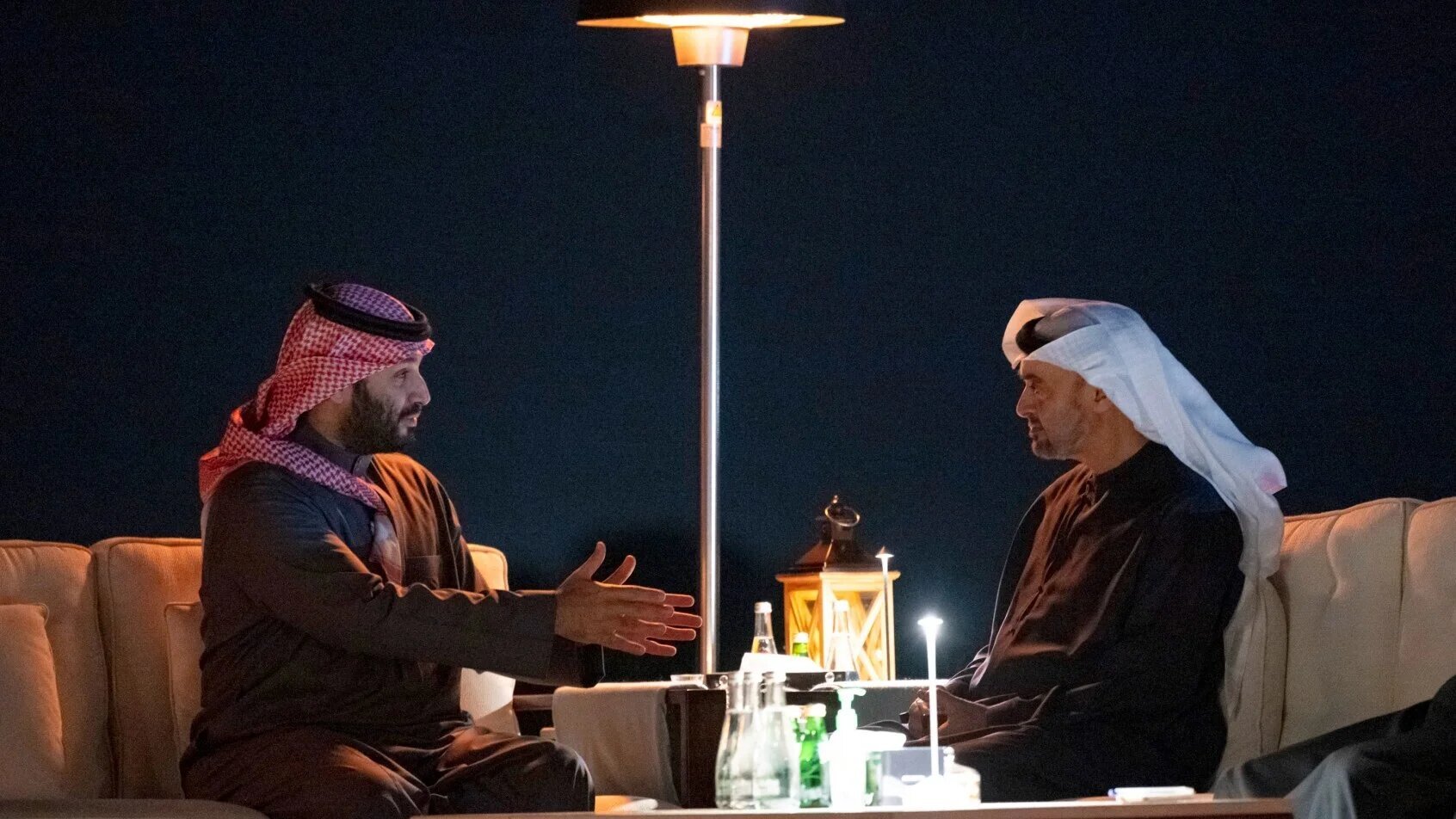
Saudi Crown Prince Mohammed bin Salman and UAE President Mohammed bin Zayed were once viewed as aligned reformist leaders, but now represent competing visions of Gulf leadership.
Their divergence has accelerated policy competition rather than coordination.
The consequences extend beyond bilateral relations.
A sustained Saudi–UAE split affects oil policy coordination, regional conflict management, and investment flows across the Middle East.
It also complicates Western diplomatic strategies, which have historically relied on unified Gulf positions on security and energy markets.
What is confirmed is that the relationship has shifted from alliance to managed competition, with both states continuing cooperation in some areas while actively competing in others.
This dual-track dynamic now defines Gulf geopolitics and is reshaping how power is distributed across one of the world’s most strategically important regions.
The core driver is not a single event but a SYSTEM-DRIVEN shift: two Gulf monarchies with overlapping ambitions in energy markets, regional security, and economic transformation are increasingly pursuing incompatible national strategies.
What is confirmed in recent reporting is that tensions have moved beyond quiet competition into open disagreement over regional conflicts and economic direction.
The most visible flashpoint has been Yemen, where both countries originally fought on the same side against Houthi forces but later backed different local actors with conflicting goals.
This divergence has reshaped alliances on the ground and contributed to repeated diplomatic friction.
The UAE has increasingly supported decentralized power structures and local partners in Yemen, while Saudi Arabia has prioritized preserving a unified state structure aligned with its border security interests.
These differences have led to military and political clashes by proxy, including competing support for rival factions in southern Yemen.
The result has been a fragmentation of the coalition that once defined Gulf intervention policy.
Beyond Yemen, the rivalry reflects deeper structural competition over economic leadership in the Gulf.
Saudi Arabia’s Vision 2030 strategy aims to centralize regional investment and reduce oil dependence through large-scale state-led development.
The UAE, by contrast, has pursued a more decentralized, globally integrated model focused on finance, logistics, aviation, and flexible energy policy.
These competing models increasingly overlap in areas such as tourism, aviation hubs, and foreign investment attraction, creating direct economic friction.
Another layer of tension is ideological and political influence.
Saudi Arabia has traditionally seen itself as the dominant Gulf power, while the UAE has positioned itself as a more agile and globally networked state, often acting independently in regional crises.
This has produced disagreements over relations with political Islam movements, responses to regional conflicts in Sudan and Libya, and approaches to normalization with Israel under the Abraham Accords framework.
Recent developments have intensified perceptions of a widening split.
Both states have taken actions signaling reduced trust in Gulf multilateral coordination mechanisms, while increasing emphasis on bilateral partnerships with external powers such as the United States, India, and China.
Analysts describe this as a gradual erosion of Gulf Cooperation Council cohesion, replaced by competing spheres of influence led by Riyadh and Abu Dhabi.
At the same time, personal leadership dynamics are widely seen as reinforcing the institutional rivalry.
Saudi Crown Prince Mohammed bin Salman and UAE President Mohammed bin Zayed were once viewed as aligned reformist leaders, but now represent competing visions of Gulf leadership.
Their divergence has accelerated policy competition rather than coordination.
The consequences extend beyond bilateral relations.
A sustained Saudi–UAE split affects oil policy coordination, regional conflict management, and investment flows across the Middle East.
It also complicates Western diplomatic strategies, which have historically relied on unified Gulf positions on security and energy markets.
What is confirmed is that the relationship has shifted from alliance to managed competition, with both states continuing cooperation in some areas while actively competing in others.
This dual-track dynamic now defines Gulf geopolitics and is reshaping how power is distributed across one of the world’s most strategically important regions.