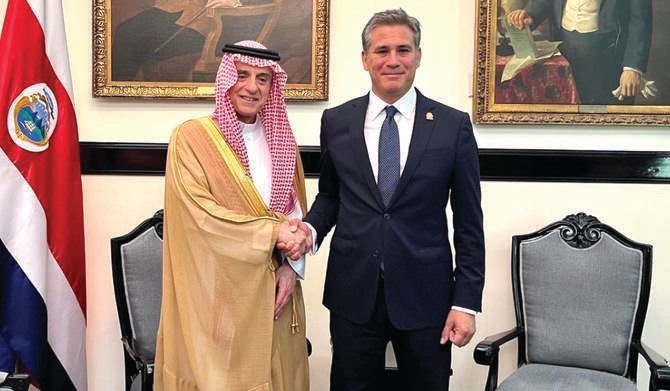
Saudi Climate Envoy Meets Costa Rica Foreign Minister as Climate Diplomacy Deepens
Talks highlight cooperation between oil-rich Gulf states and climate-vulnerable nations ahead of global negotiations on emissions, finance, and adaptation
A meeting between Saudi Arabia’s climate envoy and Costa Rica’s foreign minister underscores ongoing diplomatic efforts to bridge divides between major energy-producing states and countries on the front lines of climate vulnerability.
The talks are part of a broader pattern of intensified international engagement as governments prepare for upcoming global climate negotiations focused on emissions reductions, climate finance, and adaptation strategies.
What is confirmed is that Saudi Arabia, one of the world’s largest oil exporters, has increasingly positioned itself as an active participant in global climate discussions while maintaining its central economic reliance on hydrocarbons.
Costa Rica, by contrast, is widely recognized for its long-standing environmental policies, renewable energy mix, and advocacy for stronger global emissions commitments.
The key issue underlying such meetings is the growing effort to reconcile fundamentally different national interests within climate diplomacy.
Oil-producing states emphasize energy security, gradual transition, and technological solutions such as carbon capture, while climate-vulnerable and low-emission countries often push for faster fossil fuel reduction, stronger financing commitments, and expanded adaptation funding.
These discussions also reflect ongoing negotiations over climate finance mechanisms, which remain a central point of tension in international climate policy.
Developing and climate-vulnerable nations frequently argue that industrialized and high-emission economies should contribute more financial support to address climate impacts, including extreme weather, sea level rise, and ecosystem degradation.
Saudi Arabia’s engagement in climate diplomacy has evolved alongside its broader economic diversification strategy, which seeks to reduce long-term dependence on oil revenues.
Initiatives under its national development framework include investments in renewable energy, hydrogen projects, and large-scale carbon management technologies, while still maintaining significant fossil fuel production capacity.
Costa Rica’s foreign policy emphasis, meanwhile, has consistently prioritized environmental protection and multilateral cooperation.
The country has often served as a diplomatic voice for rainforest conservation, biodiversity protection, and global emissions accountability, particularly within United Nations climate frameworks.
Meetings between representatives of these two countries illustrate how climate diplomacy increasingly operates across traditional economic and geographic divides.
Rather than aligning strictly along developed and developing country categories, negotiations now often involve hybrid coalitions formed around specific issues such as energy transition technologies, financing structures, and regional adaptation priorities.
As global climate negotiations continue, such bilateral engagements contribute to shaping broader consensus-building efforts, particularly on how to balance energy needs with emissions reduction commitments in a fragmented international policy environment.
The talks are part of a broader pattern of intensified international engagement as governments prepare for upcoming global climate negotiations focused on emissions reductions, climate finance, and adaptation strategies.
What is confirmed is that Saudi Arabia, one of the world’s largest oil exporters, has increasingly positioned itself as an active participant in global climate discussions while maintaining its central economic reliance on hydrocarbons.
Costa Rica, by contrast, is widely recognized for its long-standing environmental policies, renewable energy mix, and advocacy for stronger global emissions commitments.
The key issue underlying such meetings is the growing effort to reconcile fundamentally different national interests within climate diplomacy.
Oil-producing states emphasize energy security, gradual transition, and technological solutions such as carbon capture, while climate-vulnerable and low-emission countries often push for faster fossil fuel reduction, stronger financing commitments, and expanded adaptation funding.
These discussions also reflect ongoing negotiations over climate finance mechanisms, which remain a central point of tension in international climate policy.
Developing and climate-vulnerable nations frequently argue that industrialized and high-emission economies should contribute more financial support to address climate impacts, including extreme weather, sea level rise, and ecosystem degradation.
Saudi Arabia’s engagement in climate diplomacy has evolved alongside its broader economic diversification strategy, which seeks to reduce long-term dependence on oil revenues.
Initiatives under its national development framework include investments in renewable energy, hydrogen projects, and large-scale carbon management technologies, while still maintaining significant fossil fuel production capacity.
Costa Rica’s foreign policy emphasis, meanwhile, has consistently prioritized environmental protection and multilateral cooperation.
The country has often served as a diplomatic voice for rainforest conservation, biodiversity protection, and global emissions accountability, particularly within United Nations climate frameworks.
Meetings between representatives of these two countries illustrate how climate diplomacy increasingly operates across traditional economic and geographic divides.
Rather than aligning strictly along developed and developing country categories, negotiations now often involve hybrid coalitions formed around specific issues such as energy transition technologies, financing structures, and regional adaptation priorities.
As global climate negotiations continue, such bilateral engagements contribute to shaping broader consensus-building efforts, particularly on how to balance energy needs with emissions reduction commitments in a fragmented international policy environment.