Rising UAE–Saudi Tensions Signal a Quiet Power Shift in the Gulf
Competition over oil policy, investment strategy, and regional leadership is exposing friction between two of the Middle East’s closest allies
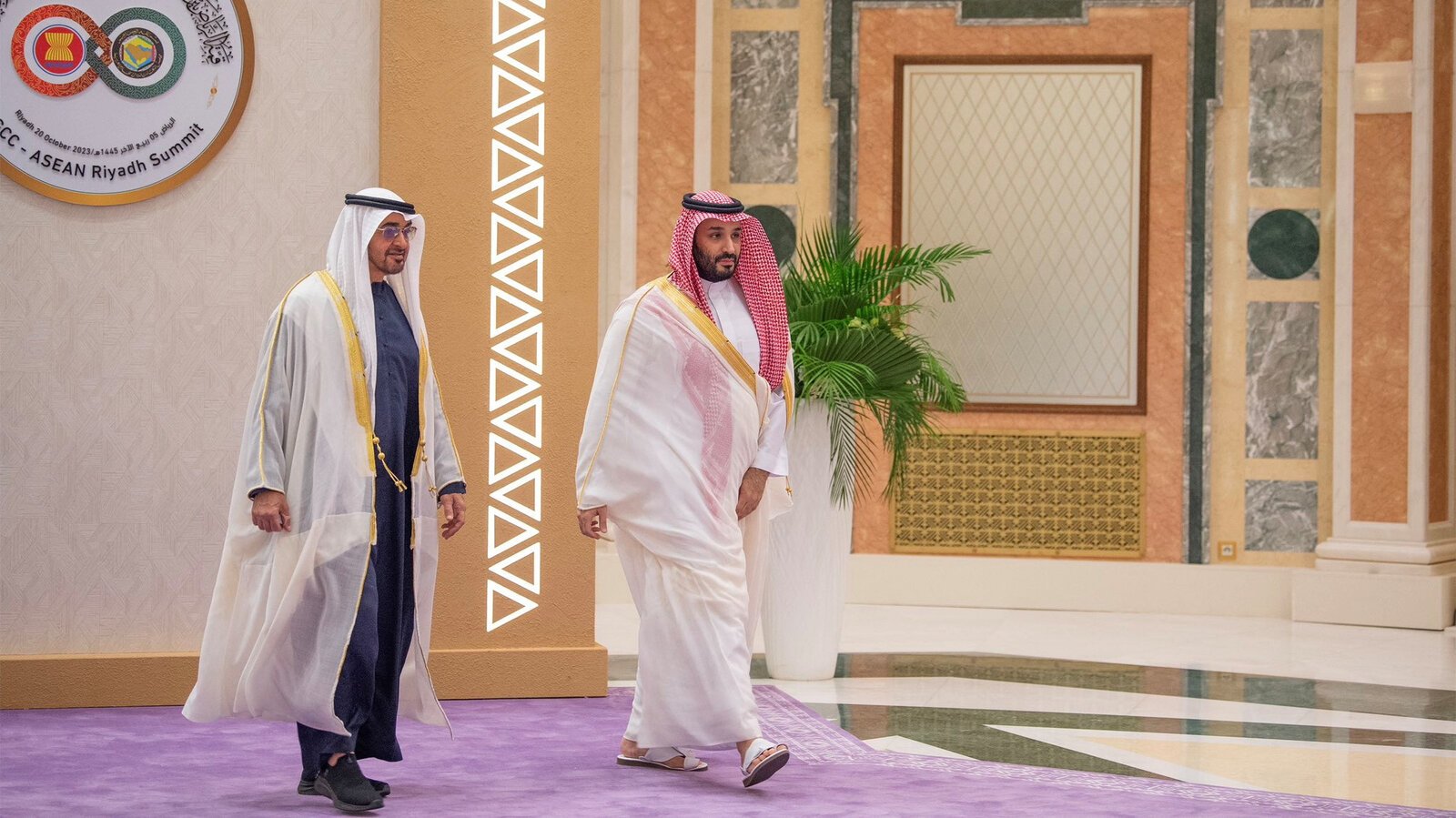
A growing strategic divergence between the United Arab Emirates and Saudi Arabia is reshaping the internal balance of the Gulf Cooperation Council, as two of the region’s most powerful states pursue increasingly competing economic and geopolitical agendas.
The core driver of the rift is SYSTEM-DRIVEN: structural competition over economic diversification models, energy policy, and regional leadership within a shared security architecture.
While the UAE and Saudi Arabia remain formal allies and cooperate on security and diplomatic issues, their long-term strategies are increasingly misaligned in ways that affect oil production policy, foreign investment competition, and industrial development.
What is confirmed is that both countries are accelerating post-oil economic transformation plans, but they are doing so in ways that directly compete.
Saudi Arabia’s Vision 2030 program has centered on large-scale state-led megaprojects, including NEOM and major sovereign wealth fund investments aimed at positioning the kingdom as a global logistics, tourism, and manufacturing hub.
The UAE, particularly Dubai and Abu Dhabi, has pursued a more flexible, business-driven model focused on regulatory openness, financial services, and foreign capital attraction.
One of the most visible areas of tension has been oil policy coordination.
Both states are leading members of OPEC+, the broader alliance managing global oil supply.
However, differences have emerged over production targets and market strategy, particularly as Saudi Arabia has pushed for stricter output discipline to stabilize prices while maximizing long-term revenue, while the UAE has periodically sought higher production allowances to expand export capacity and capture market share.
The key issue is not open confrontation but strategic hedging.
Each state is increasingly designing policies to reduce dependence on shared Gulf frameworks and instead maximize national advantage.
This includes competition for foreign direct investment, aviation and logistics dominance, and positioning as the primary regional hub for multinational companies entering the Middle East.
In parallel, there is subtle geopolitical divergence.
Both countries cooperate closely on regional security concerns, but they have at times differed in their approaches to normalization with Israel, engagement with Iran, and responses to conflicts in Yemen and Sudan.
These differences have not broken the alliance, but they have reduced policy synchronisation that previously defined Gulf coordination.
Economically, the rivalry is most visible in efforts to attract global corporate headquarters.
Saudi Arabia has introduced policies requiring multinational firms to establish regional bases in Riyadh to qualify for government contracts, while the UAE continues to rely on long-standing free zone infrastructure and highly liberal business licensing frameworks to maintain its status as the region’s primary commercial hub.
Despite the competition, there is no indication of a formal diplomatic break or security split.
Both governments continue to rely on shared defense relationships and coordinated oil strategy mechanisms.
However, the underlying trajectory is clear: the Gulf’s two leading powers are no longer moving in parallel, but in adjacent and increasingly competitive directions.
The broader implication is that the Gulf Cooperation Council is evolving from a tightly coordinated bloc into a looser system of aligned but competing national strategies, with the UAE and Saudi Arabia setting the terms of that transformation through economic competition rather than direct political confrontation.
The core driver of the rift is SYSTEM-DRIVEN: structural competition over economic diversification models, energy policy, and regional leadership within a shared security architecture.
While the UAE and Saudi Arabia remain formal allies and cooperate on security and diplomatic issues, their long-term strategies are increasingly misaligned in ways that affect oil production policy, foreign investment competition, and industrial development.
What is confirmed is that both countries are accelerating post-oil economic transformation plans, but they are doing so in ways that directly compete.
Saudi Arabia’s Vision 2030 program has centered on large-scale state-led megaprojects, including NEOM and major sovereign wealth fund investments aimed at positioning the kingdom as a global logistics, tourism, and manufacturing hub.
The UAE, particularly Dubai and Abu Dhabi, has pursued a more flexible, business-driven model focused on regulatory openness, financial services, and foreign capital attraction.
One of the most visible areas of tension has been oil policy coordination.
Both states are leading members of OPEC+, the broader alliance managing global oil supply.
However, differences have emerged over production targets and market strategy, particularly as Saudi Arabia has pushed for stricter output discipline to stabilize prices while maximizing long-term revenue, while the UAE has periodically sought higher production allowances to expand export capacity and capture market share.
The key issue is not open confrontation but strategic hedging.
Each state is increasingly designing policies to reduce dependence on shared Gulf frameworks and instead maximize national advantage.
This includes competition for foreign direct investment, aviation and logistics dominance, and positioning as the primary regional hub for multinational companies entering the Middle East.
In parallel, there is subtle geopolitical divergence.
Both countries cooperate closely on regional security concerns, but they have at times differed in their approaches to normalization with Israel, engagement with Iran, and responses to conflicts in Yemen and Sudan.
These differences have not broken the alliance, but they have reduced policy synchronisation that previously defined Gulf coordination.
Economically, the rivalry is most visible in efforts to attract global corporate headquarters.
Saudi Arabia has introduced policies requiring multinational firms to establish regional bases in Riyadh to qualify for government contracts, while the UAE continues to rely on long-standing free zone infrastructure and highly liberal business licensing frameworks to maintain its status as the region’s primary commercial hub.
Despite the competition, there is no indication of a formal diplomatic break or security split.
Both governments continue to rely on shared defense relationships and coordinated oil strategy mechanisms.
However, the underlying trajectory is clear: the Gulf’s two leading powers are no longer moving in parallel, but in adjacent and increasingly competitive directions.
The broader implication is that the Gulf Cooperation Council is evolving from a tightly coordinated bloc into a looser system of aligned but competing national strategies, with the UAE and Saudi Arabia setting the terms of that transformation through economic competition rather than direct political confrontation.