
Gulf Amidst Turbulence: Insights from London Talks on Regional Tensions
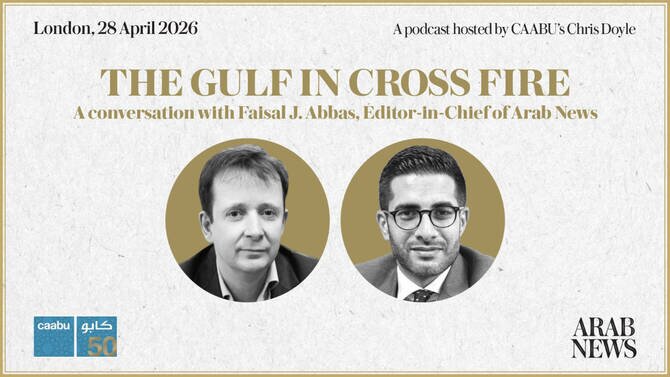
A high-level discussion in London hosted by CAABU and Arab News examines the geopolitical complexities of the Gulf region.
In a significant, yet often underappreciated display of diplomatic engagement, Saudi Arabia stands as the sole international partner hosting an air defense system typically reserved for British soil.
This arrangement underscores the depth of trust between the two nations, offering a glimpse into the multifaceted relationship that extends far beyond physical proximity.The strategic importance of this bond was a central theme at a recent London event organized by the Council for Arab-British Understanding (CAABU) and Arab News.
The meeting brought together key stakeholders, including UK Parliament members, senior diplomats, and Gulf royals, to dissect the complex tapestry of regional tensions.
Led by CAABU Director Chris Doyle and Arab News Editor-in-Chief Faisal J.
Abbas, discussions centered on the Gulf's precarious position amid escalating hostilities.Abbas highlighted Britain’s largely unheralded contributions to stabilizing Syria post-regime change, a testament to the UK’s behind-the-scenes influence in the region.
He also drew attention to Prince William's official visit to Saudi Arabia this year, viewing it as a tangible demonstration of the UK government's commitment to its Gulf alliances.The intra-Gulf dynamics were not overlooked, with Abbas painting a picture of a collective resilience that has emerged from past disagreements.
The reconciliation between Saudi Arabia and Qatar, he noted, exemplifies how differences can be bridged through pragmatic means.
Even the UAE’s departure from OPEC, while significant, is viewed as a sovereign decision akin to Brexit—destined for polarized opinions but ultimately judged by history.The London event served as a platform for candid discussions on the Gulf's situation, emphasizing both its economic transformation and regional instability.
Abbas praised Gulf countries for exhibiting courage, wisdom, and resilience in the face of conflict, stressing the importance of avoiding an intra-regional war and addressing the potential consequences of a fragmented Iran post-conflict.The conversation also touched upon the necessity of a unified diplomatic strategy, particularly concerning a post-war Iran.
While acknowledging the military might of Saudi Arabia and its GCC neighbors to inflict significant damage on Iran, Abbas posed critical questions regarding the region's subsequent steps—especially in rebuilding and addressing the aftermath of such a conflict.The event, characterized by attendees as both insightful and sobering, underscored CAABU’s role in facilitating informed dialogue between the UK and the Arab world.
It highlighted the interconnected nature of regional stability, economic momentum, and international diplomacy—a convergence of elements that is more crucial now than ever before.As the discussion concluded, participants acknowledged the inherent difficulty in ending conflicts once initiated: something that 'starting a war' often neglects to consider.
These high-level dialogues serve as vital bridges between understanding and action in an era marked by geopolitical complexities.
This arrangement underscores the depth of trust between the two nations, offering a glimpse into the multifaceted relationship that extends far beyond physical proximity.The strategic importance of this bond was a central theme at a recent London event organized by the Council for Arab-British Understanding (CAABU) and Arab News.
The meeting brought together key stakeholders, including UK Parliament members, senior diplomats, and Gulf royals, to dissect the complex tapestry of regional tensions.
Led by CAABU Director Chris Doyle and Arab News Editor-in-Chief Faisal J.
Abbas, discussions centered on the Gulf's precarious position amid escalating hostilities.Abbas highlighted Britain’s largely unheralded contributions to stabilizing Syria post-regime change, a testament to the UK’s behind-the-scenes influence in the region.
He also drew attention to Prince William's official visit to Saudi Arabia this year, viewing it as a tangible demonstration of the UK government's commitment to its Gulf alliances.The intra-Gulf dynamics were not overlooked, with Abbas painting a picture of a collective resilience that has emerged from past disagreements.
The reconciliation between Saudi Arabia and Qatar, he noted, exemplifies how differences can be bridged through pragmatic means.
Even the UAE’s departure from OPEC, while significant, is viewed as a sovereign decision akin to Brexit—destined for polarized opinions but ultimately judged by history.The London event served as a platform for candid discussions on the Gulf's situation, emphasizing both its economic transformation and regional instability.
Abbas praised Gulf countries for exhibiting courage, wisdom, and resilience in the face of conflict, stressing the importance of avoiding an intra-regional war and addressing the potential consequences of a fragmented Iran post-conflict.The conversation also touched upon the necessity of a unified diplomatic strategy, particularly concerning a post-war Iran.
While acknowledging the military might of Saudi Arabia and its GCC neighbors to inflict significant damage on Iran, Abbas posed critical questions regarding the region's subsequent steps—especially in rebuilding and addressing the aftermath of such a conflict.The event, characterized by attendees as both insightful and sobering, underscored CAABU’s role in facilitating informed dialogue between the UK and the Arab world.
It highlighted the interconnected nature of regional stability, economic momentum, and international diplomacy—a convergence of elements that is more crucial now than ever before.As the discussion concluded, participants acknowledged the inherent difficulty in ending conflicts once initiated: something that 'starting a war' often neglects to consider.
These high-level dialogues serve as vital bridges between understanding and action in an era marked by geopolitical complexities.