Food Security in the Middle East: A Divergent Trend Amid Global Improvement
While global hunger rates decline, the Middle East experiences a worsening food security situation due to conflict, economic pressures, and reliance on imports.
Global hunger edged down last year, but not in the Middle East.
The divergence — driven by conflict, inflation, currency stress, and a heavy reliance on imports — is reshaping food security across Western Asia and North Africa, even as other regions recover.
According to "The State of Food Security and Nutrition in the World" report published recently by five UN agencies, 8.2 percent of the global population experienced hunger in 2024, down from 8.5 percent in 2023.
However, in Africa, more than 20 percent of people — 307 million — faced hunger in 2024.
In Western Asia, which includes several Middle Eastern countries, 12.7 percent of the population, or more than 39 million people, were affected.
The contrast with other parts of Asia is striking.
Improvements in South-Eastern and Southern Asia were largely driven by economic recovery, better affordability of healthy diets, and stronger social protection systems.
David Laborde, director of the Agrifood Economics Division at the UN’s Food and Agriculture Organization, noted that while "high income countries" like the UAE or Saudi Arabia are exempt from any major food insecurities, the rest of the region and particularly conflict-affected countries (like Lebanon and Syria) contribute to the rising hunger trend due to displacement, disrupted supply chains, and economic vulnerability.
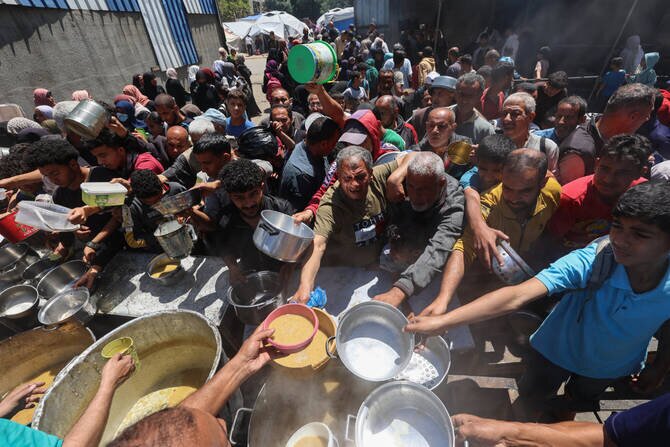
Nowhere is the food crisis more acute than Gaza, where war has devastated basic systems.
Only 1.5 percent of cropland is currently available for cultivation, down from 4.6 percent in April 2025.
Two of the three official indicators used to determine famine conditions are present in parts of the strip.
The data landed amid warnings from UN agencies of an impending famine.
The Integrated Food Security Phase Classification reported that nearly a quarter of Gaza’s population is enduring famine-like conditions, while the remainder face emergency levels of hunger.
FAO, the World Food Programme, and UNICEF have cautioned that time is rapidly running out to mount a full-scale response.
The report identifies several drivers behind the worsening situation, including conflict, economic instability, limited access to affordable food, and exposure to global shocks such as the COVID-19 pandemic and the war in Ukraine.
Some pressures have eased, but inflation’s aftershocks persist, especially where budgets and safety nets are already thin.
The Middle East's reliance on imports exacerbates its vulnerability to price spikes and currency fluctuations.
When local currencies depreciate, the cost of these imports rises, directly affecting consumer prices and worsening food insecurity.
Egypt offers a case study.
Heavy reliance on wheat imports from Russia and Ukraine, combined with a severe foreign currency shortage, has driven food prices far beyond wage growth since mid-2022.
The social toll is mounting as rising food prices disproportionately affect the poorest households.
Sustained double-digit food inflation correlates with child malnutrition and worsens long-term health outcomes.
The consequences can also be gendered, particularly affecting women who manage household food budgets.
With the deadline for achieving the UN’s 2030 Agenda fast approaching, Laborde urges governments to stabilize food prices and protect vulnerable populations through integrated fiscal and trade policy reforms.
The divergence — driven by conflict, inflation, currency stress, and a heavy reliance on imports — is reshaping food security across Western Asia and North Africa, even as other regions recover.
According to "The State of Food Security and Nutrition in the World" report published recently by five UN agencies, 8.2 percent of the global population experienced hunger in 2024, down from 8.5 percent in 2023.
However, in Africa, more than 20 percent of people — 307 million — faced hunger in 2024.
In Western Asia, which includes several Middle Eastern countries, 12.7 percent of the population, or more than 39 million people, were affected.
The contrast with other parts of Asia is striking.
Improvements in South-Eastern and Southern Asia were largely driven by economic recovery, better affordability of healthy diets, and stronger social protection systems.
David Laborde, director of the Agrifood Economics Division at the UN’s Food and Agriculture Organization, noted that while "high income countries" like the UAE or Saudi Arabia are exempt from any major food insecurities, the rest of the region and particularly conflict-affected countries (like Lebanon and Syria) contribute to the rising hunger trend due to displacement, disrupted supply chains, and economic vulnerability.
Nowhere is the food crisis more acute than Gaza, where war has devastated basic systems.
Only 1.5 percent of cropland is currently available for cultivation, down from 4.6 percent in April 2025.
Two of the three official indicators used to determine famine conditions are present in parts of the strip.
The data landed amid warnings from UN agencies of an impending famine.
The Integrated Food Security Phase Classification reported that nearly a quarter of Gaza’s population is enduring famine-like conditions, while the remainder face emergency levels of hunger.
FAO, the World Food Programme, and UNICEF have cautioned that time is rapidly running out to mount a full-scale response.
The report identifies several drivers behind the worsening situation, including conflict, economic instability, limited access to affordable food, and exposure to global shocks such as the COVID-19 pandemic and the war in Ukraine.
Some pressures have eased, but inflation’s aftershocks persist, especially where budgets and safety nets are already thin.
The Middle East's reliance on imports exacerbates its vulnerability to price spikes and currency fluctuations.
When local currencies depreciate, the cost of these imports rises, directly affecting consumer prices and worsening food insecurity.
Egypt offers a case study.
Heavy reliance on wheat imports from Russia and Ukraine, combined with a severe foreign currency shortage, has driven food prices far beyond wage growth since mid-2022.
The social toll is mounting as rising food prices disproportionately affect the poorest households.
Sustained double-digit food inflation correlates with child malnutrition and worsens long-term health outcomes.
The consequences can also be gendered, particularly affecting women who manage household food budgets.
With the deadline for achieving the UN’s 2030 Agenda fast approaching, Laborde urges governments to stabilize food prices and protect vulnerable populations through integrated fiscal and trade policy reforms.