

'Assad has ruined everything': Inside the buffer zone keeping a tenuous hold on stability in northern Syria
The Turkish red crescent flag is given as much prominence as the Syrian opposition one.
In the grand greeting rooms where commanders and visiting dignitaries will meet to discuss tactics, it is the Turkish flag which is placed side-by-side with that of the opposition's.
We're shown conference rooms where "training on prisoners of war" will be given as well as lectures on military manoeuvres.
We see the officers' accommodation and waiting soldiers jump to attention and salute as we're led into their quarters.
The commander is a defector from the start of the civil war in 2011, who used to work in Bashar al Assad's intelligence unit.
He is anxious to press home time and again the same twin messages.
"We are not extremists," Commander Saif Abu Baker of Al Hamza Divison says repeatedly.
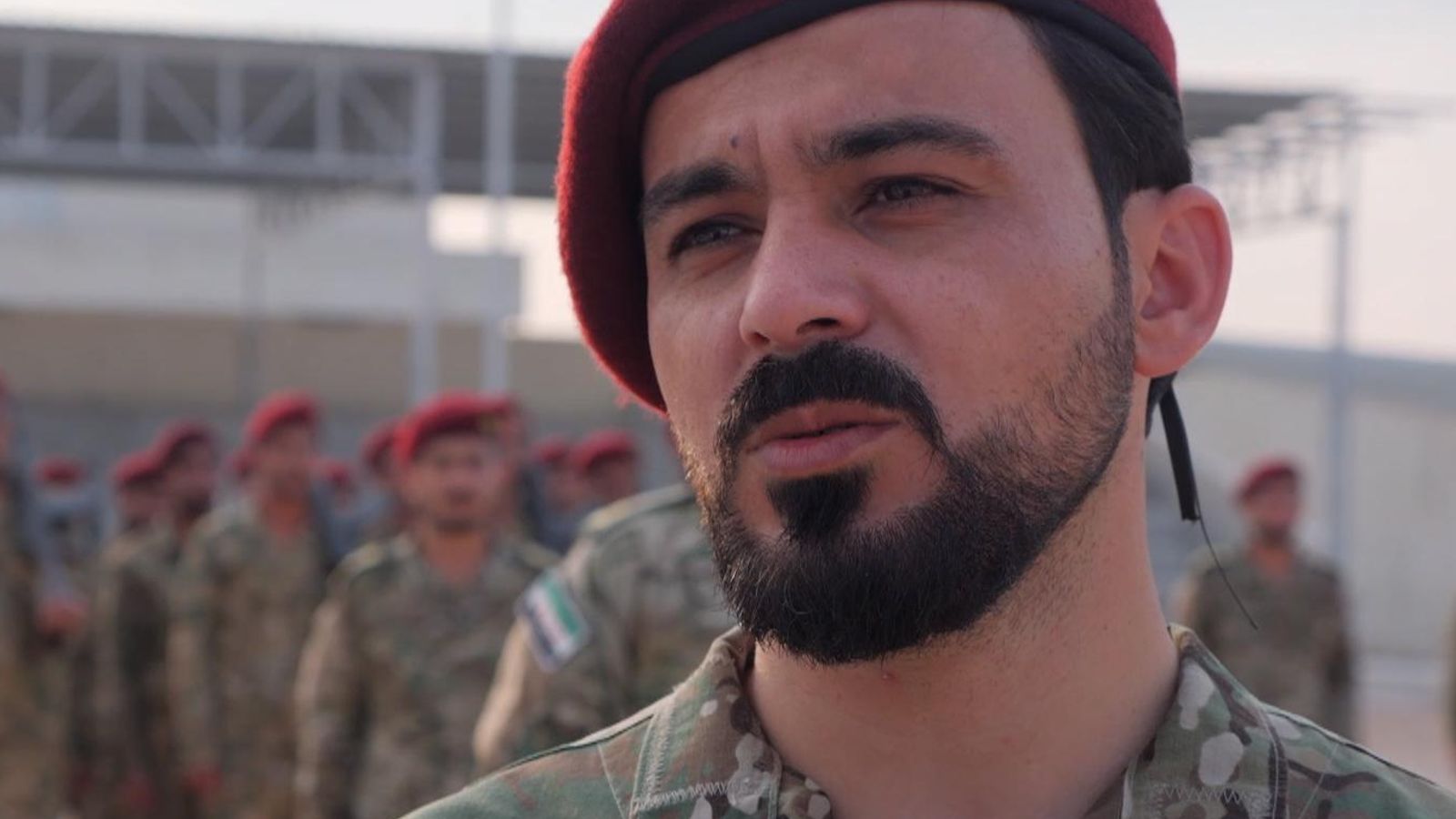
"ISIS has not gone. There are 3,000 ISIS fighters in the desert of east Syria being supported by Assad's regime and the separatist PKK (Kurds).
"They will only go if we, the opposition, are supported and the regime is finished."
The Syrian National Army, as it is now called, was born out of the Free Syrian Army and is largely backed by Turkish funds and Turkish weaponry.
Without Turkish support, it's unlikely the opposition would be able to hold the so-called buffer zone.
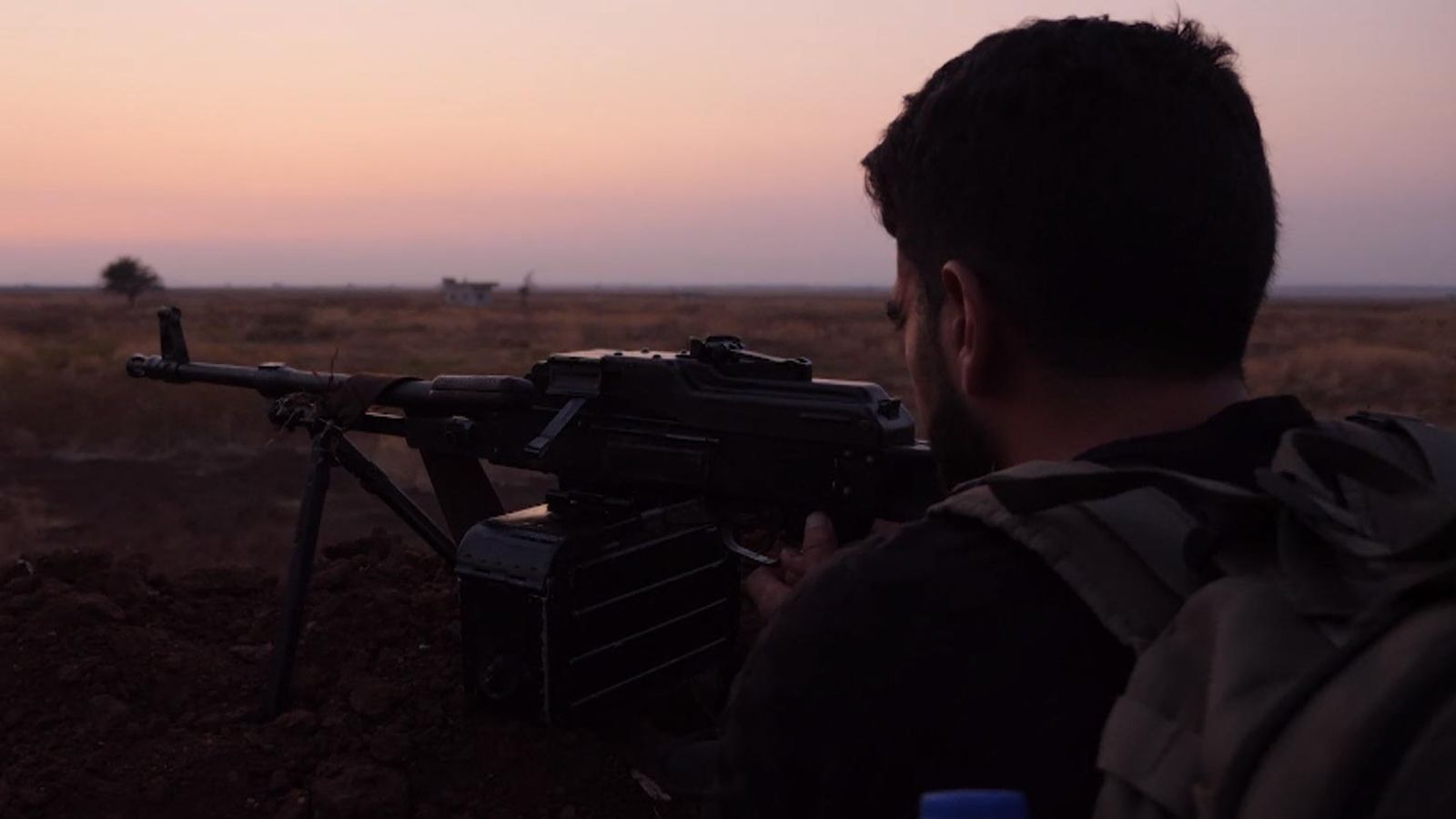
It's an area where Turkish troops have moved 30km inside Syria and stretch nearly 100km along the border - pushing out ISIS fighters but also the Kurdish-dominated SDF and keeping Assad's regime troops at bay.
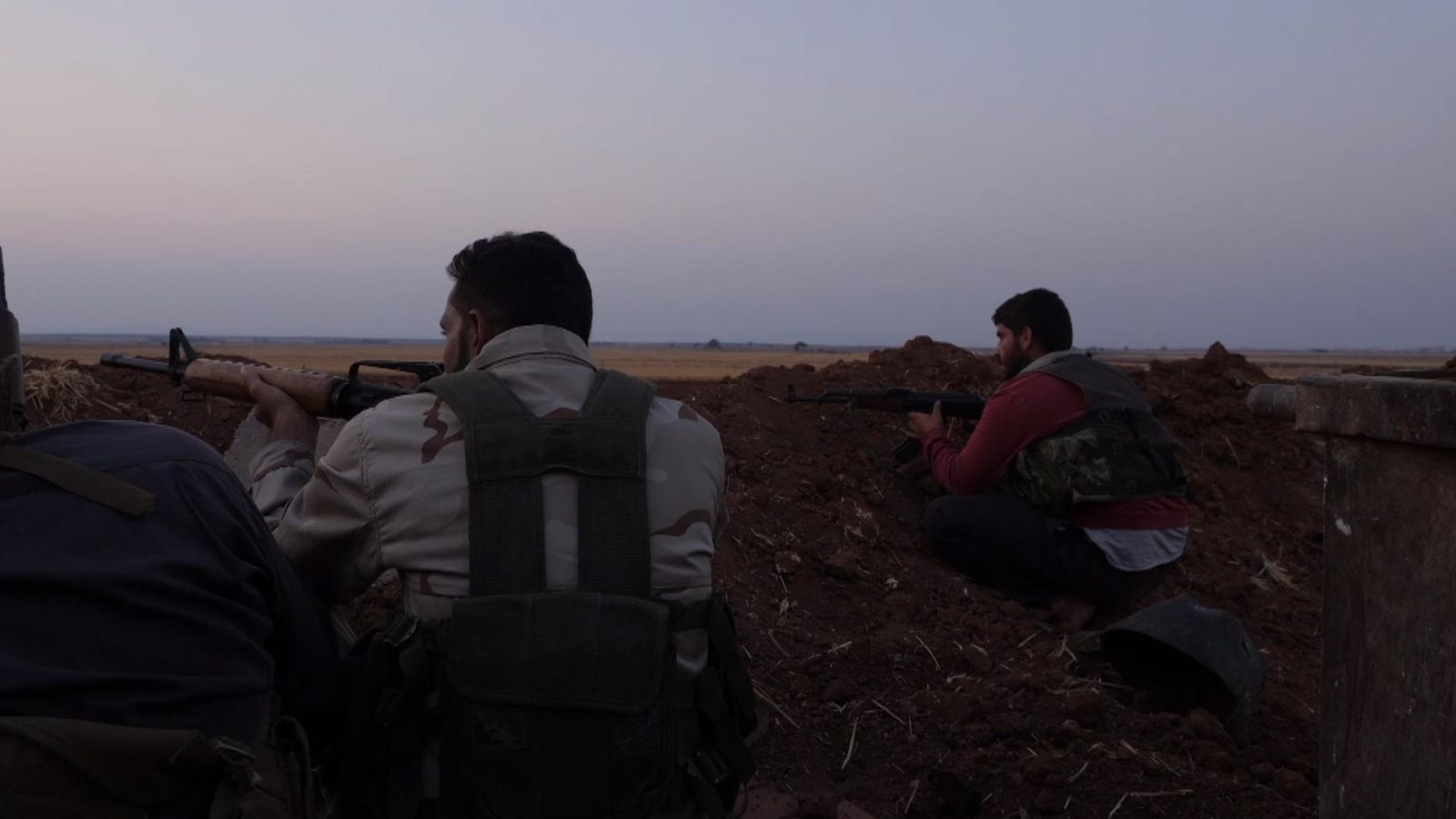
When we visit the edge of the buffer zone where opposition troops are taking lookout gun positions on sandbags, the sandbags are all stamped with the Turkish national flag.
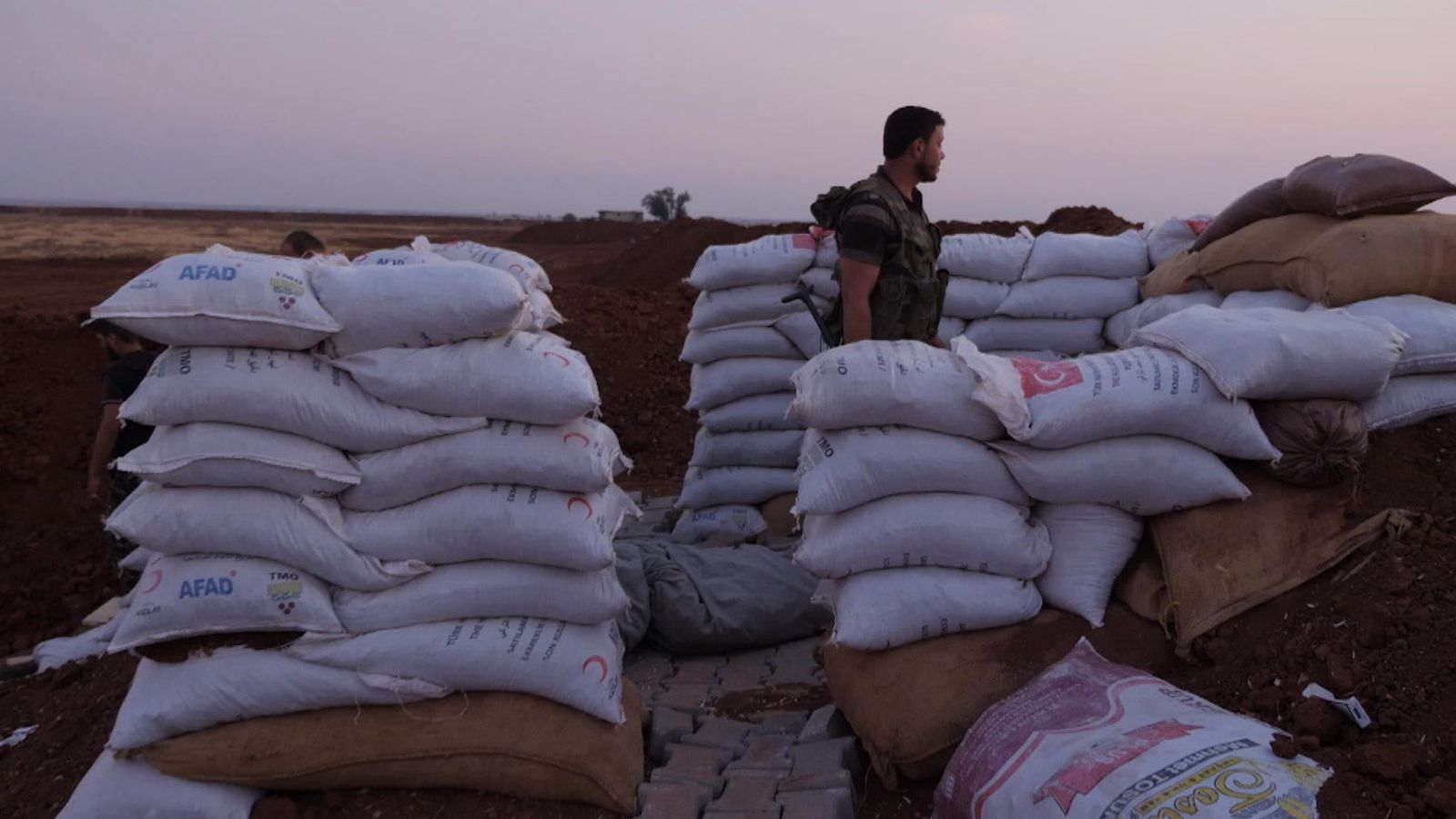
Sandbags are stamped with the Turkish national flag
Here, they can see regime troops about a kilometre away; where fire is often exchanged between the sides.
And the opposition knows they wouldn't be able to hold the line of the so-called buffer zone without Turkish military help.
"We have no choice," Commander Moatasm Abbas of the Al Moatasm Division said.
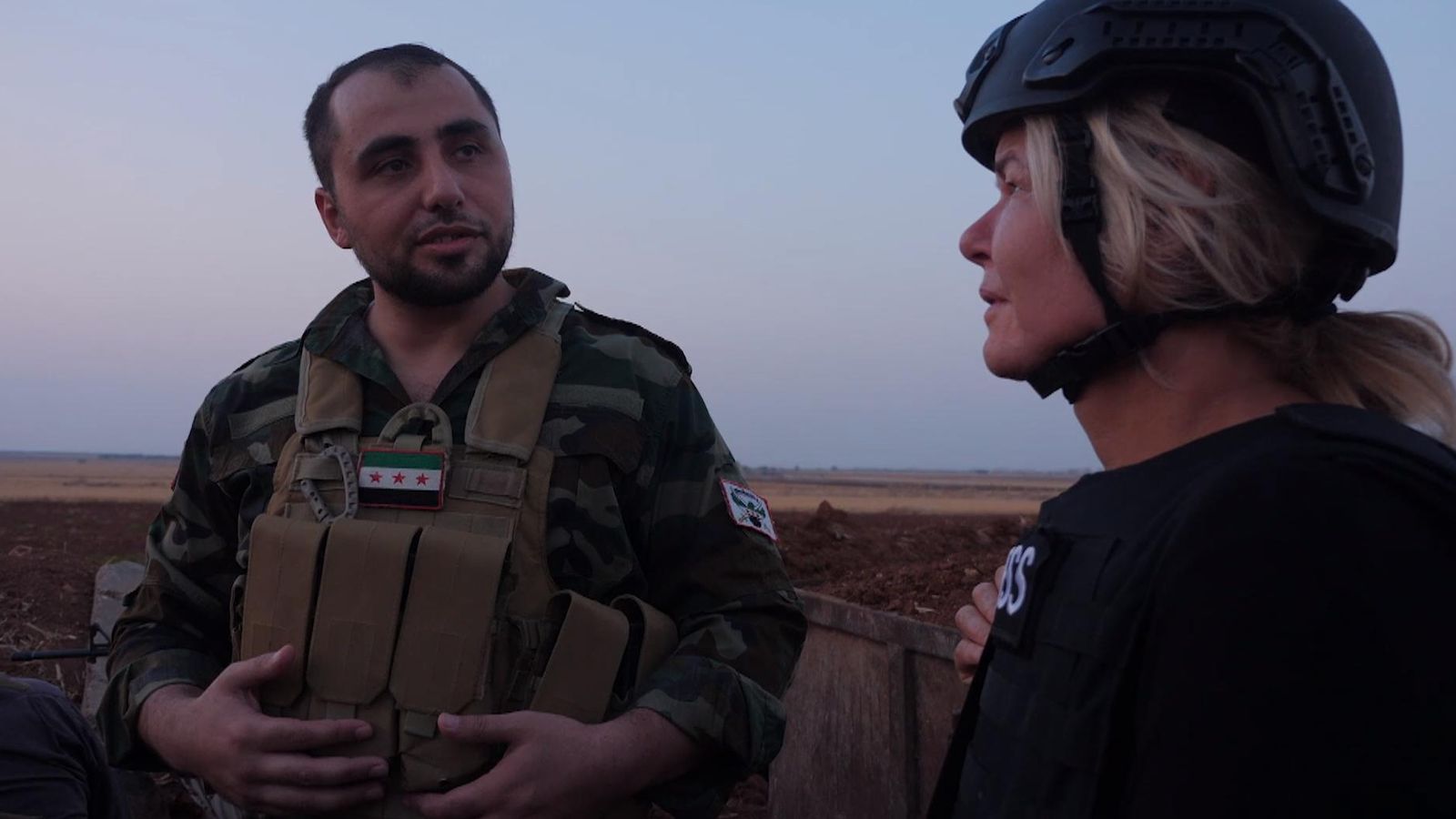
"We either fight with what weapons we've got or we die.
"Withdrawing is not an option. It does not exist in our dictionary. Our dictionary is revolution.
"We are continuing with what weapons we have, whatever happens, and Turkey is the only one who is with us on the ground, with its weapons and military equipment."
Turkey is certainly making its mark and leaving its footprint in this part of Syria.
Turkish President Recep Tayyip Erdogan has spoken often of trying to persuade tens of thousands of the nearly four million Syrian refugees camped on its soil to return to their homeland.
He insists his troops are only in Syria to maintain security; to protect land for Syrians and create a buffer zone between Turkey and those he views as terrorists.
Those terrorists identified by Turkey not only include ISIS but also the Kurdish YPG - the former partners of the Western-backed SDF who were also fighting the Islamic extremists - as well as Assad's regime troops now supported by Russia and Iran.
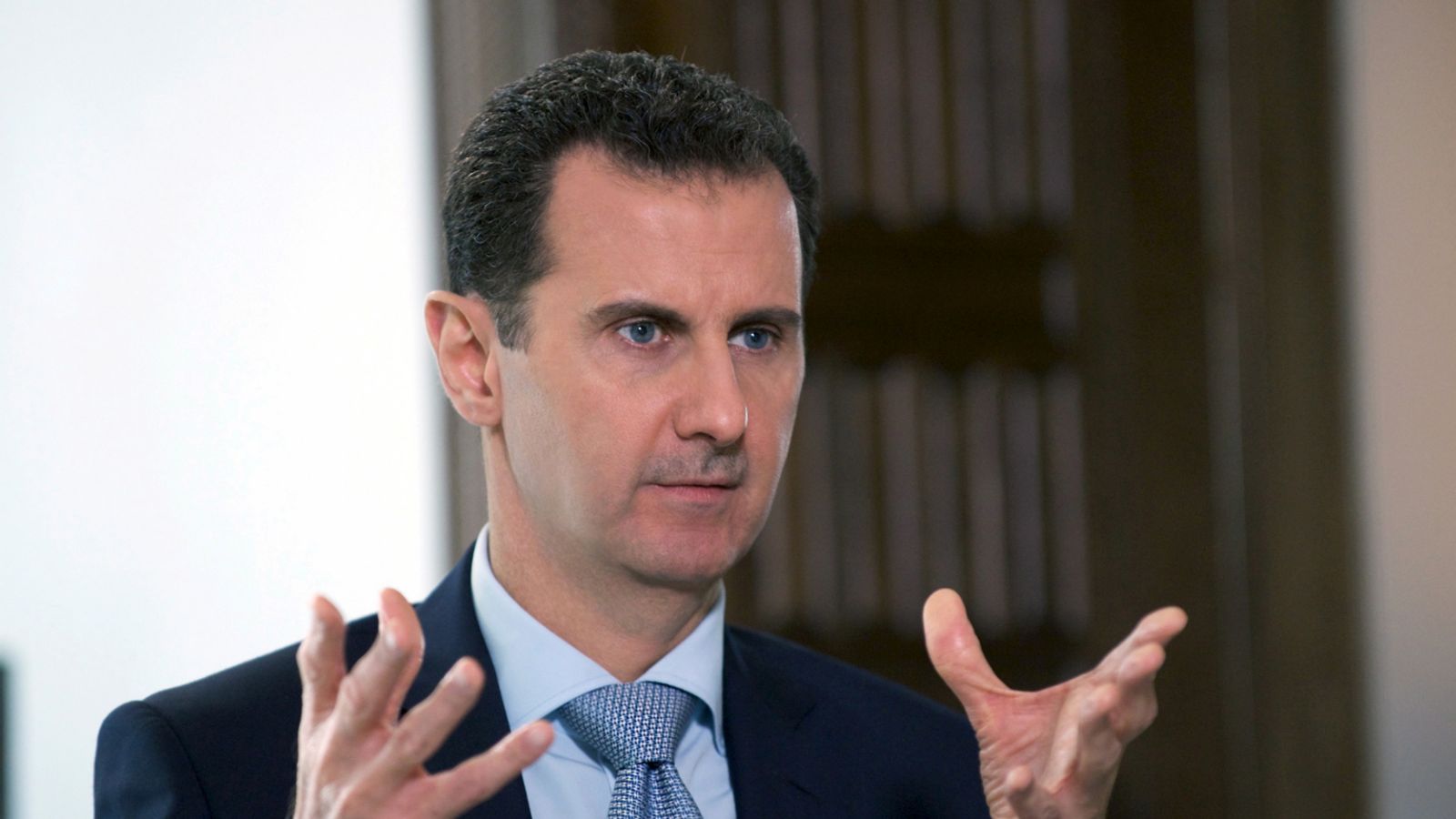
President Erdogan has always insisted he does not want to remain inside Syria indefinitely and his troops respect the sovereignty of their neighbour.
But withdrawal is unlikely to come anytime in the near future - and those we spoke to in the buffer zone know only too well that the tenuous hold on the stability that they have in the area, is dependant right now on the Turkish military presence.
When we visit Al Bab, in the centre of the town square, once an ISIS stronghold where they planned attacks on Aleppo, there's now a huge red Turkish crescent.
The shops and stalls are bustling with business and packed with people.
But whilst we are there, there's a vehicle explosion.
A car parked outside a mosque has been rigged with a small amount of explosives.
Not enough to kill, although four people were injured, but enough to scare and frustrate the people of Al Bab who are weary of constant instability and desperate for change.
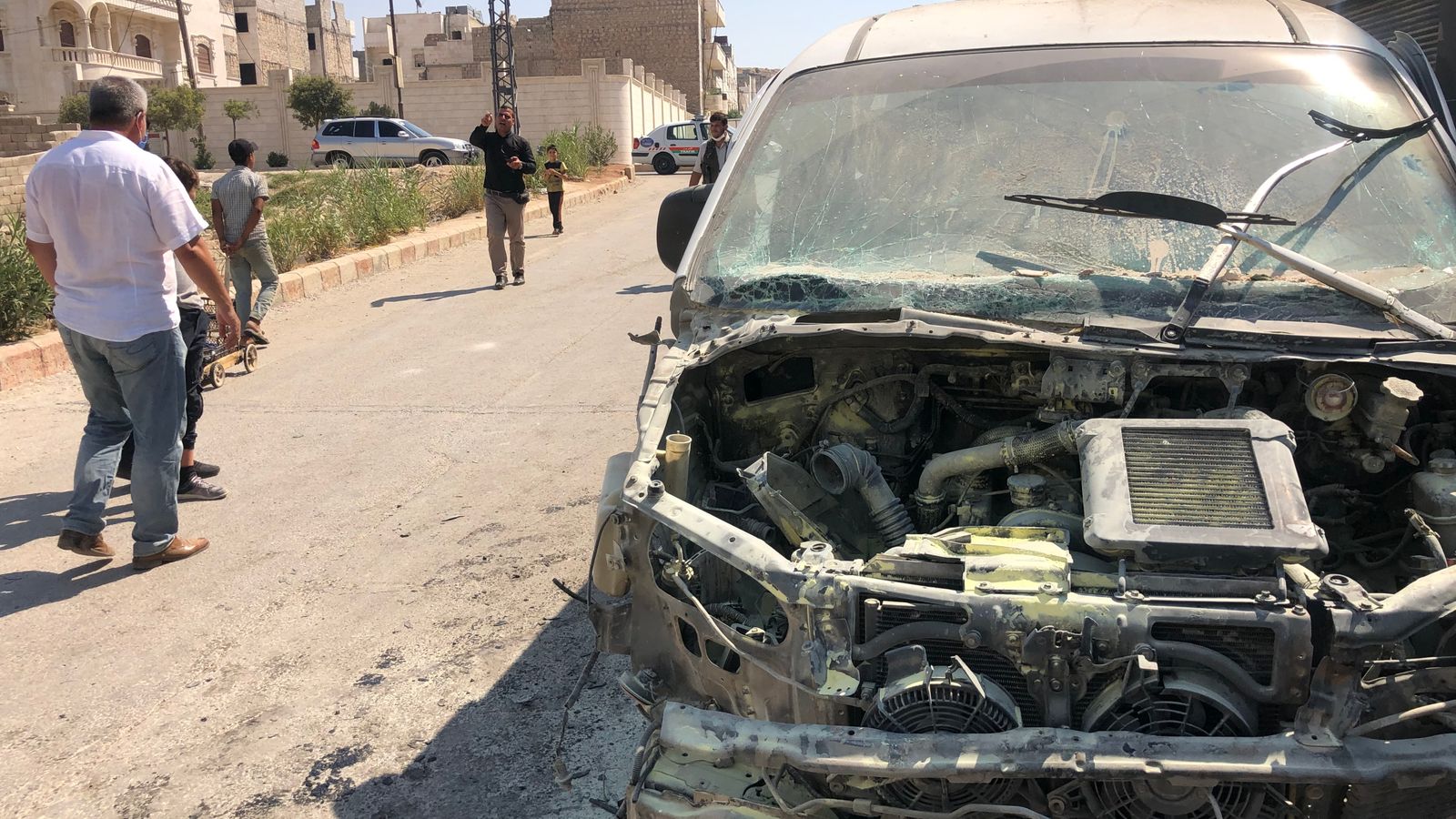
One man standing over the mangled wreckage of the car tells us: "We have terrorists here... they're ISIS terrorists and they're the separatist parties, the Kurds.
"They are doing this... causing all these attacks... it's the PKK and ISIS, and we have suffered from this for a long time.
"Since we were liberated until now, we're suffering from this.
"We are sending a message to the world to please find a solution."
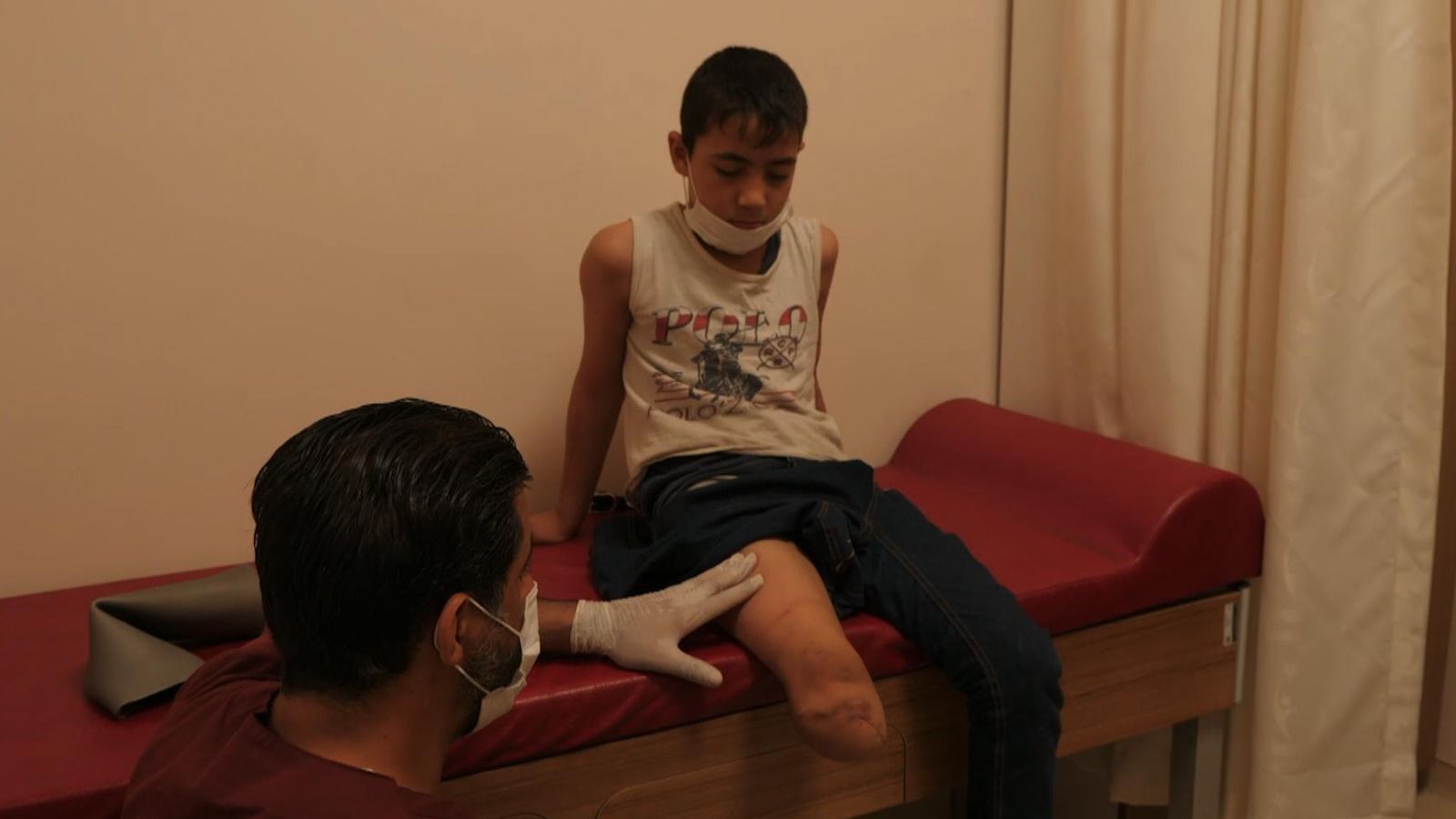
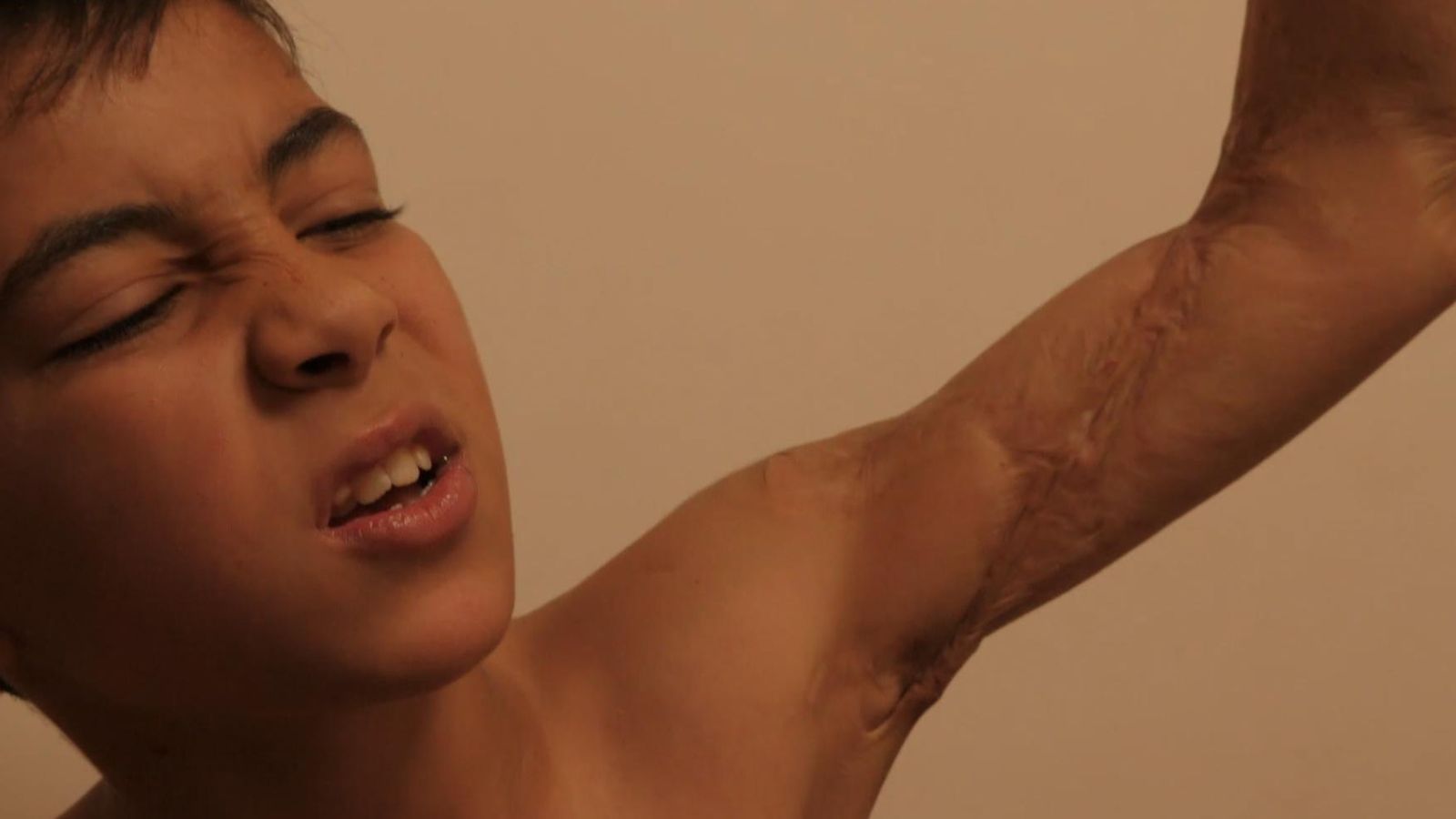
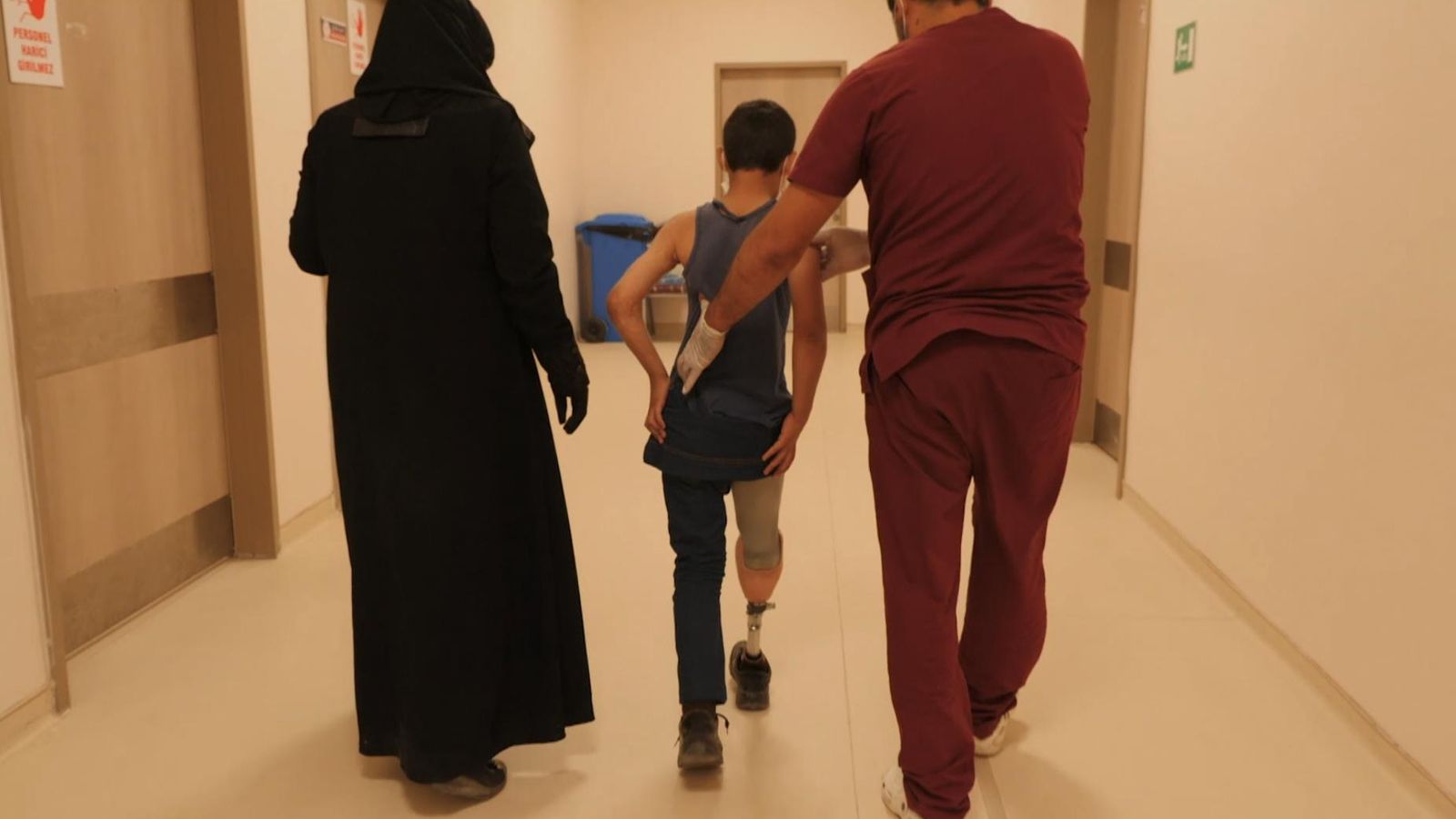
In the new 200-bed hospital built by the Turkish authorities in Al Bab, we find the battered and mutilated war wounded.
Nine-year-old Abdul Rahman has not known anything but war his entire life.
His leg was blown off by a regime bomb, but for the first time he's been fitted with a prosthetic limb courtesy of the Turkish-run health facility which has seven operating rooms.
Prosthetics which would cost between $5,000 to $10,000 are being provided free by the hospital.
Turkey is investing heavily here.
The recipients are not entirely sure how genuine this largesse is and are a little suspicious about what the cost will be to them or their country in the long run.
But right now, they are in no position to turn down any help - and Turkey seems to be the country which is metaphorically and physically holding out its hand to help the battered people opposed to Assad and who've been running from his regime - many since 2011.
"I don't want war," says Abdul Rahman. "I can't take it. Assad has ruined everything."