

Credit Suisse has stumbled from one crisis to another - but the panic is possibly overdone
It never rains but only pours at Credit Suisse.
Switzerland's second largest lender has stumbled from one crisis to another in recent years.
There was the corporate spying scandal three years ago in which the bank was accused of hiring a private detective after one of its former executives had defected to a rival.
Shortly afterwards, the bank lost $5.5bn from its exposure to the collapsed hedge fund manager Archegos Capital, while it also suffered losses related to the collapse of the supply chain finance group Greensill Capital.
Other embarrassments included a string of fines for making fraudulent loans - nicknamed 'tuna bonds' - to the government of Mozambique between 2012 and 2016.
After these various setbacks Credit Suisse appeared to have pulled off a considerable coup when, in April 2021, it hired Antonio Horta-Osorio, the highly regarded former chief executive of Lloyds Banking Group, to become its new chairman. Investors were delighted when he promised to rebuild the bank's reputation.
Unfortunately, in January this year, he was forced to resign after an internal investigation revealed he had broken COVID quarantine rules to attend the Wimbledon tennis championships and had also used the bank's private jet to take a holiday to the Maldives.
He was followed out of the door in July this year by Thomas Gottstein, the chief executive, who resigned for what he described as "personal and health-related considerations".
His successor Ulrich Korner, the bank's fourth chief executive in just 17 years, has promised a major restructuring announcement before the end of the month in an attempt to cut costs and stem the flow of red ink that has characterised recent results.
The bank has reported a loss in five of the last seven quarters and in each of the last three due, chiefly, to issues in its investment banking division.
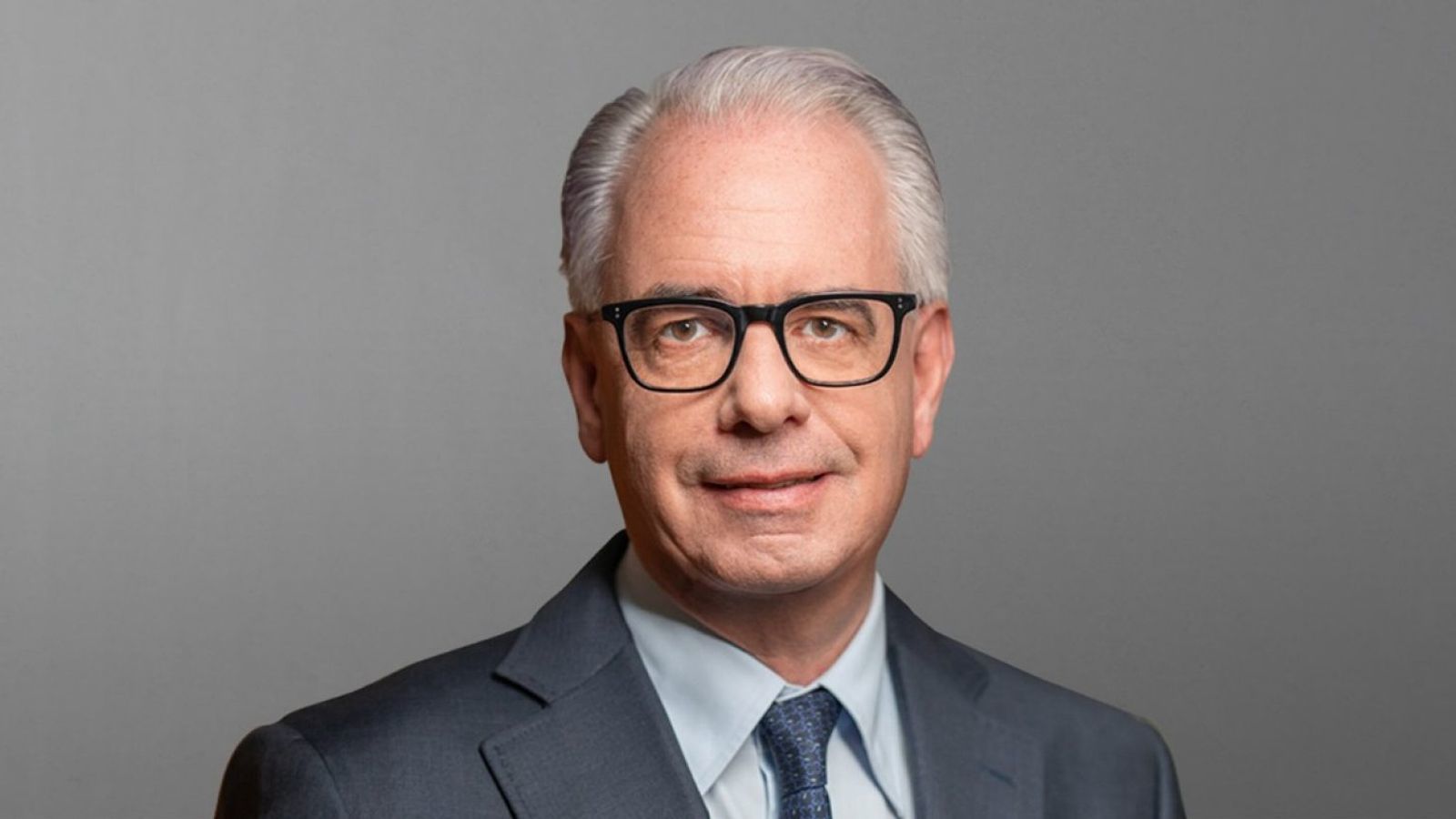 Ulrich Korner, the bank's fourth chief executive in just 17 years
Mr Korner, nicknamed 'Uli the Knife' for his cost-cutting prowess, ought to have represented a clean break with the past.
Unfortunately, according to the Financial Times, he appears to have spent most of the weekend - along with other senior executives at the bank - trying to reassure clients and investors about the bank's financial health.
Mr Korner sent an internal memo to colleagues on Friday afternoon, which promptly leaked, in which he urged them to "remain focused amid the many stories you read in the media" and told them not to confuse the bank's weak share price performance - the shares are down 61.5% so far this year following a 5% decline this morning - with its "strong capital base and liquidity position".
That does not appear to have calmed nerves over the bank's financial health.
Apart from the latest lurch in Credit Suisse's share price to a new all-time low - the bank is now valued at less than its book value - there has been a spike in credit default swaps (the instruments investors use to insure themselves against a potential default) of Credit Suisse. Rumours abound that the bank is also preparing to tap investors for capital.
Is the panic being overdone? Possibly. Credit Suisse has a reasonably strong capital position and certainly one that bears no comparison with those of the lenders that collapsed or required rescuing during global financial crisis.
It is why various market commentators have been at pains today to stress that this does not appear to be a so-called 'Lehman moment'.
But it is a fact that Credit Suisse's funding costs have risen, gnawing away at its profitability, following downgrades in its credit rating.
The irony is that Mr Gottstein and his predecessor at Credit Suisse, the much-respected former Prudential chief executive Tidjane Thiam, had done much work to try and reshape Credit Suisse following the financial crisis.
A conscious decision was taken, with the backing of the Swiss government, to reduce the size of the lender's investment banking division and to focus on wealth management.
But the scandals have kept on coming. Shortly before Mr Gottstein resigned, the bank became the first Swiss domestic lender to be fined for a corporate crime, its punishment relating to its failure to stop money laundering by Bulgarian drug dealers between 2004 and 2008.
The woes of this bank matter. Credit Suisse, whose ambassadors include the tennis superstar Roger Federer, is one of just 30 lenders on the list of 'Global Systemically Important Banks' published by the Financial Stability Board (the multinational body that promotes global financial stability) which means, in the terminology adopted around the time of the financial crisis, that it is too big to fail.
It is also a huge employer in the UK. Of the bank's 45,000 employees globally some 6,000 are here, the majority working at its offices at Canary Wharf, which are also home to an art collection that reflects the bank's lavish patronage of the sector.
It seems highly likely that if the restructuring planned by Mr Korner is as radical as is being rumoured - and as radical as those shareholders who may be tapped for cash are demanding - then the bank may be employing somewhat fewer people in both London and New York in the near future.