

Hong Kong gets its first metaverse churches with avatars and virtual preachers
Hong Kong Baptist minister Reverend Enoch Lam Yee-lok has said he believes he has the answer for Christians who find going to church too inconvenient and the services to be boring.
In February, he started Me Church, where people show up as avatars – cartoon-like depictions of themselves – that sit in a stadium, sing hymns and listen to him preach. All virtually.
It is one of two Hong Kong churches that opened in the metaverse this year, geared towards a tech-savvy generation interested in the world of virtual reality and artificial intelligence.
The metaverse is an integrated network of 3D virtual worlds and users can enter it by using a number of available applications and platforms. Using a virtual reality headset, they can become so immersed that it can feel like they are actually there.
The metaverse has been described as a game-changer in a new era of social interactions over the internet. Tech giant Facebook created a global buzz when it announced last year that it would be renamed Meta to focus on the potential of the concept.
Lam, in his 60s, is well known for his unusual approach to promoting religion, including his popular So Gor (Brother Jesus) stand-up comedy shows with a religious twist.
He said the Covid-19 pandemic had shaken the attitudes of older people who had become used to attending online services from the comfort of their homes while churches stayed closed because of restrictions.
So when he heard that Christians elsewhere were already exploring the potential of the metaverse, he decided to act.
Similar churches have existed overseas for some years, offering services complete with Bible readings, sermons, hymns and collections that accept cryptocurrency.
One of the most established is Life.Church in the United States, which grew from a network of bricks-and-mortar churches to create its presence online and in the metaverse.
Lam said he felt the time was right for Hong Kong churches to enter the metaverse space too, as he had noticed that young people were learning differently.
Giving an example, he said the old way of telling the Biblical story of Noah, who built a giant ark to prepare for a massive flood nobody believed was coming, would not work for young people today.
“They will not just sit still and listen to you,” he said. “They’ll want to jump in and build Noah’s Ark themselves.”
At Me Church, they will be able to participate as they choose. Its co-founder, business developer Timothy Fung Ting-yin, said: “We are just launching one more medium to spread the gospel.”
Meanwhile, insurance agent and workplace chaplain Augustine Chow Chi-kin, 68, was also troubled when churches that had to close during the pandemic began broadcasting their weekend services over Zoom, YouTube and Facebook.
He found them to be one-way, non-interactive and not engaging enough to hold the attention of viewers at home.
After hearing about the metaverse last October, he learned how to use a VR headset, borrowed a virtual church built on a VR platform by Christians in Malaysia and by April this year, his Meta Church was ready.
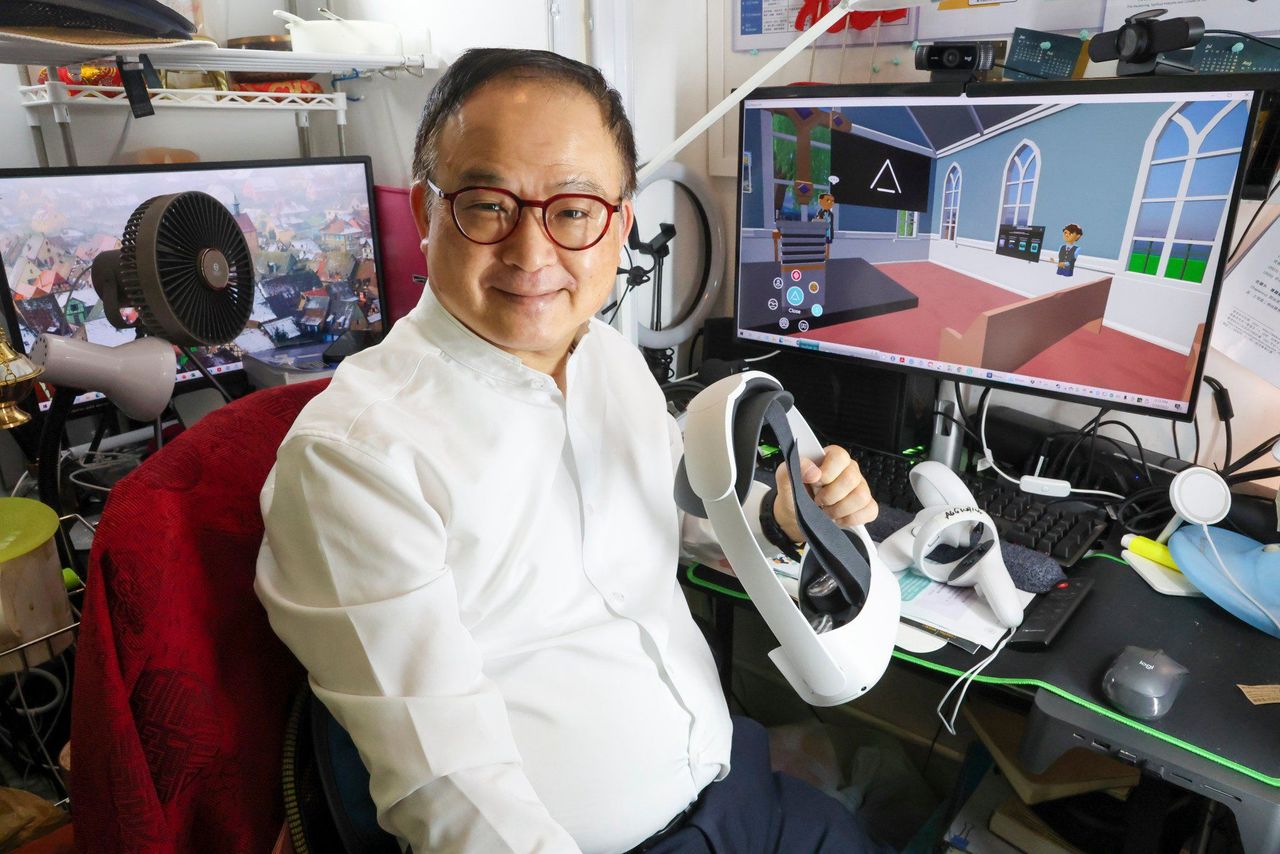 Insurance agent and workplace chaplain Augustine Chow demonstrates a session in the metaverse.
He and Lam have since become enthusiastic about using popular 3D platforms already available to start new digital ministries offering immersive digital experiences to visitors.
“Now we have one more channel,” Chow said, adding that he hoped to attract those unable to attend a physical church and those who had left the flock.
Visitors without a VR headset can use their computer mouse and keypad to sign in, create avatars, sit at a pew or move around and interact with other avatars, striking up a conversation.
Those with a headset have a richer experience of being present, and their avatars are able to shake hands, hug and pray together.
Lam and Chow have not yet started regular worship meetings, but Lam said an event held during Easter drew about 200 people who listened to him preach.
Chow’s weekly fellowships attract five or six people, including other church leaders and also non-Christians from Hong Kong, Taiwan, Malaysia, and sometimes the United States and the Middle East.
Pastor Matthew Ho, 44, from a church under the Peace Evangelical Centre, was among 60 people who joined a virtual introductory tour of Me Church conducted by Lam.
He said his avatar explored a worship hall and function rooms, shook hands and chatted with the others attending the tour virtually.
While the virtual church offered another way to spread the faith, Ho said, he had his doubts because human interactions were irreplaceable in faith communities.
“There is a difference between real and virtual pastoral care,” he said. “Believers live together in the physical world. A committed believer will be seen by others, but in the virtual world, it could all be lip service only.”
Student Eden Chow Ho-yin, 20, who has been attending a Lutheran church for two years, said he would not mind checking out such places in the metaverse, but preferred the face-to-face interactions experienced at physical locations.
“The metaverse might work better for those who don’t enjoy being with many people or want to avoid the hassle of travelling to church,” he said.
Me Church’s Lam said metaverse churches were not built to replace physical ones, adding: “Human interaction still needs a physical presence.”
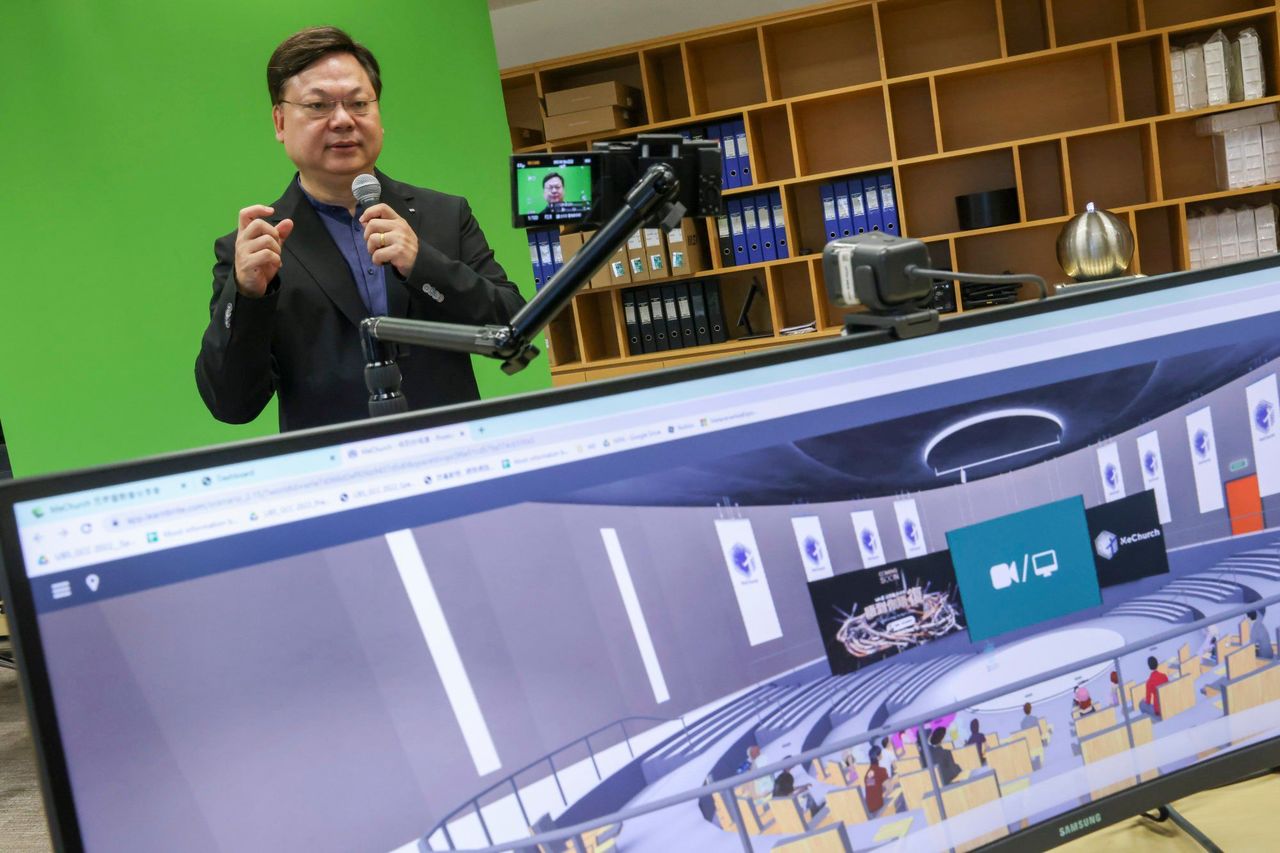 Reverend Lam has said metaverse churches were not built to replace physical ones.
Chow said it was too early to say if Christians would embrace the metaverse community to such an extent that they would stop attending physical churches.
Both men said they were open to having virtual baptisms and communion. “It’s not a matter of whether we can or can’t, but whether people can accept it,” Lam said.
But Reverend Philip Tang Tat-keung, a guest lecturer from Bethel Bible Seminary, said metaverse churches might end up as a new denomination of Christianity with their own theologies.
He said there were questions on important matters such as virtual baptisms and the distribution of virtual communion, which could be highly debatable.
“There is a major discussion around the use of avatars, which are not real but are an identity that users select to represent themselves,” he said.