Arab Press

بالشعب و للشعب
Thursday, Mar 12, 2026

Sandstorm blankets parts of Middle East, raising alarm

Sandstorm blankets parts of Middle East, raising alarm

An unprecedented wave of sandstorms is striking parts of the region, with experts blaming climate change and poor government regulations.

A sandstorm has blanketed parts of the Middle East, including Iraq, Syria and Iran, sending hundreds of people to hospitals and disrupting flights in some places.

From Riyadh to Tehran, bright orange skies and a thick veil of grit signalled yet another stormy day on Monday in what was the latest in a series of unprecedented nearly back-to-back sandstorms this year that have bewildered residents and raised alarm among experts and officials, who blame climate change and poor governmental regulations.

Sandstorms are typical in late spring and summer, spurred by seasonal winds. But this year they have occurred nearly every week in Iraq since March.

Iraqi authorities declared the day a national holiday, urging government workers and residents to stay home in anticipation of the 10th storm to hit the country in the last two months. The Iraqi Ministry of Health stockpiled canisters of oxygen at facilities in hard-hit areas, according to a statement.

More than 1,000 people were hospitalised across the nation with respiratory problems, Ministry of Health Spokesman Seif al-Badr told AFP news agency.

“It’s a region-wide issue, but each country has a different degree of vulnerability and weakness,” said Jaafar Jotheri, a geoarchaeologist at the University of Al-Qadisiyah in Baghdad.

A child sweeps the floor during a sandstorm at the Imam Ali Shrine in Najaf, Iraq


Specifically in Iraq, Jotheri explained, desertification exacerbated by record-low rainfall is adding to the intensity of storms. In a low-lying country with plenty of desert regions, the impact is almost double, he said. “Because of 17 years of mismanagement of water and urbanisation, Iraq lost more than two-thirds of its green cover,” he said. “That is why Iraqis are complaining more than their neighbours about the sandstorms in their areas.”

In Syria, medical departments were put on alert as the sandstorm hit the eastern province of Deir el-Zour that borders Iraq, Syrian state TV said. Earlier this month, a similar storm in the region left at least three people dead and hundreds were hospitalised with breathing problems.

Bashar Shouaybi, head of the Syrian Ministry of Health’s office in Deir el-Zour, told state TV that hospitals were prepared and ambulances were on standby. He said they have acquired an additional 850 oxygen tanks and medicine needed to deal with patients who have asthma.
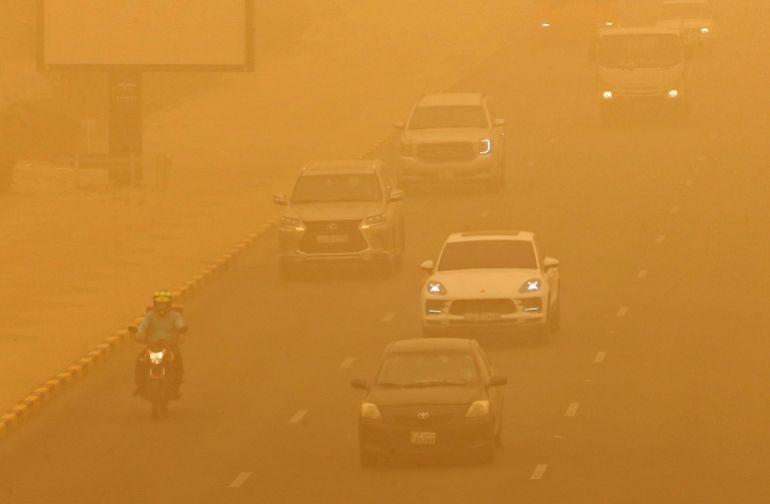
Cars drive amid a heavy sandstorm in Kuwait City, Kuwait


The sky in Kuwait turned bright orange as a severe sandstorm blanketed the country. And for the second time this month, Kuwait International Airport suspended all flights because of the dust. Earlier this month, another storm forced all schools and government offices to shut down.

The second heavy sandstorm in less than a week descended on Saudi Arabia’s capital Riyadh as well, obscuring iconic buildings like the Kingdom Centre in a grey haze. Officials warned drivers to go slowly. Emergency rooms in the city were flooded this month with 1,285 patients complaining they couldn’t breathe properly.

Iran last week shut down schools and government offices in the capital of Tehran over a sandstorm that swept the country. It hit hardest in the nation’s southwest desert region of Khuzestan, where more than 800 people sought treatment for breathing difficulties.
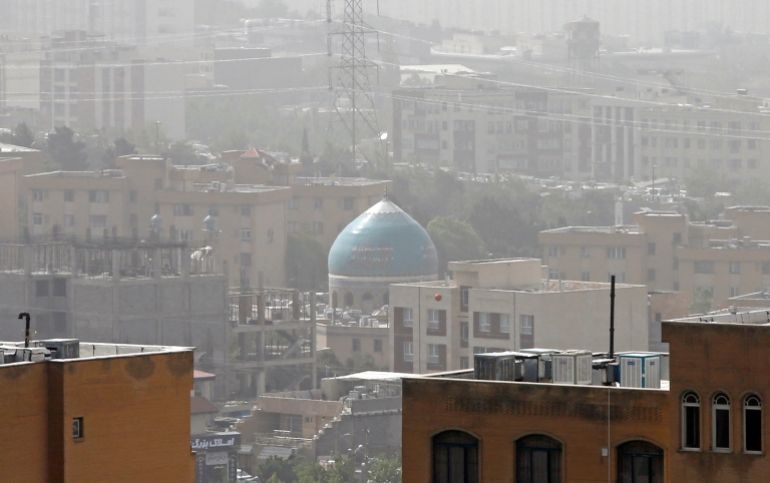
Iran last week shut down schools and government offices in the capital of Tehran over a sandstorm that swept the country


Dozens of flights out of western Iran were cancelled or delayed. Blame over the dust storms and heavy air pollution has mounted, with a prominent environmental expert telling local media that climate change, drought and government mismanagement of water resources are responsible for the increase in sandstorms. Iran has drained its wetlands for farming – a common practice known to produce dust in the region.

Alireza Shariat, the head of an association of Iranian water engineers, told Iran’s semiofficial ILNA news agency last month that he expected extensive dust storms to become an “annual springtime phenomenon” in a way Iran has never seen before.

Newsletter

Related Articles

Arab Press
0:00
0:00
Close
Three Commercial Vessels Attacked Near Strait of Hormuz, Thai-Flagged Ship Damaged and Crew Evacuated
Saudi Red Sea Oil Exports Set for Record in March as Kingdom Reroutes Crude Amid Hormuz Crisis
Saudi Arabia Seeks Belgian Military Support After Iranian Missile Attacks
Saudi Arabia Welcomes US Decision to Designate Sudan’s Muslim Brotherhood as Terrorist Organisation
Saudi Aramco Plans Dual Gulf and Red Sea Export Routes as Iran Crisis Disrupts Oil Shipments
Saudi Cabinet Condemns Iranian Attacks and Reaffirms Kingdom’s Right to Defend Its Sovereignty
Ukraine Deploys Counter-Drone Teams to Gulf States as Iranian Drone Threat Expands
Bahrain Grand Prix Faces Uncertainty as Saudi Arabia Works to Keep Formula One Race on Track
Saudi Arabia Faces New Strategic Dilemma in Yemen as Regional War Reshapes Calculations
OPEC Confirms Saudi-Led Oil Output Increase as Iran War Disrupts Global Energy Markets
Pakistan Pledges Rapid Support for Saudi Arabia Amid Escalating Middle East Tensions
Global Energy Agency Announces Record Release of 400 Million Barrels to Stabilize Oil Markets Amid Hormuz Disruption
Aramco Warns Global Oil Market Faces ‘Catastrophic’ Shock if Strait of Hormuz Remains Closed
Iran Launches Drone and Missile Attacks Across Gulf Targets Including Saudi Arabia, Kuwait and Bahrain
Saudi Arabia Elevates Fahad Al-Saif as Vision 2030 Enters Crucial Implementation Phase
Saudi Aramco Expands Routes to Move Oil Without Reliance on the Strait of Hormuz
Saudi Arabia and Pakistan Reaffirm Mutual Defense Cooperation Following Iran Strike
Saudi Arabia Plans Major Ukrainian Arms Deal to Counter Iranian Drone Threat
Pentagon Signals Intensification of U.S. Air Campaign as Iran Conflict Escalates
U.S. Senator Lindsey Graham Raises Prospect of Mutual Defense Pact With Saudi Arabia Amid Iran Conflict
Why Saudi Arabia Is Unlikely to Have Wanted U.S. Airstrikes on Iran
Saudi Arabia’s Red Sea Oil Exports Set to Reach Record High as Gulf Routes Face Disruption
Saudi Arabia Pushes East–West Oil Pipeline Toward Full Capacity as Hormuz Crisis Disrupts Global Energy Flows
Oil Prices Retreat From Peak as G7 Weighs Release of Strategic Reserves
Pentagon Identifies U.S. Soldier Who Died After Iranian Strike on Saudi Air Base
Why Saudi Arabia’s $50 Billion ‘The Line’ Megacity Slowed — and How Artificial Intelligence Is Reshaping the Plan
United States Withdraws Diplomatic Staff from Saudi Arabia and Southeast Turkey as Regional Conflict Escalates
Fanatics Moves Tom Brady Flag Football Showcase from Saudi Arabia to Los Angeles Amid Regional War
Saudi Arabia Seeks Strategic Support from Pakistan After Iranian Missile and Drone Attacks
Saudi Arabia Begins Oil Output Cuts as Hormuz Disruption Forces Storage Limits
Saudi Arabia Travel Advisory Tightened as Middle East War Triggers Regional Security Alerts
Saudi Arabia Warns Iran It Will Be ‘Biggest Loser’ as Drone Strikes Spread Across Gulf States
Lindsey Graham Urges Saudi Arabia to Join US Effort Against Iran as War Expands
Saudi Crown Prince Holds Strategic Calls With Spanish and Ukrainian Leaders Amid Regional Tensions
Kuwait’s Jazeera Airways Shifts Operations to Saudi Arabia Amid Regional Airspace Disruptions
Saudi Arabian Grand Prix: Why Jeddah’s Night Race Has Become One of Formula One’s Most Distinctive Events
F1 Leadership Addresses Bahrain and Saudi Arabia Races as Middle East Conflict Raises Safety Concerns
Zelenskyy Offers Saudi Crown Prince Assistance to Counter Iranian Drone Threat
Seventh U.S. Service Member Dies from Injuries After Iranian Strike in Saudi Arabia
Civilian Infrastructure Increasingly Hit as Iran Conflict Expands and Saudi Arabia Reports First Fatalities
Saudi Arabia Warns Iran to Halt Attacks and Signals Potential Retaliation
US Embassy in Riyadh Issues Security Alert Urging Americans to Shelter in Place Amid Regional Attacks
Projectile Strike on Saudi Residential Building Kills Two as Regional Conflict Expands
Saudi Arabia Warns Iran While Expanding Diplomatic Efforts to Contain Widening Middle East War
Iran’s President Rejects U.S. Surrender Demand as Drone and Missile Strikes Hit Gulf States
Saudi Arabia Intercepts Drone Swarm Targeting Strategic Shaybah Oil Field
Pakistan Faces Growing Pressure to Balance Ties With Iran and Saudi Arabia as Regional War Intensifies
Middle East Conflict Tests Mohammed bin Salman’s Vision to Transform Saudi Arabia Into a Global Hub
Proposed U.S.–Saudi Nuclear Deal Could Ease Traditional Nonproliferation Requirements
Iran Claims Strike on U.S.-Linked Oil Tanker Near Saudi Waters as Maritime Tensions Escalate
×