Saudi Arabia’s Economic Spending Surge Is Slowing as Oil Revenue Pressure Forces a Strategic Reset
The kingdom is scaling back parts of its breakneck investment expansion as lower oil prices, rising deficits and mounting project costs force Riyadh to rebalance the ambitions of Vision 2030.
Saudi Arabia’s spending slowdown is fundamentally system-driven because the kingdom’s economic transformation model remains heavily dependent on oil revenue, sovereign borrowing capacity and state-directed investment flows.
Saudi Arabia’s multi-year spending boom is losing momentum as the government recalibrates economic priorities under growing fiscal pressure.
The slowdown reflects a widening gap between the enormous financial demands of Vision 2030 and the more constrained revenue environment created by lower oil prices, rising borrowing costs and escalating development expenses.
What is confirmed is that Saudi authorities are moderating the pace of expenditure growth across several sectors while reviewing timelines and priorities for some of the kingdom’s largest infrastructure and development projects.
Government spending remains historically high, but the rate of expansion has slowed significantly compared with the aggressive post-pandemic acceleration that followed the oil price surge after the Ukraine war.
The key issue is that Saudi Arabia’s economic diversification strategy was designed around the assumption that the kingdom could simultaneously maintain elevated oil revenue, expand global investment influence and finance one of the largest state-led modernization programs in the world.
That model is now facing financial strain.
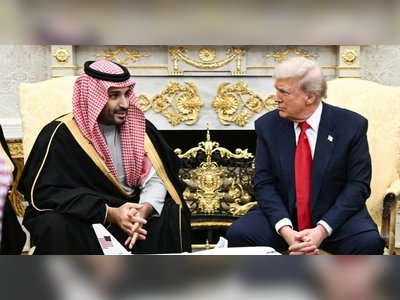
Vision 2030, launched by Crown Prince Mohammed bin Salman, aims to transform Saudi Arabia from an oil-dominated economy into a diversified system centered around tourism, logistics, technology, manufacturing, entertainment and advanced infrastructure.
The scale is enormous.
Saudi Arabia committed hundreds of billions of dollars to megaprojects including Neom, the futuristic city development on the Red Sea coast; the Line, a planned linear urban corridor; large-scale tourism zones; sports investments; logistics hubs; industrial zones; renewable-energy expansion and nationwide infrastructure upgrades.
These projects were intended not only to diversify the economy but also to reshape Saudi Arabia’s international image and domestic social structure.
The spending boom accelerated sharply after global energy prices surged in twenty twenty-two.
Higher oil revenue gave Riyadh temporary fiscal breathing room.
Saudi Arabia posted large surpluses, increased sovereign wealth activity and expanded state-backed investment domestically and internationally.
But the environment changed.
Oil prices retreated from earlier peaks while global economic growth slowed.
At the same time, Saudi Arabia itself helped restrain oil supply through OPEC Plus production cuts designed to stabilize crude prices.
That created a paradox.
The kingdom supported higher prices by reducing production, but lower export volumes also reduced government revenue.
Saudi Arabia still depends heavily on hydrocarbons.
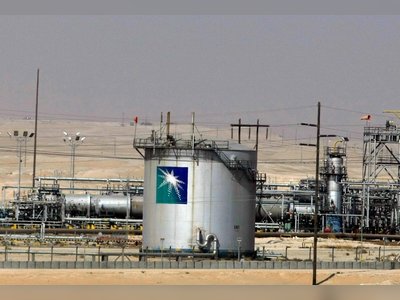
Despite years of diversification efforts, oil income continues providing the overwhelming majority of government revenue and export earnings.
This means even moderate declines in crude prices or production volumes quickly affect fiscal planning.
The government increasingly faces difficult allocation choices.
Some projects require enormous long-term capital commitments with uncertain near-term economic returns.
Construction costs, imported labor expenses, infrastructure complexity and financing demands all rose significantly as the scale of Saudi development accelerated.
The Line became one of the clearest examples.
The project attracted global attention because of its unprecedented ambition, involving a massive mirrored urban corridor intended to stretch across the desert.
But reports increasingly suggested that timelines, population targets and construction phases were being reassessed as authorities focused on financial sustainability and execution capacity.
The broader slowdown does not mean Vision 2030 is being abandoned.
Saudi leadership continues treating the program as the central framework for the kingdom’s long-term future.
The shift instead reflects a transition from rapid expansion toward more selective prioritization.
Riyadh is increasingly emphasizing projects considered commercially viable, strategically important or capable of generating faster economic returns.
Tourism remains central.
Saudi Arabia continues investing heavily in Red Sea resorts, luxury hospitality, cultural tourism, religious tourism expansion and entertainment infrastructure.
The kingdom views tourism as one of the fastest paths toward generating non-oil revenue and private-sector employment.
Sports investments also continue.
Saudi Arabia maintains aggressive spending on football, global sporting events, golf, boxing and Formula One because these sectors support broader branding and tourism objectives.
But other areas are slowing.
Private contractors, consultants and construction firms increasingly report longer payment cycles, project reprioritization and more selective contract approvals.
Some foreign companies operating inside Saudi Arabia have become more cautious about revenue expectations tied to state-backed development.
Borrowing is becoming more important.
Saudi Arabia increasingly relies on debt markets to finance expansion while attempting to preserve sovereign wealth reserves.
The kingdom remains financially strong compared with many regional peers, but debt issuance has accelerated as spending commitments expanded.
This matters because global financing conditions are less favorable than during earlier periods of cheap capital.
Higher interest rates increase borrowing costs for governments and state-linked entities alike.
The slowdown also reflects capacity limits.
Saudi Arabia is attempting to build multiple megacities, transport networks, industrial projects and tourism zones simultaneously while modernizing labor markets and expanding private-sector participation.
That creates enormous logistical and managerial pressure.
Labor shortages, engineering bottlenecks and supply-chain constraints became increasingly visible as projects advanced.
The kingdom’s leadership appears increasingly aware that execution risk matters as much as funding.
There is also a geopolitical dimension.
Saudi Arabia wants to maintain investor confidence while avoiding the perception that Vision 2030 is financially unsustainable.
Scaling projects more gradually may ultimately strengthen credibility by demonstrating fiscal discipline rather than unchecked expansion.
The broader Gulf environment influences Saudi calculations as well.
Competition with the United Arab Emirates, Qatar and other regional economies continues intensifying across tourism, logistics, aviation, finance and technology sectors.
Saudi Arabia still wants to establish itself as the dominant economic hub of the Arab world.
That strategic objective remains unchanged.
But Riyadh increasingly appears willing to adjust pace in order to preserve long-term stability.
The spending moderation also carries domestic implications.
Vision 2030 is not only an economic program but a political project tied directly to Crown Prince Mohammed bin Salman’s legitimacy.
The modernization campaign reshaped Saudi society through entertainment liberalization, expanded tourism, labor reforms and large-scale urban transformation.
A major economic slowdown would therefore carry political consequences.
For now, however, the kingdom continues growing faster than many advanced economies, supported by state investment, non-oil sector expansion and population growth.
The core challenge is sustainability.
Saudi Arabia is attempting one of the most ambitious economic transformations ever attempted by a hydrocarbon-dependent state while still relying heavily on the oil system it seeks to move beyond.
The practical consequence is that Riyadh is entering a more disciplined phase of Vision 2030 in which project sequencing, financial efficiency and commercial return are becoming more important than sheer scale alone.
The slowdown marks not the end of Saudi Arabia’s transformation strategy, but the beginning of a more financially selective era in which the kingdom must prove that its post-oil ambitions can survive outside the conditions of exceptionally high energy revenue.
Saudi Arabia’s multi-year spending boom is losing momentum as the government recalibrates economic priorities under growing fiscal pressure.
The slowdown reflects a widening gap between the enormous financial demands of Vision 2030 and the more constrained revenue environment created by lower oil prices, rising borrowing costs and escalating development expenses.
What is confirmed is that Saudi authorities are moderating the pace of expenditure growth across several sectors while reviewing timelines and priorities for some of the kingdom’s largest infrastructure and development projects.
Government spending remains historically high, but the rate of expansion has slowed significantly compared with the aggressive post-pandemic acceleration that followed the oil price surge after the Ukraine war.
The key issue is that Saudi Arabia’s economic diversification strategy was designed around the assumption that the kingdom could simultaneously maintain elevated oil revenue, expand global investment influence and finance one of the largest state-led modernization programs in the world.
That model is now facing financial strain.
Vision 2030, launched by Crown Prince Mohammed bin Salman, aims to transform Saudi Arabia from an oil-dominated economy into a diversified system centered around tourism, logistics, technology, manufacturing, entertainment and advanced infrastructure.
The scale is enormous.
Saudi Arabia committed hundreds of billions of dollars to megaprojects including Neom, the futuristic city development on the Red Sea coast; the Line, a planned linear urban corridor; large-scale tourism zones; sports investments; logistics hubs; industrial zones; renewable-energy expansion and nationwide infrastructure upgrades.
These projects were intended not only to diversify the economy but also to reshape Saudi Arabia’s international image and domestic social structure.
The spending boom accelerated sharply after global energy prices surged in twenty twenty-two.
Higher oil revenue gave Riyadh temporary fiscal breathing room.
Saudi Arabia posted large surpluses, increased sovereign wealth activity and expanded state-backed investment domestically and internationally.
But the environment changed.
Oil prices retreated from earlier peaks while global economic growth slowed.
At the same time, Saudi Arabia itself helped restrain oil supply through OPEC Plus production cuts designed to stabilize crude prices.
That created a paradox.
The kingdom supported higher prices by reducing production, but lower export volumes also reduced government revenue.
Saudi Arabia still depends heavily on hydrocarbons.
Despite years of diversification efforts, oil income continues providing the overwhelming majority of government revenue and export earnings.
This means even moderate declines in crude prices or production volumes quickly affect fiscal planning.
The government increasingly faces difficult allocation choices.
Some projects require enormous long-term capital commitments with uncertain near-term economic returns.
Construction costs, imported labor expenses, infrastructure complexity and financing demands all rose significantly as the scale of Saudi development accelerated.
The Line became one of the clearest examples.
The project attracted global attention because of its unprecedented ambition, involving a massive mirrored urban corridor intended to stretch across the desert.
But reports increasingly suggested that timelines, population targets and construction phases were being reassessed as authorities focused on financial sustainability and execution capacity.
The broader slowdown does not mean Vision 2030 is being abandoned.
Saudi leadership continues treating the program as the central framework for the kingdom’s long-term future.
The shift instead reflects a transition from rapid expansion toward more selective prioritization.
Riyadh is increasingly emphasizing projects considered commercially viable, strategically important or capable of generating faster economic returns.
Tourism remains central.
Saudi Arabia continues investing heavily in Red Sea resorts, luxury hospitality, cultural tourism, religious tourism expansion and entertainment infrastructure.
The kingdom views tourism as one of the fastest paths toward generating non-oil revenue and private-sector employment.
Sports investments also continue.
Saudi Arabia maintains aggressive spending on football, global sporting events, golf, boxing and Formula One because these sectors support broader branding and tourism objectives.
But other areas are slowing.
Private contractors, consultants and construction firms increasingly report longer payment cycles, project reprioritization and more selective contract approvals.
Some foreign companies operating inside Saudi Arabia have become more cautious about revenue expectations tied to state-backed development.
Borrowing is becoming more important.
Saudi Arabia increasingly relies on debt markets to finance expansion while attempting to preserve sovereign wealth reserves.
The kingdom remains financially strong compared with many regional peers, but debt issuance has accelerated as spending commitments expanded.
This matters because global financing conditions are less favorable than during earlier periods of cheap capital.
Higher interest rates increase borrowing costs for governments and state-linked entities alike.
The slowdown also reflects capacity limits.
Saudi Arabia is attempting to build multiple megacities, transport networks, industrial projects and tourism zones simultaneously while modernizing labor markets and expanding private-sector participation.
That creates enormous logistical and managerial pressure.
Labor shortages, engineering bottlenecks and supply-chain constraints became increasingly visible as projects advanced.
The kingdom’s leadership appears increasingly aware that execution risk matters as much as funding.
There is also a geopolitical dimension.
Saudi Arabia wants to maintain investor confidence while avoiding the perception that Vision 2030 is financially unsustainable.
Scaling projects more gradually may ultimately strengthen credibility by demonstrating fiscal discipline rather than unchecked expansion.
The broader Gulf environment influences Saudi calculations as well.
Competition with the United Arab Emirates, Qatar and other regional economies continues intensifying across tourism, logistics, aviation, finance and technology sectors.
Saudi Arabia still wants to establish itself as the dominant economic hub of the Arab world.
That strategic objective remains unchanged.
But Riyadh increasingly appears willing to adjust pace in order to preserve long-term stability.
The spending moderation also carries domestic implications.
Vision 2030 is not only an economic program but a political project tied directly to Crown Prince Mohammed bin Salman’s legitimacy.
The modernization campaign reshaped Saudi society through entertainment liberalization, expanded tourism, labor reforms and large-scale urban transformation.
A major economic slowdown would therefore carry political consequences.
For now, however, the kingdom continues growing faster than many advanced economies, supported by state investment, non-oil sector expansion and population growth.
The core challenge is sustainability.
Saudi Arabia is attempting one of the most ambitious economic transformations ever attempted by a hydrocarbon-dependent state while still relying heavily on the oil system it seeks to move beyond.
The practical consequence is that Riyadh is entering a more disciplined phase of Vision 2030 in which project sequencing, financial efficiency and commercial return are becoming more important than sheer scale alone.
The slowdown marks not the end of Saudi Arabia’s transformation strategy, but the beginning of a more financially selective era in which the kingdom must prove that its post-oil ambitions can survive outside the conditions of exceptionally high energy revenue.