

Who was the real Elvis Presley?
Baz Luhrmann's Elvis, which was released last week, is an immensely entertaining look at the life and times of Elvis Presley, made with all the razzmatazz and whiplash-inducing camera pans that one would expect from the acclaimed director of Romeo + Juliet and Moulin Rouge. The story is narrated from the perspective of Elvis's manager Colonel Tom Parker, played by Tom Hanks. Parker is portrayed as an unreliable narrator, who helped Elvis go from a poor background to become the "King of rock 'n' roll".
Hanks's Parker is a savvy businessman who, alongside Sam Phillips (Josh McConville) of Sun Records, sees in Elvis a musician who can bring rock 'n' roll, a sound developing in black underground clubs, to the mainstream US.
Warning: This article contains language some readers may find offensive
Luhrmann shows how Elvis turned songs – including Hound Dog, initially performed by Big Mama Thornton, and Arthur "Big Boy" Crudup's blues classic That's All Right – into Billboard chart hits. Elvis was renowned as a white singer who "sounded black". Commentators at the time said that he borrowed some of his infamous performance techniques from black musicians; his gyrating hips became the talk of the nation earning him the nickname Elvis the Pelvis.
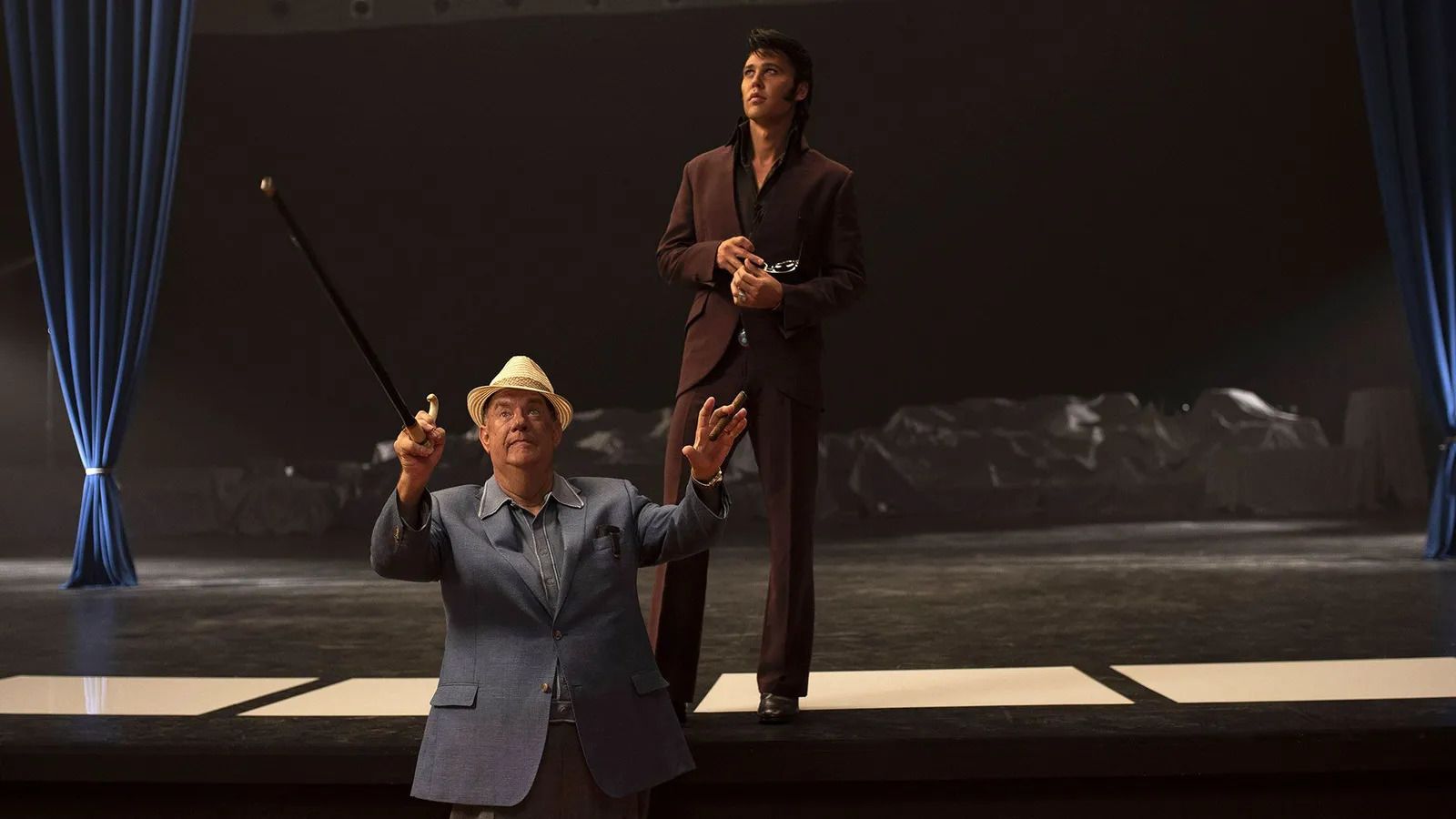 In the film Elvis, Austin Butler stars as Presley and Tom Hanks plays his manager, Colonel Parker
Austin Butler uncannily emulates Presley in a performance likely to make the actor a household name. The film portrays the singer's meteoric rise, and shows Parker taking half of his earnings, and being prompt to head off any potential problems. When there is a furore about Presley's hip movements, he cajoles the musician into creating a more family-friendly performing style. When Elvis wants to go on an international tour, it's Parker who lines up the legendary Las Vegas residency. Presley's frustrations are sated by his bank balance, even as he famously puts on weight, and his star begins to wane.
The biopic veers away from delving into Elvis's relationship with Priscilla Presley, focussing on his career and, interestingly, his relationship with the black community. Elvis was born impoverished, and grew up in the mostly black neighbourhood of Tupelo, Mississippi. He grew up around black people, and by the time he moved to Memphis, Tennessee, he was such a big fan of black music that he covered the songs he heard. He was friends with the blues singer songwriter BB King, played in the film by Kelvin Harrison Jr.
Within this framework, the film claims that Elvis was instrumental in helping black people get equal rights in the US. It does this through Parker's narration, who acts as a mouthpiece for an idea formulated by Michael T Bertrand in his book Race, Rock and Elvis. Bertrand contends that by singing songs hitherto attributed to black musicians, Elvis helped white southerners rethink their attitude to race, leading to an unacknowledged (well, at least until Luhrmann's film) impetus for white people to support the civil rights movement.
"Elvis represented a generation that came up at a time when there was a lot of change going on in the South," Bertrand, who is also a professor of history at Tennessee State University, tells BBC Culture. "One of the changes was to do with the evolution of black radio programming, and in the late 1940s teenagers like Elvis were tuning in [which gave them] a different type of perspective concerning race within a segregated society. As Elvis gets older, he has an appreciation of African-American culture and was drawn to black music in a way his grandparents would not have been. As he became popular, Elvis showed that it was 'okay' [for white people] to appreciate black culture.
"Elvis and his peers in the South are the first white kids consuming rhythm and blues. That's a breakthrough, and there were huge ramifications in that," adds the author. In his view, rock 'n' roll and Elvis "introduced a larger audience and a larger group of people to a culture that had been behind the veil of segregation. It opened up society in a positive way".
Elvis's contribution was through his actions rather than any big public statement, Bertrand believes. "I don't think Elvis was political in the sense that he would go on marches and things like that. These musicians were worried about their careers first and did not make political statements. They made their statements with their choice of music. In the context of the segregation they lived under, that was a major statement. In the 50s, many rhythm and blues artists said they were happy Elvis opened doors because the music became accessible. The problem was that because he was white, he had accessibility to venues that some of his colleagues and contemporaries did not."
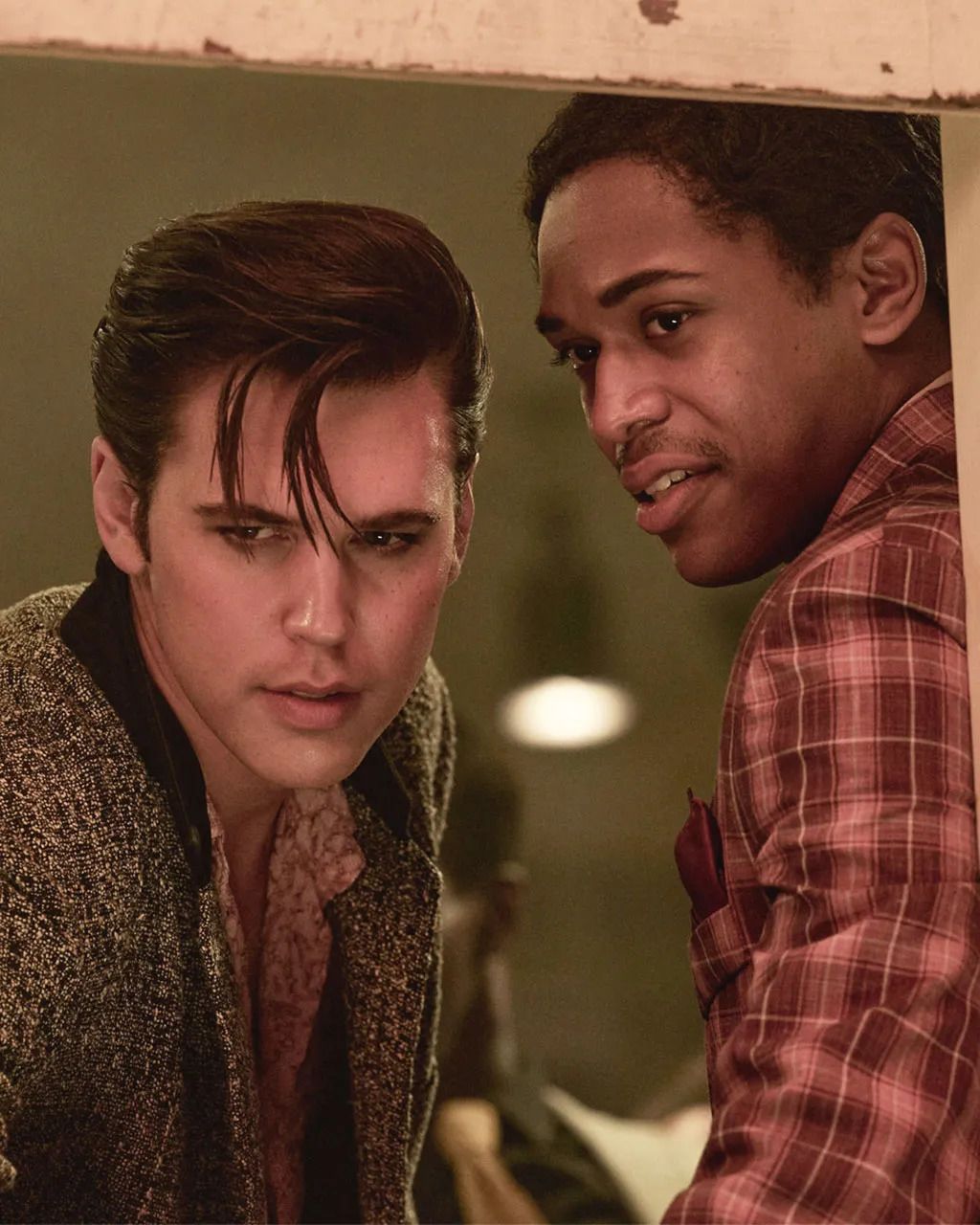 Presley's friendship with BB King, played by Kelvin Harrison, features in the film
But equally, other commentators have seen Elvis as a problematic figure regarding race, with accusations that he has appropriated black music, and some even going so far to state that he's a racist. An infamous and damning comment about Elvis regarding race can be found in Public Enemy's Fight the Power, a song written for Spike Lee's seminal film, Do the Right Thing, in 1989. It contains the rap, "Elvis was a hero to most, but he never meant shit to me. Straight up racist that sucker was simple and plain."
A lot of the history of pop is the history of black innovation being stolen by the white music business – Neil Kulkarni
It was a shocking statement for many. The legend is that Elvis invented rock 'n' roll, and changed the soul of modern music. But here was Public Enemy's Chuck D, a popular black musician and lyricist, coming out against Elvis. Chuck D has been asked since to justify the lyrics on many occasions, and he's dialled back from this position that Elvis is "straight-up racist".
However Chuck D has since put forward an argument that the exalted position of Elvis has come at the expense of black musicians, who have consequently not received their fair due. In Eugene Jarecki's 2017 documentary film The King , the Public Enemy lyricist argues, "Sam Philips was a businessman. He tried to sell those records with black folks and couldn't. He found someone to sell a black sound to white face, he knew what to sell to America. That isn't a problem. Culture is to be shared. What I took offence to was that Elvis was no more of a king than Little Richard, Bo Diddley and Chuck Berry. So who is anointing him king?"
For some, that makes Elvis the king of appropriation. Helen Kalowole's Guardian article He Wasn't my King, argues that Presley's whiteness enabled him to get famous and rich by singing songs that went unheard when emanating from the black people who originated them.
As Michael Bertrand puts it: "The appropriation thing will be an argument that follows [Elvis]. The music industry was extremely discriminatory. They understood that there were white and black teenagers listening to rhythm and blues, and they were looking for a white face to appeal to a wider audience and that was Presley. I think the industry is into appropriation and Elvis is into appreciation. When Elvis went into a recording studio, he didn’t write his own songs, he basically wanted to record everything on the radio that he liked."
"The problem was that the music industry made him out to be the only rock 'n' roll figure. Elvis didn't think that, he appreciated black musicians. I run into a lot of people who like Elvis but have issues with how he was singled out when musicians such as Fats Domino, Little Richard and Chuck Berry made huge contributions."
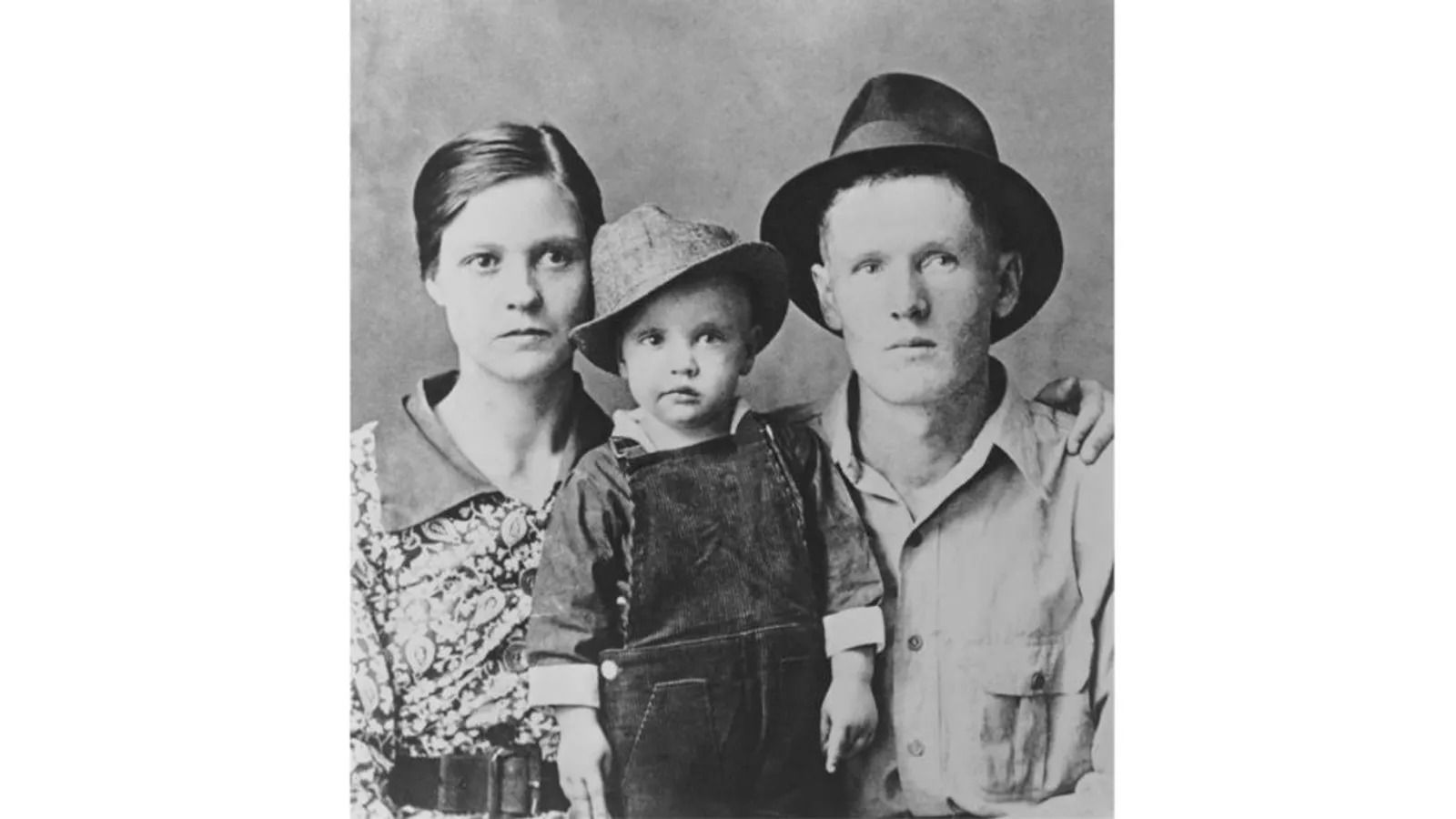 Elvis, pictured here with his parents in 1937, grew up in a majority black neighbourhood in Tupelo, Mississippi
Chuck D suggests that the racism referenced in his rap lies elsewhere, in the systemic racism of the music industry, and that black culture is continually repackaged and sold to the public in a way that hides its black roots. "I was persuaded that Elvis was another exploiter of black culture for white commercial gain by Chuck D," musicologist Neil Kulkarni, author of The Periodic Table of Hip Hop, tells BBC Culture. "That line did make me think a lot about cultural appropriation. A lot of the history of pop is the history of black innovation being stolen by the white music business, cleaned out and packaged, and sold to white audiences. That's even true today. Whether Elvis was a racist or a civil rights hero, I think the truth is to be found in the middle."
Breaking barriers
Broadcaster and journalist Jonathan Wingate visited Tupelo – where Elvis spent the first years of his life – for a programme for BBC Radio 5 Live. "I spoke to a lot of people, one of whom was Sam Bell, his best friend until he left Tupelo, who told me that Elvis was not racist."
"White children could play with black children when they were small," music journalist Phil Sutcliffe tells BBC Culture. "But then by convention and parental enforcement, they hit an age where they wouldn't be allowed to mix. That is the point where Elvis became remarkable because at that point, he didn't put up the barrier as convention would have dictated."
Elvis could not have existed without the blues… but whether you call that cultural appropriation, or just say it left an indelible influence on Elvis's style, is up for debate – Jonathan Wingate
Wingate tells BBC Culture, "I think everything is about perception, and the cultural perception now is very different to what it was when Elvis first burst on to the spotlight. His relationship with African-American music is a complicated one.
"When he first burst on to the airwaves, it was at the same time as all the campaigns against racial segregation in the American South were exploding everywhere. Elvis could not have existed without blues, rhythm and blues and gospel music. But whether you call that cultural appropriation – or just say it left an indelible influence on Elvis's style – is up for debate. I would just say he had impeccable taste."
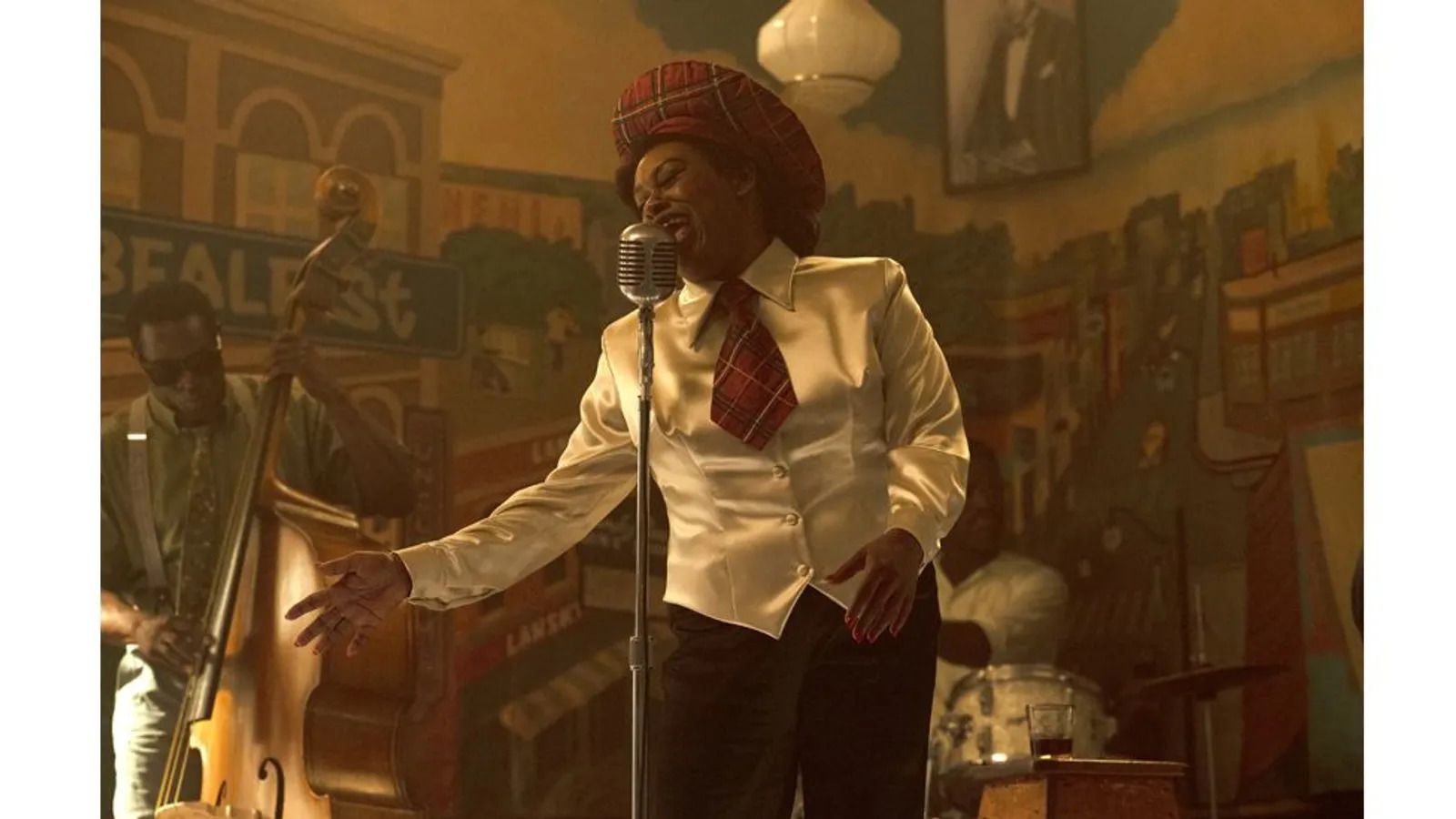 In the film, Shonka Dukureh plays Big Mama Thornton, who first performed the song Hound Dog – later a hit for Presley
Wingate can see how the film acclaims Elvis's role in the civil rights movement, even if he would not put it so boldly himself. "A lot of America was segregated at the time, and you wonder how much that music would have been palatable to mainstream America at that point. Elvis somehow made things OK. I would say Elvis opened the doors to a lot of those artists."
Wingate feels that Elvis did as much as was possible for him at the time. "I don't think it's a surprise he didn't speak out," he says. "My guess is that he wasn't politically aware… People like Tom Parker would not have let him do that as it would have been seen as too subversive."
"When I teach my students," says Kulkarni, "I show them two videos, Little Richard singing Tutti Frutti and Pat Boone singing the same song. Boone is your typical anodyne figure and that's the same old story of black innovation being marginalised and repackaged. Elvis is a somewhat more nuanced thing. The industry is always racist, but the artists themselves, that's more complex."
Le Gendre and Sutcliffe feel that having an impact is not enough to be exalted as a civil rights hero. "I don't buy that at all," says Le Gendre. "I think if you really want to contribute to civil rights, you should get on the front line and march. This is what was happening and needed at the time."
"He did some support anonymously," says Kulkarni, "that's great. It's a shame that such a huge figure couldn't be more supportive. I'm dubious about his role in the civil rights movement. The industry has a long history of finding white faces to repackage black faces for the mainstream, which still happens today. The use of black music with a white face is just how commerce works," argues Le Gendre. "It's designed for people to have a good time, spend money, dance. They then go home. They don't go on marches or try to change America."
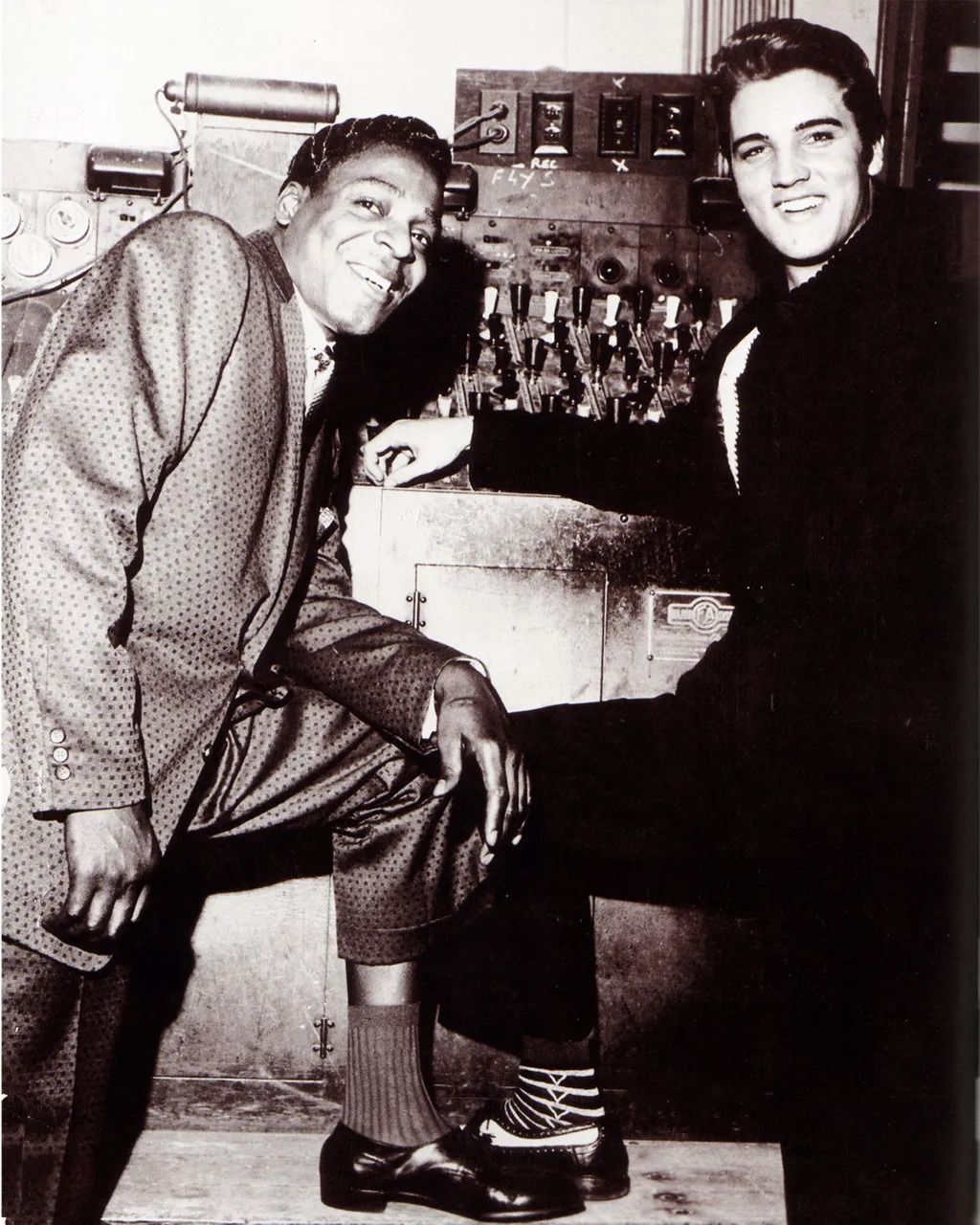 Blues artist Brook Benton and Presley, backstage at the WDIA Goodwill Revue, 1957
That's not to say Presley didn't do anything – he did show support for black artists and causes. For instance, he attended the 1956 Goodwill Revue in Memphis, the WDIA radio station's annual benefit concert to help the city's deprived children. The all-black line-up featured the likes of BB King and other big stars of the era. Though Presley's record contract did not allow him to perform, he supported from the wings. And when invited on stage, he greeted the screaming crowds with a trademark rebellious twist of his hip. For BB King, Elvis's presence at the revue spoke volumes: "I believe he was showing his roots. And he seemed proud of those roots," he said.
Of course, there are always multiple perspectives on the life of a legendary figure, and Baz Luhrmann's film is just one interpretation. And each of us has our own perception of Elvis, the man, his music and what he did, or didn't, stand for.