

10,000 residents confined as Hong Kong district enters Covid-19 lockdown
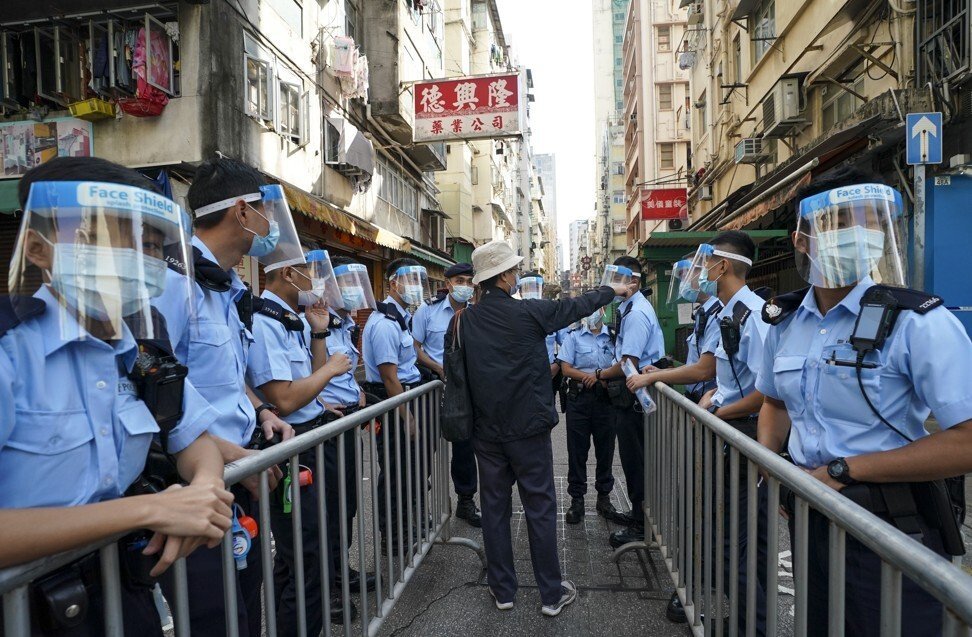
Ten thousand residents in one of Hong Kong’s most densely populated districts woke up to police cordons and officer patrols on Saturday, as a large area was locked down in an unprecedented attempt to stem the spread of Covid-19 in the city.
Residents of the Yau Tsim Mong zone who were outside the area when it was cut off before dawn found themselves separated from their families, before ministers ordered frontline workers to allow households to reunite. Others left their homes only to have their route to work blocked.
The government declared at 4am it would seal off an estimated 200 buildings in an area of Jordan packed with ageing and subdivided flats to carry out emergency Covid-19 testing. Thousands of civil servants have been deployed for the operation.
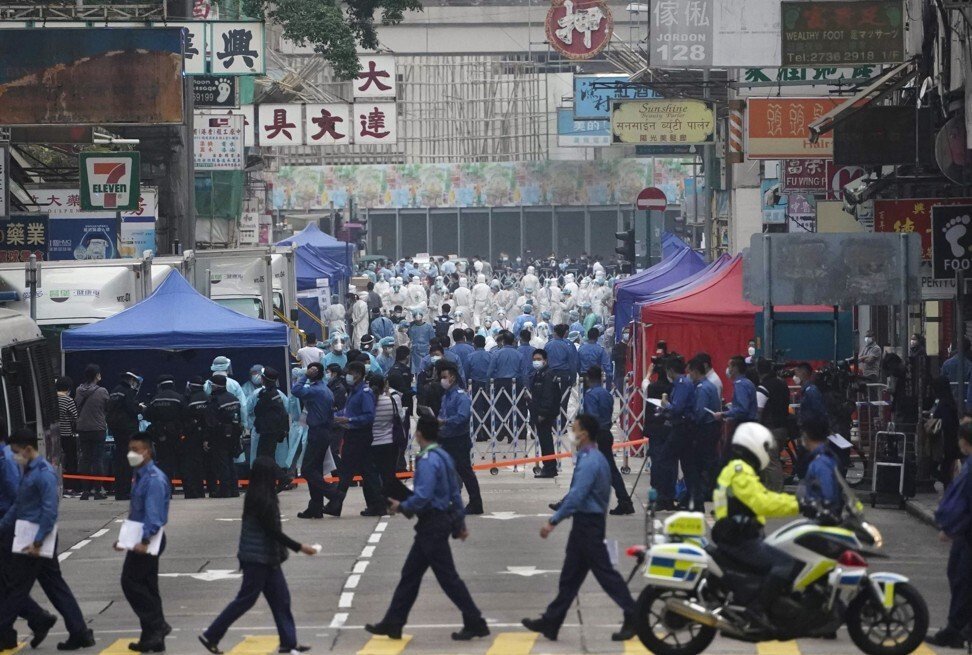
The area under lockdown, which measures nearly 500,000 sq ft and overlaps a designated mandatory-testing zone, borders Kansu Street to the north and Nanking Street in the south. The eastern and western boundaries are Woosung Street and Battery Street, respectively.
As part of the drastic step, the government has ordered everyone in the area to get tested by the end of Saturday, as it aimed to allow residents to leave the sealed-off section for work from about 6am on Monday.
Secretary for Home Affairs Caspar Tsui Ying-wai said 10,000 residents in the locked-down section were expected to be tested, with 3,000 government staff deployed for the mission.
“We have set aside sufficient resources to carry out tests as soon as possible,” he said on Saturday.
Tsui said the Home Affairs Department had established resting places for non-residents who were trapped inside the zone. He discouraged outsiders from delivering supplies of any kind to those inside the area.

Amid complaints that food would go stale and customer orders were being abandoned, the minister stopped short of committing to compensating affected businesses in the neighbourhood.
He also defended the lockdown’s implementation against criticism that it was not rolled out quickly enough and risked an exodus of residents before taking effect, insisting it was delivered in the shortest time possible.
Of the 3,000 civil servants being deployed, more than 1,700 were police or other disciplined services officers, according to sources.
Announcing the lockdown in the early hours, the government said it was necessary after 162 confirmed cases were found in 56 housing blocks in the Jordan area between January 1 and January 20.
“Despite the short-term inconvenience, we hope the lockdown will cut off the transmission chain and restore business and livelihood in the neighbourhood affected by the pandemic,” officials said in a statement.
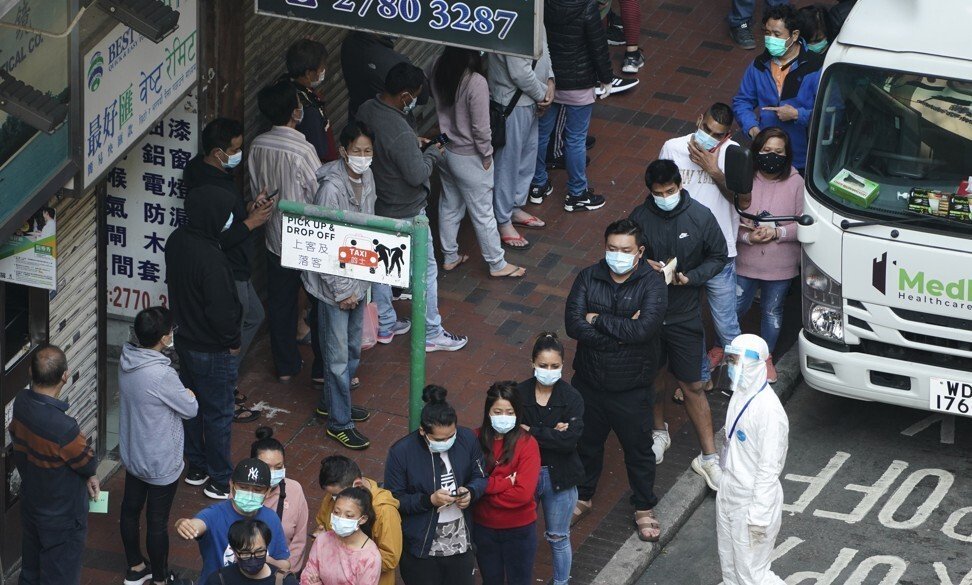
News of the lockdown, aimed at eliminating the outbreak to zero cases in the area, leaked ahead of the announcement, giving some residents time to leave the targeted area in advance.
Secretary for Food and Health Professor Sophia Chan Siu-chee said those who had been in the area for more than two hours in the past 14 days were also required to get tested by the end of Saturday, even if they were no longer inside the zone.
Residents outside the area but wishing to go home should be allowed to do so, she clarified.
By 9.15am, 120 people had been screened, Chan said, adding all testing was expected to be completed by the end of the day.
The specific area was chosen for lockdown because it had a higher concentration of the 162 cases recorded in the district over the past week, the health secretary said.
She did not rule out a second batch of testing for the neighbourhood, subject to the first round’s results.
Secretary for Environment Wong Kam-sing said nearly 90 per cent of sewage samples collected from a block of about 40 buildings in the area had returned positive readings for the coronavirus.
Hong Kong on Friday confirmed 61 new Covid-19 cases, 55 of which were locally transmitted. Twenty-four cases came from Yau Tsim Mong, and eight of them were found in the designated testing zone.
Under the lockdown rules, all persons within the restricted area must get screened for Covid-19 at 51 mobile testing facilities stationed locally before the end of Saturday. No one can leave the zone until the restrictions are lifted.
Just three types of people will be allowed to enter the area: residents, relatives staying in the same flat as those in need of care, and staff members in urgently needed sectors such as elderly care.
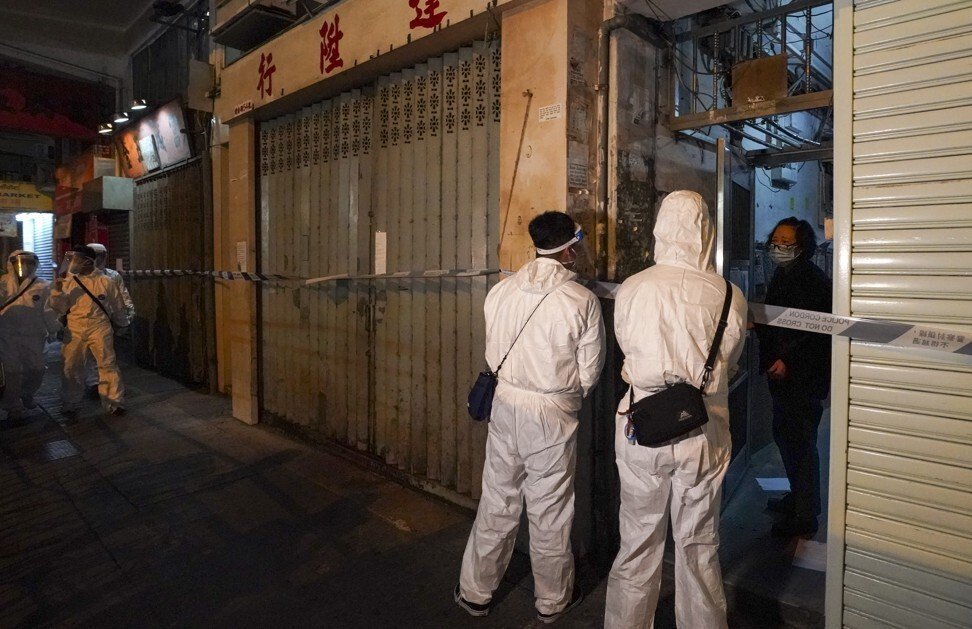
After police cordoned off the area, officers in protective gear from other disciplined services – customs, immigration, fire services and correctional services – conducted door-to-door inspections, alongside health officers.
By 7am, officers clad in white personal protective suits had set up counters at some of the checkpoints.
Some officers also waited at the entrances of cordoned-off residential buildings. Police officers stood guard around the enclosed areas.
Police arrested a man who grew irritated when officers would not allow him to enter the area and he began to struggle with them. The 47-year-old man arrived at the junction of Shanghai Street and Nanking street shortly before 10am, saying he wanted to go home. Officers stopped him at the cordon line and told him that he would not be allowed to leave the area for 48 hours after entering.
The man became emotional and allegedly punched an officer, who suffered a minor injury and was sent to hospital for treatment. After the arrest, the man was allowed to enter the area.
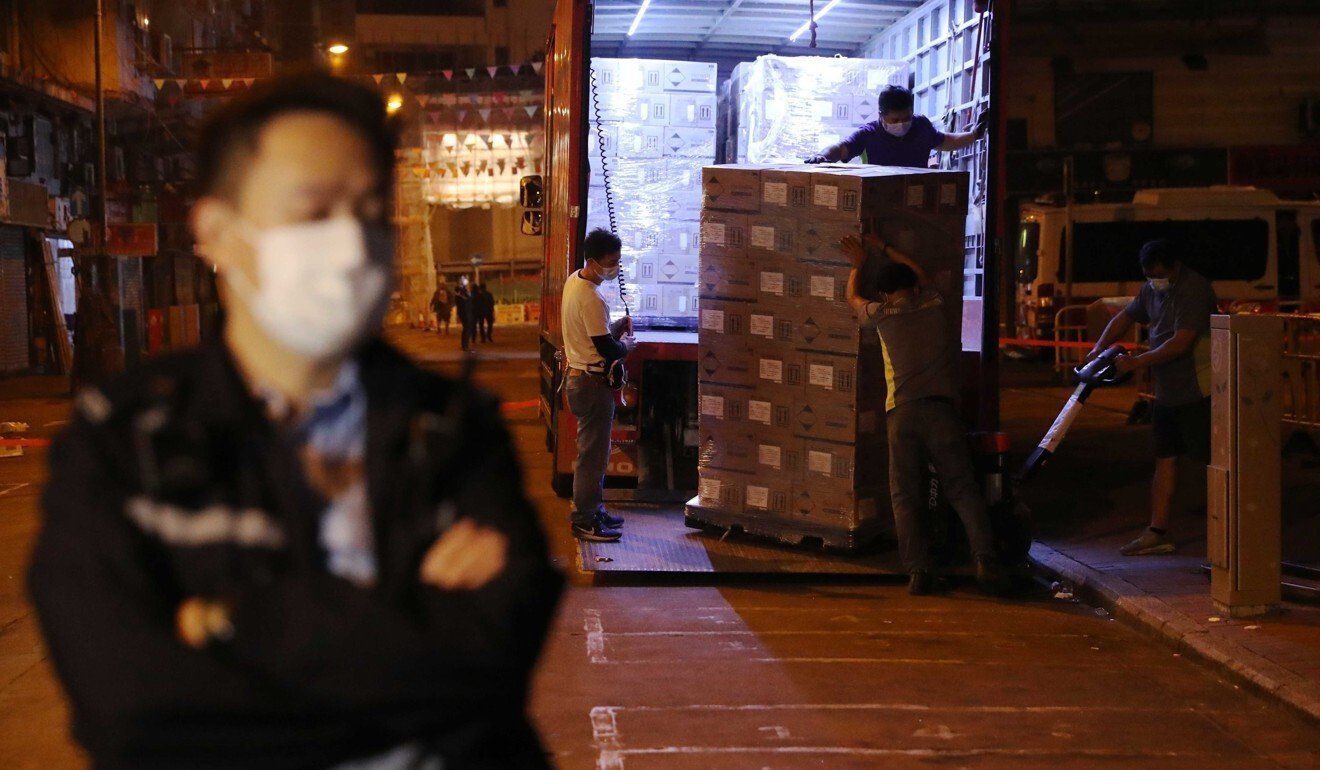
Lou Hung-kau, who lives in the neighbourhood where he also runs a cha chaan teng, berated the government for locking down the area without warning food businesses.
The 66-year-old said: “Shutting the area down was not a problem, but the government should have informed store owners in the area in advance so that we don’t prepare the food. Now the food will go stale.”
Grocery store owner Clara Choi could not go to her shop because she did not live in the area, which made her worry about a cat that she kept on the premises. On being refused access to tend to the animal, she said: “It’s barbaric.”
Amid some confusion over the rules, Woosung Street resident Norisa Ale found out on Saturday she would be separated from her husband for at least two days, having gone out for a walk in the small hours and returning after the restrictions were imposed.
“I came back at 5am and the police officers said I could not go inside even though I told him I lived here,” she said.
Ale waved at her husband as they spoke over the phone. She said she would ask a few friends for somewhere to stay.
“This is about safety for everyone,” she said, adding she could accept the arrangement.
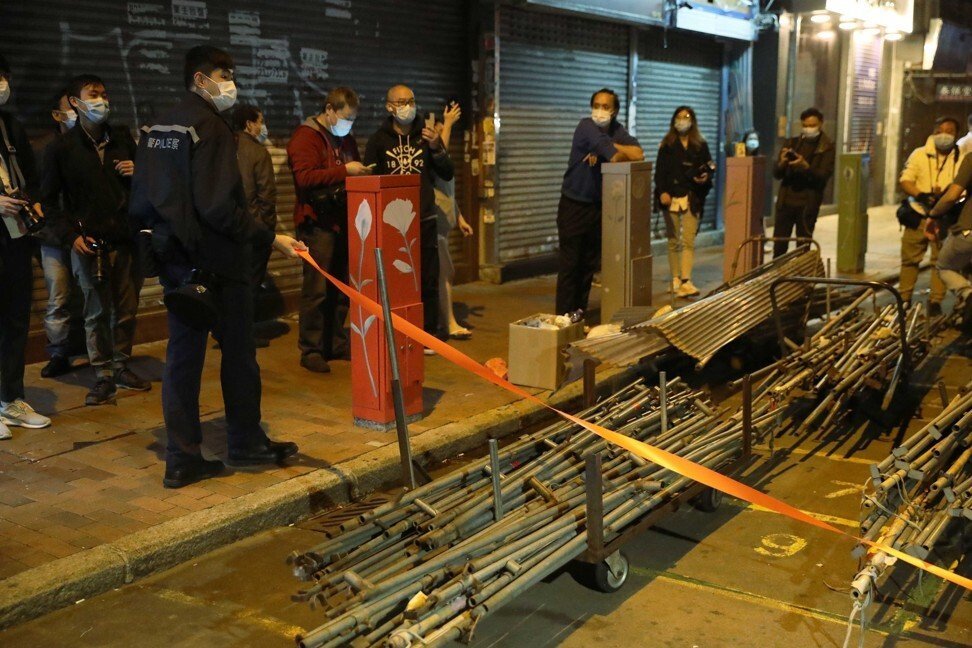
Another resident, confined to the restricted zone, had to call his boss to tell him he could not go to work.
“I went to bed really early last night, at around 9pm, so I only found out about it this morning,” he said.
He said he was a little worried about his food supply and work.
Luk Chung-hung, a labour sector lawmaker with the pro-government Hong Kong Federation of Trade Unions, called on the government to offer compensation, such as a subsidy ranging between HK$500 (US$64) and HK$1,000 for each worker who was unable to get to his or her job as a result of the lockdown. He questioned why the lockdown could not be done within 24 hours, pointing to authorities in Hubei province in mainland China who tested about 10 million people within several days.
For enquiries relating to the new restrictions, call the Home Affairs Department on 2399 6469 and 2399 2319. The department has also set up a hotline for members of ethnic minority communities on 3755 6816.