

Desperate tourist-reliant EU nations reopen their ‘Covid-free’ zones. But can enough holidaymakers actually reach them?
The European Union’s general idea for the upcoming summer is to let vaccinated and Covid-negative tourists in. It was suggested that the EU’s ‘green pass’ would serve this purpose. But several more weeks are still needed to roll it out, and waiting for so long will cost southern European countries, who want holidaymakers back on their beaches, a lot of money.
It’s anyone’s guess why this time EU executives are not urging the bloc members to stick to some kind of a joint reopening strategy. Is it because of a failure of a previous common plan, regarding vaccines purchase and distribution? Who knows. But, this time, seeing that waiting for a common approach would take a while, countries rushed to roll out their own reopening rules. Which means the tourists now need to do separate paperwork for every state they want to visit.
‘We cannot wait until June’
Greece was one of the first EU member states to go its own way on this. In fact, it was the country which managed to set up the bloc’s first ‘Covid-free’ zone. The island of Kastellorizo, with a population of some 500 people, was almost fully vaccinated under the government’s plan of prioritizing the immunization of small islands.
The aim was to support such tiny communities, some of which have very small medical facilities – but at the same time, to allow them to reopen their touristic business as soon as possible.
The bigger islands, like Crete, had to wait longer to reopen – but there was no bad blood, University of Crete professor and former member of the European Parliament Notis Marias told RT. “I don’t think there is any kind of jealousy or competition between Crete and other islands. We have great solidarity.”
Maybe there was no reason for jealousy after all – given that Greece is now fully reopening for tourism and is ready to accept visitors with a vaccination certificate or a negative Covid test.
What about solidarity with the EU neighbors? “A common position” on reopening is welcome, Greece’s tourism minister Harry Theoharis told the New York Times, but “we cannot wait until June” (when the EU’s ‘green passport’ for free travelling is expected to be rolled out).
“We need to reopen our economy,” professor Marias said. “The Greek government has a certain strategy while reopening tourism starting from the 14th of May. There are special protocols to be applied for tavernas, hotels, transport.”
He agrees that for people craving to relax on a seashore, it would be difficult to follow certain protection rules. “But this is the way we need to live. It is up to the people who run the businesses to follow the protocols, otherwise they will be fined and prosecuted by the authorities. So I expect them to be very careful in order to preserve their own businesses, if they want to keep them open. It’s also up for the local authorities to observe the protocols, not to allow mass gatherings on the beaches for example.”
‘If we don’t die of the virus, we die of poverty’
For the countries depending on tourism, the season could have already started in May. And they are already losing money – like Italy, for example.
The southern-European country also unrolled a programme to vaccinate its small islands. The island of Elba – where the French emperor Napoleon was exiled – is included in the plan.
“We are waiting for the needed number [of vaccine doses] to arrive in the upcoming days, as maximum – in the upcoming weeks,” Angelo Zini, the mayor of Elba’s main city Portoferraio, told RT. “Of course, there are people who have doubts, whether to get vaccinated or not, but the majority does want to get a jab. In recent months, the spread of the virus slowed down significantly.”
Mr Zini says that the last year was relatively better for Elba than for other places in Italy. “But this year, we have been closed for a long time and we already lost a big part of spring. This is obviously taking its toll on the businesses. Some of them, especially small ones, got support from the state, but it’s not enough to survive, everything needs to come back to work again. We are ready to reopen, we have all set for the season.”
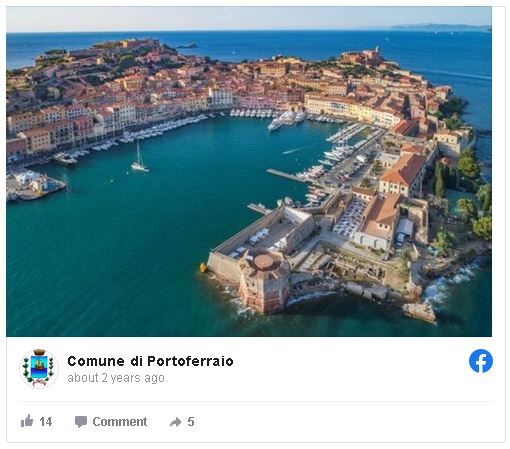
“The campaign to immunize the islands is a very important one. Here in Elba, we have a hospital facility, but some others don’t, so the main goal was to preserve the health of our citizens,” Portoferraio’s Vice Mayor Luca Baldi continues.
“But the [vaccination] campaign may bring benefits for tourism as well, while we are now competing with other places like Greece or Spain.”
On May 4, Italy’s PM Mario Draghi confirmed that Italy will adopt the EU’s free travel document when it's available in the second half of June. Suddenly, it was also announced that the country will introduce its own ‘green pass,’ so from mid-May international tourists are welcome in the country.
“On the state level, foreign tourism is a big part of the revenue. We can try to survive while [catering to] only domestic tourists, but it's hard, as we are used to host many visitors from Germany, Scandinavian countries, Switzerland. Without them we will suffer a lot,” Mr Baldi says.
Tourism matters so much for all the Italian regions that the idea of immunizing islands first turned into a scandal. Back in April, the head of the Emilia-Romagna region Stefano Bonaccini even called on the tourism minister Massimo Garavaglia to scrap the plan.
“Tourist locations should not be privileged to the detriment of others,” he wrote in an angry Facebook post. “Instead, the government should work to provide as many vaccine doses as possible in the closest future, as well as elaborate on the vaccination passport, with equal rules for all in Europe.”
Bigger Italian islands like Sicily also had certain concerns regarding the immunization plan, as they are no less dependent on tourism than the smaller ones.
“Sicily asked to be part of the programme, but unfortunately, it’s a national plan, so we need to follow the rules that are equal for all of us,” Mario Bolognari, mayor of the popular touristic town of Taormina, told RT. “We had some supply problems in the past months, but now the doses arrive in necessary numbers.”
May is a very important month for Sicily, Mr Bolognari says, but now the island is completely deserted. “The appointments we had for June are now all cancelled,” he adds.
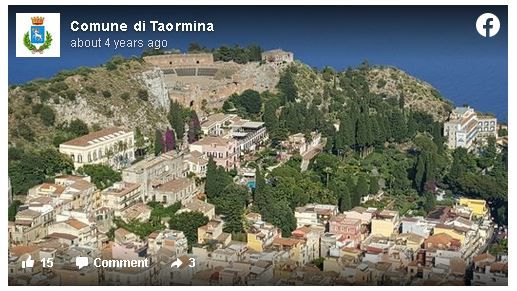
“Taormina is quite rich, but for now the situation is very dire, especially for the tourism-related staff or small family-run businesses. Some of them will have to close, maybe not hotels, but bars and restaurants, yes. They receive certain support from the state, but it’s always less than the profit they would make.”
"I wish they would have a way to reopen, otherwise if we don’t die of the virus, we die of poverty."
Half of the visitors Taormina traditionally welcomes are from abroad, Mr Bolognari says. “We host people from Germany, from the Scandinavian countries and the UK, from France and the US. If we don’t have an agreement with all these countries, what’s the purpose of having a passport?”
It’s bad news, then, that neither Italy nor Greece is included in the ‘green list’ the UK drafted for its holidaymakers. As for the US, the Department of State’s advisory dating back to April 20 clearly says: ‘Do not travel’ to both Italy and Greece because of high Covid risk.
Meanwhile, in the beginning of May, Italy reported its own first Covid-free destination. Procida, an island near the city of Naples, immunized most of its 10,000-strong community. “In April, the head of the Campania region decided to speed up the process [of islands’ inoculation] and ordered the vaccination of the islands Procida, Ischia and Capri,” local mayor Dino Ambrosino told RT. “We rolled up our vaccination campaign very fast, and the majority of people wanted to use the chance.”
“We are not scared of meeting people. Traditionally, our island was – and still is – a very open one. Most of our citizens have their jobs related to the sea, they navigate the whole world. So, even now, we have a lot of contacts with the outside world. Regarding the imported Covid cases – it may not be a tourist who brings it, but a sailor who returns home.”
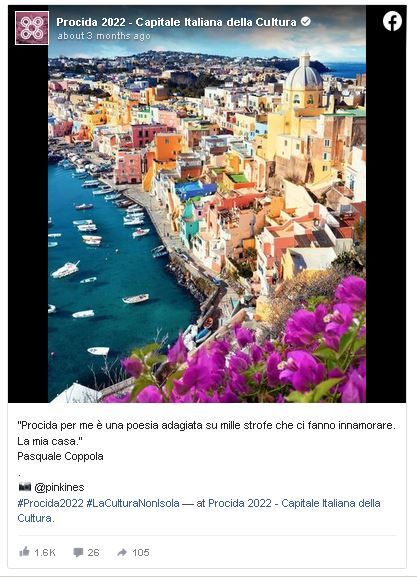
For Procida, the fact of being the first almost fully inoculated community in Italy, has a somewhat symbolic meaning. The island had been chosen as the culture capital of Italy for the next year.
“When Culture Minister Franceschini announced the title of the culture capital for Procida, he was a bit prophetic. Now, as we are the first to be vaccinated, we can become a sort of symbol of hope,” Mr Ambrosino says. “Have you seen the colors of our houses? They may represent a contrast to the grey color of the times of the coronavirus emergency. So, we hope to become a guide for people, to make them meet again, as we will have a number of cultural events scheduled for the whole year starting from January.”
Well, for certain European countries, like Italy and Greece, the matter of meeting the 2022 season with hope is directly related to the money they can make from tourism in 2021.