

How COVID has forced the end of 9-to-5, office-based workdays
“The 9-to-5 workday is dead,” Salesforce President Brent Hyder said in a statement earlier this week. “And the employee experience is about more than ping-pong tables and snacks.”
The software company said nearly half of its employees said they only want to come into work a few times a month in a firm-wide survey, but 80% want to stay connected to a physical workplace. As a compromise, Salesforce will offer three different employment options for its workers.

Some employees will work a “flex” option, meaning they’ll come into the office between one and three times per week; some will work remotely full-time; and others will work in an office full-time, Hyder explained. He added that it no longer makes sense to expect all employees to work an eight-hour workday and expect to do their jobs successfully.
“This work-from-anywhere model will unlock new growth opportunities that will help us drive greater equality,” Hyder said. “Our talent strategy is no longer bound by barriers like location, so we can broaden our search beyond traditional city centers and welcome untapped talent from new communities and geographies.”
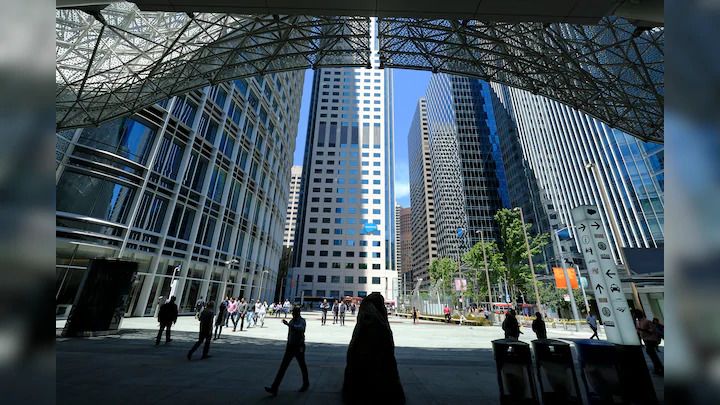 People make their way into the Salesforce Transit Center after it reopened, in San Francisco.
A number of other large tech companies have embraced a similar sentiment after nearly a year of adapting to workplace changes brought on by the 1COVID1-19 pandemic.
Spotify announced its “work from anywhere” plan for employees on Friday that will allow employees to choose whether they want to work from home or an office space going forward.

“Effectiveness can’t be measured by the number of hours people spend in an office,” the company said in a blog post. “Instead, giving people the freedom to choose where they work will boost effectiveness. Giving our people more flexibility will support a better work-life balance and also help tap into new talent pools while keeping our existing band members.”
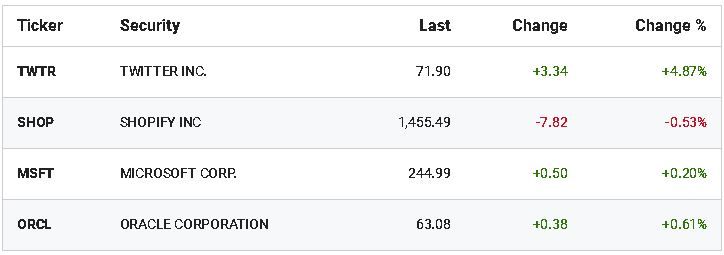
Twitter said in May that its employees could work from home if "forever” if that's their desire. Shopify announced in May that it would be a “digital-by-default” company. Microsoft adopted a new work-from-home policy in October. Oracle said in December that it might allow employees to choose office locations and whether they want to work from home. The list goes on.
A December Pew Research Center survey of more than 10,300 panelists found that 54% of Americans would consider working from home after the pandemic ends if given the opportunity, and 20% were already working from home.
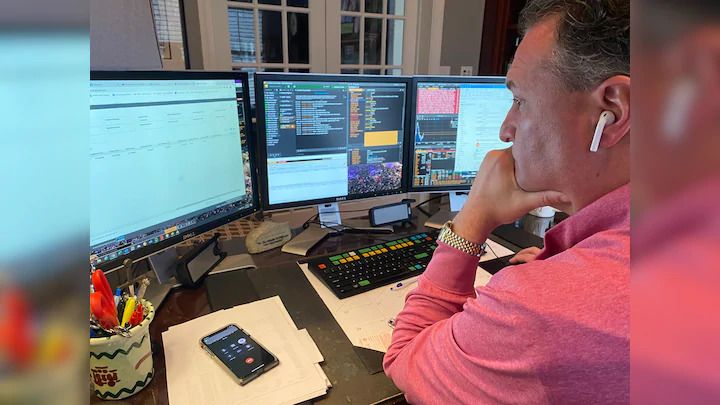 Jonathan Corpina, Senior Managing Partner at Meridian Equity
Partners Inc., who normally works on the New York Stock Exchange trading
floor, works in his home office in Armonk, NY.
Jonathan Corpina, Senior Managing Partner at Meridian Equity
Partners Inc., who normally works on the New York Stock Exchange trading
floor, works in his home office in Armonk, NY.
“While 1COVID1-19 was a horrendous force on millions of lives and their livelihoods, ... the optimist in me sees it will also have surfaced many positives,” Stephan Aarstol, business owner and author of “The Five Hour Workday,” told Fox Business. “Our society finally taking a hard look at how we work and challenging the validity of the 9-5 workday may be one of the positives.”
Aarstol’s Mark Cuban-backed, San Diego-based company Tower Paddle Boards has experimented with a five-hour workday over the past five years. The business owner said he created a constraint for his company that 1COVID1-19 eventually forced on others.
“If people couldn’t be as productive as they
were before, they risked being fired,” he said of his company. “Our customer service team’s hours shrunk, too, so we didn’t answer the phone after 1 p.m. ... Then we looked for what broke, assuming it would be lots of things. The reality is: not much broke.”
Company leaders have the power to determine how many hours constitute a full workday -- not societal pressure, Aarstol explained.
“1COVID1-19 was a Pandora’s box of sorts that suddenly and over an extended period of time forced a different decision upon them that they may not have even known was a possibility before,” he said. “Their self-interest of not wanting to go back may be the basis of their decision going forward. And that Pandora's box opening for the employees may put intense pressure on the decision-makers decision in the future.”
Many employers and employees are also leaving densely-populated and high-priced cities and moving to smaller cities across the country.
 The 110 Arroyo Seco Parkway that leads to downtown Los Angeles during the coronavirus outbreak in Los Angeles, Calif.
The shift toward more work-from-home opportunities will likely open opportunities for workers to move outside of big metropolitan areas while keeping their Silicon Valley and New York City jobs.
Facebook founder Mark Zuckerberg said in a May 21 townhall video that the tech giant was thinking of ways to make its remote work policy more flexible for employees who might wish to work outside of the company's urban office locations in Silicon Valley, New York City, Chicago, Boston and elsewhere..

Now, the company is working to develop a permanent plan for the company's future that will include more flexible work options.
Multiple reports have noted tech companies’ and employees’ growing shift away from Silicon Valley and New York City into places like Texas and Florida in what has been dubbed the “tech exodus.” Tesla CEO Elon Musk, for example, announced in December that he had moved from California to Texas as he builds a 4-million-square-foot factory near Austin.

Oracle announced in its quarterly report released in December that it was moving its headquarters from Silicon Valley to Austin; financial technology company Hewlett Packard Enterprise and venture capital firm V8C did the same.

“Our low taxes, high quality of life, top-notch workforce, and tier-one universities create an environment where innovative companies like HPE can flourish,” Texas Gov. Greg Abbott said in a December statement when he shared news of HPE’s move. “We look forward to a successful partnership with HPE, as together we build a more prosperous future for Texas."
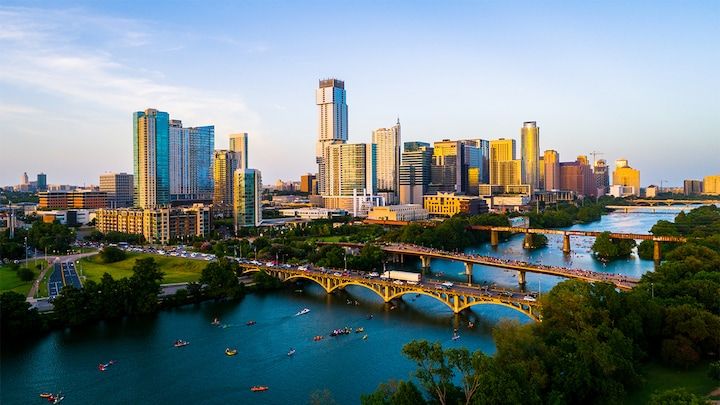 Austin, Texas
Miami has also attracted the attention of some tech leaders, including tech investor Keith Rabois and Blumberg Capital founder David Blumberg.
“As of last night, we have moved out of California, and are now happier residents of southern Florida,” Blumberg announced in December, according to the San Francisco Financial Times. “Poor governance at the local level in San Francisco and statewide in California has driven us away.”
His statement continued: “We certainly hope and pray that California will take action to remedy the disastrous self-inflicted political situation and restore its former luster and quality of life, but for now we are voting with our feet.”
The forced constraint of 1COVID1-19 has undoubtedly shaped Americans’ habits and preferences, as Aarstol noted.
A forced shift toward work-from-home culture and away from the once widely accepted 9-5 workday will shape the future of American employment opportunities and what company policies and cultures will boost productivity.
“Rules ... are starting to be devised to manage this new phenomenon. The ground has shifted. The old rules won’t work,” Aarstol said. “At this point, we’re not even out of the pandemic yet. The real test is when the all-clear slowly sounds over the next year, and every company and every employee has a decision to make … about how to work.”