

Like it or not, vaccine passports remain our pathway to normalisation
Who would have thought two years ago that most of us would be familiar with the Greek alphabet? It seems not too long ago that Delta was the variant of concern in Covid-19 cases.
Globally, Omicron has spread like wildfire, with the US reporting a record single-day number of over 1 million new cases in early January. The highly infectious variant has wreaked havoc around the world, straining health systems and public services.
Countries have responded in various ways – locking down, introducing new social distancing restrictions, tightening entry requirements and rushing to provide boosters. Israel is already offering a fourth vaccine shot to counter Omicron. Out of an abundance of caution, Hong Kong has imposed all four measures, increasingly utilising lockdowns.
One thing all countries agree on is that vaccinations are safe, effective and life-saving – offering the best protection against Covid-19, short of staying inside a bubble and never coming into contact with anyone else. UN chief António Guterres declared global vaccinations are the “only way out” of the pandemic.
Whether due to fear of Omicron’s outbreak in the community or the recently introduced vaccine passport scheme to be launched on February 24, there has been a surge in first vaccinations of late. Hong Kong has finally achieved the initial herd immunity goal of 70 per cent, though experts have been shifting the number upwards.
About 78 per cent of the population have received a first vaccine dose and over 800,000 people have received a booster. Perhaps Hong Kong can soon reach the ultimate goal of vaccinating 90 per cent of the population – the milestone denoted for relaxation of social distancing measures and sustained freedom by top microbiologist Dr Yuen Kwok-yung.
Some Hongkongers have grumbled about the vaccine passport plan, which would restrict entry into non-essential premises such as restaurants, gyms, beauty parlours and cinemas to those who have had at least one coronavirus jab. Others have grumbled that the vaccine passport should have been introduced six months ago so as to accelerate vaccination rates.
The most vocal detractors are, of course, those who are not vaccinated. Excuses range from fear of side effects to mistrust in government and lack of Covid-19 in the city. Globally, 4.78 billion people have had at least one jab – surely an ample data set for vaccine sceptics.
Already, Hong Kong is behind the curve on enacting a “health pass” or vaccination pass. Germany, France, Italy and several major cities in the US require vaccine passes for dining in at restaurants and entry to some public venues; Britain did, too, until recently when it scrapped many of its restrictions in a move to open up. Going a step further, Italy recently mandated vaccinations for people over 50.
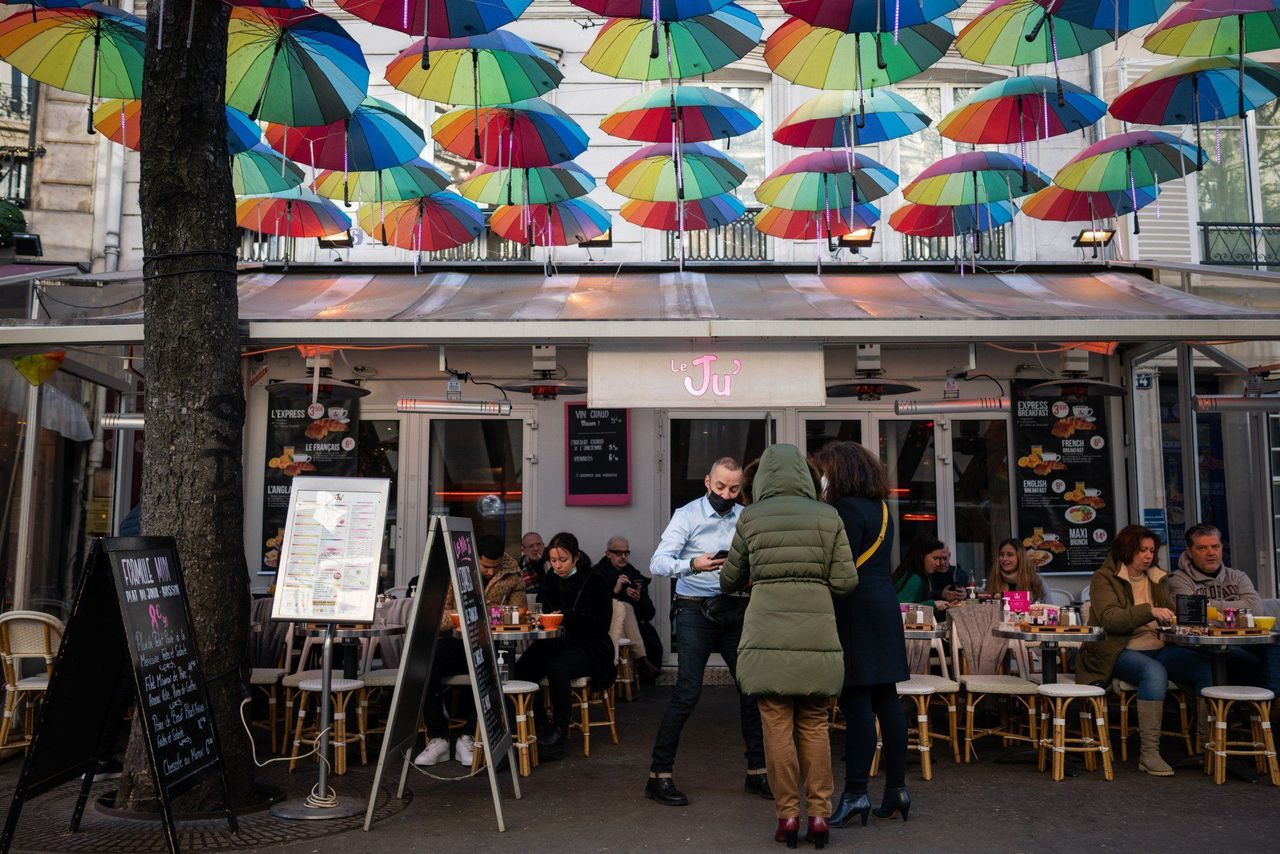 A waiter checks the vaccine pass of customers arriving at a restaurant
in central Paris, France, on January 24. Hong Kong is behind the curve
on enacting a proof of vaccination scheme.
A waiter checks the vaccine pass of customers arriving at a restaurant
in central Paris, France, on January 24. Hong Kong is behind the curve
on enacting a proof of vaccination scheme.
Closer to home, Singapore bars unvaccinated people from dining in and entering shopping malls unless they have recovered from Covid-19. To further encourage vaccination, the unvaccinated are no longer allowed to enter their workplace even if they test negative for Covid-19.
And finally, those who are “unvaccinated by choice” have to pay their own coronavirus medical bills if admitted to hospital. This is because the unvaccinated contribute to the majority of intensive inpatient care. Probably for this reason, the current vaccination rate in Singapore is 91 per cent of its eligible population.
Just to be clear, the Hong Kong government is not mandating vaccination. Vaccination is a personal choice. Vaccine holdouts can choose not to get vaccinated; they just have to bear the consequences of not being able to enter non-essential premises and of potentially some other restrictions down the line.
As limits on normal social activities cannot continue indefinitely, vaccine passports pave the way for their gradual resumption.
Is it right to continue to penalise and impose social distancing restrictions on 78 per cent of the population for the sake of the wilfully unvaccinated 22 per cent?
Every time social distancing measures are tightened, many sectors of the economy have to suffer to protect the unvaccinated from severe illness, as they make up the majority of intensive care. Singapore’s health minister put it this way: the wilfully unvaccinated are “free-riding” on the goodwill of the inoculated.
If the wilfully unvaccinated choose to lose out on certain privileges because of the vaccine passport, perhaps it is a small price to pay for the stability of our health care system, strength of the economy and overall health of members of society.