

Who’s going to pay for an ethical chocolate bar?
Europe, the world's biggest consumer of chocolate, and West Africa, the leading grower of the cocoa beans used to make it, share a common goal to make the sector sustainable.
But they have opposing views on how to put an end to the social, economic and environmental harms caused by satisfying Europe’s sweet tooth, heralding a showdown over who will bear the costs of complying: Big Chocolate or cocoa farmers.
The EU is finalizing regulations that seek to ensure that chocolate entering the market is free from deforestation and child labor. At the same time, Ghana and Ivory Coast, the world’s biggest cocoa producers, are demanding higher prices. That's vital, they say, to make sustainable chocolate a possibility — and not a pipe dream.
The stakes are high: For the EU, cocoa is a test case for how companies and producers react when the bloc tries to impose higher standards. For producers, the push to set up a cartel could drive up prices in the short term — but also risks stimulating oversupply and ultimately causing a price crash that would deepen the poverty already suffered by most cocoa farmers. Chocolate makers, facing rising costs and greater scrutiny, may reroute supply chains to other cocoa-producing countries seen as less risky.
Doing nothing is not an option, said Alex Assanvo, who heads the joint West African initiative to support cocoa prices.
"We are not asking to pay them more, we are asking to pay them a fair price," Assanvo told POLITICO in an interview. "If we believe that this is going to create oversupply, well then I don't know, maybe we should stop eating chocolate."
Bittersweet taste
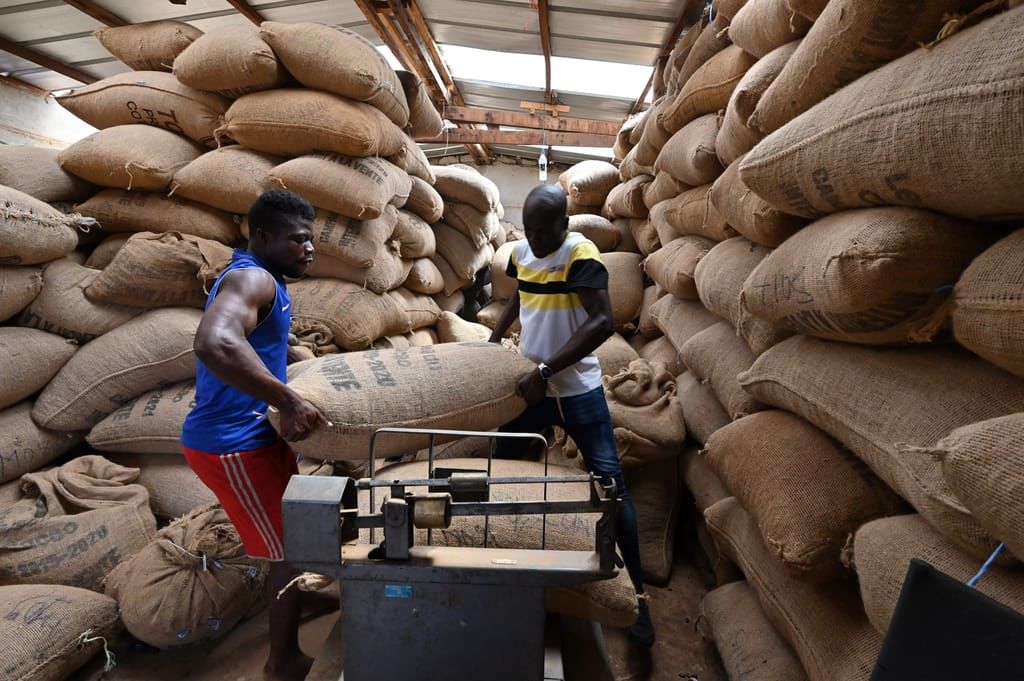
Chocolate may be sweet but the industry that makes it is not. Most of the beans used to produce the world’s supply are grown by impoverished West African farmers; all too often from trees planted on deforested land and harvested by children. One problem drives the others. Poverty pushes farmers to chop down forests to produce more beans and profits and to put children to work as they cannot afford to pay wages to adult laborers.
To address this, Ghana and Ivory Coast, which produce 60 percent of the world’s cocoa, formed an export cartel in 2019 modeled on the Organization of the Petroleum Exporting Countries (OPEC). They introduced a $400 per ton Living Income Differential, which aims to bring the floor price up enough to cover the cost of production.
In public, big chocolate manufacturers and traders, including Barry Callebaut, Cargill, Ferrero, Hersey, Lindt, Mars, Mondelez and Nestlé, welcomed the initiative.
Yet behind the scenes many of the firms — which between them account for about 90 percent of the industry's $130 billion in annual profits — have done everything possible to avoid paying the premium and to drive prices back down, according to the Ivorian Coffee-Cocoa Council (CCC), the Ghana Cocoa Board (Cocobod) and their joint Initiative Cacao Ivory Coast-Ghana (ICCIG).
The companies that responded to requests for comment from POLITICO said that they have paid the Living Income Differential (LID) since its introduction. The Ghanian and Ivorian trade boards and the ICCIG claim, however, that they have negated the LID's value by forcing down a different premium, the origin differential.
Fed up, these countries boycotted the World Cocoa Foundation Partnership Meeting at the end of October in Brussels. They then gave the companies a deadline: commit to the premiums by November 20 or the countries would ban their buyers from visiting fields to carry out harvest forecasts and suspend their Corporate Social Responsibility programs – which sell well with ethically-minded consumers.
More harm than good?
Another proposed remedy comes from Brussels. Cocoa is one of the products to which the new EU legislation on due diligence — Brussels speak for supply-chain oversight and compliance — would apply.
Under this, large firms operating in the bloc will be forced to evaluate their global supply chains for human rights and environmental abuses, and compensate injured parties. In theory, this should reduce deforestation and child labor and improve the lot of farmers.
Yet, as European ambassadors thrash out the terms — and big players like France push for them to be watered down — concerns are growing that the legislation could turn out at best to be ineffective in practice, and at worst do more harm than good.
Cocoa farmers, and the NGOs that support them, have reason to be skeptical: Back in 2000, a BBC documentary exposed the widespread use of child labor on cocoa plantations in Ivory Coast and Ghana. The resulting media pressure led to a proposal for legislation in the United States forcing companies to certify chocolate bars free of child labor.
Companies pushed back hard, Antonie Fountain, managing director of cocoa NGO coalition The Voice Network, told POLITICO. The proposal was dropped and companies committed instead to a voluntary plan to solve child labor, he explained: “And that turned into a two-decade failure of policy."
The resulting patchwork of pilot projects failed to transform the sector. Despite an initial decline, nearly 20 years after the framework was introduced 790,000 children in Ivory Coast and 770,000 in Ghana are still working in cocoa, with 95 percent of them exposed to the worst forms of child labor, according to a 2020 report.
Deforestation has meanwhile accelerated.
Ivory Coast has lost up to 90 percent of its forest in the last half century. Between 2000 and 2019 alone 2.4 million hectares of forest was cleared for cocoa farms, representing 45 percent of the total deforestation and forest degradation in the country, according to Trase, a data-driven transparency initiative.
The government’s attempts to safeguard what remains are half-hearted and often undermined by corruption: In 2019 a quarter of Ivory Coast's cocoa production was in protected areas and forest reserves, the Trase study found. This left the EU exposed to 838,000 hectares of deforestation from Ivorian cocoa. Commodity trader Cargill leads the pack, according to Trase, with its 2019 exports exposed to 183,000 hectares of deforestation.
Over the last decade companies have proposed corporate social responsibility (CSR) initiatives that aim to tackle both ills. For instance, Mondelez, the maker of Cadbury and Toblerone, recently committed $600 million to tackle deforestation and forced labor in cocoa-producing countries, bringing its total funding for environmental and social issues to $1 billion since 2010.
These sums are, however, puny by comparison with the profits earned by those firms, said Fountain. Mondelez returned $2.5 billion to investors in the first half of 2022.
Mondelez is "excited" about its investments, the firm said in a statement. But it is calling for more sector-wide actions and rethinking its incentive model. Cargill did not respond to a request for comment.
Social responsibility
The big numbers that companies cite about their CSR programs' reach often boil down to one-off training sessions on productivity for farmers, Uwe Gneiting, senior researcher at Oxfam, told POLITICO. This was the case for 98 percent of the 400 farmers interviewed for research recently carried out by Gneiting and others from the charity into the impact of sustainability programs over the last decade in Ghana on farmers' incomes.
The research finds that CSR initiatives, which companies use to tout their sustainability credentials to European consumers, have not meaningfully increased farmers' productivity or profits, pointed out Gneiting. In fact, farmers end up shouldering the associated costs, because companies offer the training but do not pay for extra labor or the fertilizer that farmers need to put it into action.
Instead, Ghanian and Ivorian farmers have been hammered by the soaring cost of production and of living over the last three years, finds the new Oxfam research. Fertilizer costs have increased by more than 200 percent, said Gneiting, along with labor and transportation costs. That in turn has contributed to a decline in yields that have also been hurt by climate change, with weather patterns becoming increasingly unpredictable.
All of this has meant incomes have declined close to 20 percent since 2019, said Gneiting, which for farmers already living on the poverty line is “existential.” The decline would have been much worse, he added, if it hadn’t been for the Living Income Differential. Nonetheless, 90 percent of the farmers interviewed say they are worse off than three years ago.
Over the same period, as cocoa prices have fallen, companies have made "windfall gains," said Isaac Gyamfi, director of Solidaridad West Africa. "The raw material became cheaper for them. But the price of chocolate didn't change."
Can Brussels sort it out?
To what extent the new due diligence directive will make a difference depends on the final text that was put to a meeting of EU trade ministers on Friday.
When the European Commission first came up with the draft it was seen as a game changer, but subsequent wrangling over the regulation's scope has raised doubts. Last week, ambassadors from France, Spain, Italy and some smaller countries voted down the text in the European Council, seeing the value chain and civil liability provisions as too wide and too ambitious.
 Two-thirds of Ivorian cocoa is exported to the EU and the U.K.
A European diplomat told POLITICO that France supported the proposed directive “very strongly," and its view that it was important to concentrate on the "upstream" part of the supply chain was shared by a majority of EU member countries.
NGOs take the view that, while it's positive that the EU is proposing broad legislation, there is a risk that it ends up replicating the mistakes that undermined the voluntary initiatives. One of these is the potential limitation of the companies’ due diligence obligations to “established business relations."
“What you're going to get is a whole bunch of companies that are going to try to have as few established business relations as possible, which just makes supplying commodities more precarious, rather than less,” said Fountain.
Analysis from Trase finds that 55 percent of Ivorian cocoa, two-thirds of which is exported to the EU and the U.K., comes from untraceable sources. NGOs working on cocoa and on other sectors due to be impacted by the new directive are calling for it to be applied to business relationships based on their risk rather than their duration.
The civil liability mechanism, which should guarantee compensation for people whose rights have been violated, has also come under scrutiny. The latest compromise proposal debated in the Council, seen by POLITICO, reduces the risk of companies getting sued by stipulating that a company can only be held liable if it "intentionally or negligently" failed to comply with a due diligence obligation aimed to protect a "natural or legal person" — not a forest, for instance — and subsequently caused damage to that person's "legal interest protected under national law." But, it states, a company cannot be held liable "if the damage was caused only by its business partners in its chain of activities.”
Earlier this year, the EU, Ivory Coast and Ghana and the cocoa sector all committed to a roadmap to make cocoa more sustainable, which, they agreed, includes improving farmers' incomes. Yet it remains unclear whether this will be mentioned in the final draft of the due diligence directive.
"Sustainability cannot exist without a living income," said Heidi Hautala, Green MEP and chair of the European Parliament's Responsible Business Conduct Working Group. Hautala, who is among those pushing for the reference to a living income to be included in the final text, added that responsible purchasing practices are "a prerequisite for respect of human rights, environment and climate."
Living income “needs to be a part of it because otherwise you’re in trouble,” agreed Fountain.
“If you don't look at what does a farmer need in order to comply, if you don't make sure that a farmer actually has the right set of income, then all you're doing is pushing the responsibility for being sustainable back to the farmer. And this is what we've done for the last two decades.”