

Who sold Palestine?
The Jewish people had scattered across the world following the Roman persecution in the second century A.D., leaving Palestine, where their ancestor Abraham (peace be upon him) had come from Iraq and settled. A group amongst them pursued the ideal of a homeland, following the 19th-century popularity of establishing a nation-state. As one of the wealthiest families in the world, the Rothschilds were one of the financiers of this aim. The Rothschilds, who have made a fortune through banking since the 18th century, are a German-Jewish family whose members fled to European countries, some even receiving the title of nobility.
These Jewish nationalists (Zionists) gathered in Basel, Switzerland in 1897 and turned to England – the most powerful country at the time – for help establishing a homeland in Palestine. Their "Promised Land," as it says in the Torah. This is also mentioned in the Quran (Surah Maide: 5). Zion is the name of the hill on which Bayt al-Maqdis was built by the Prophet Solomon where Jerusalem is located.
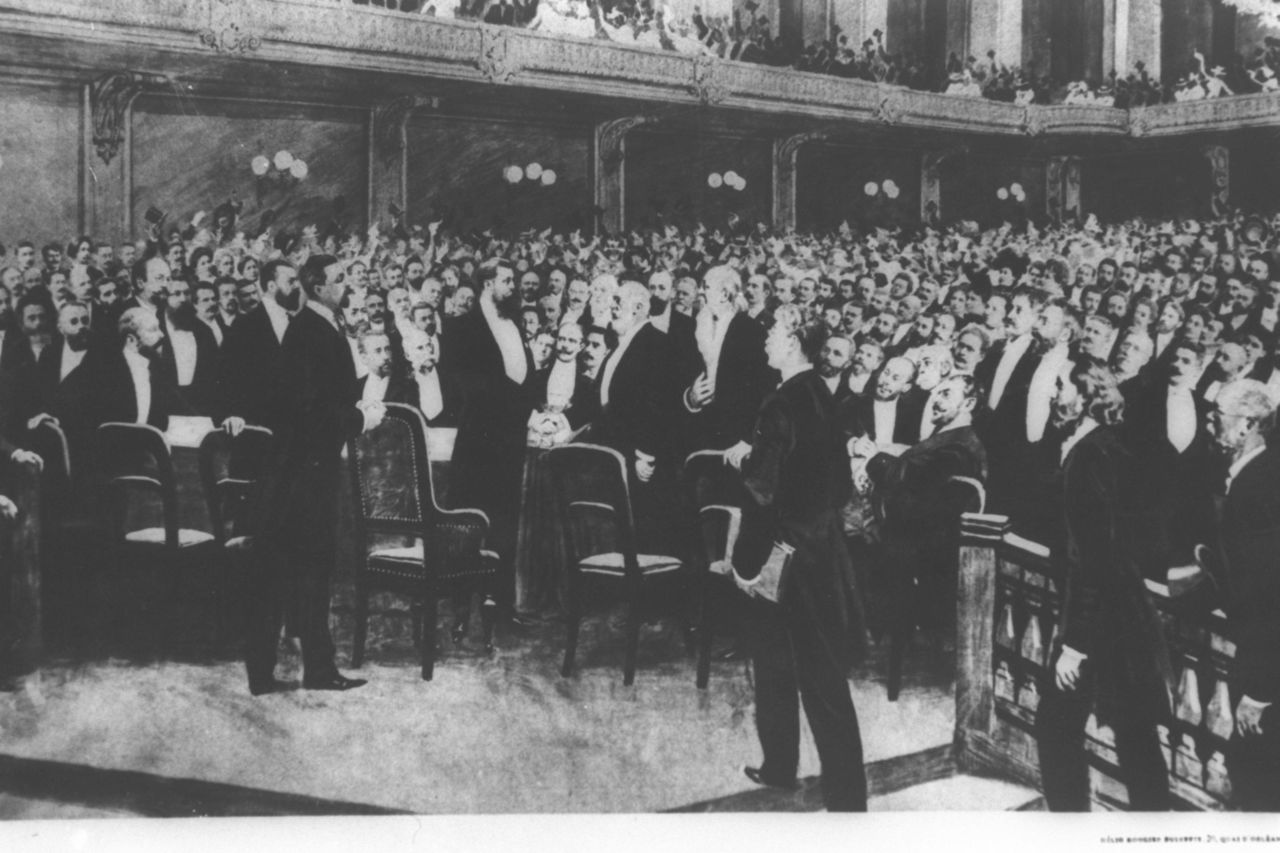 Theodor Herzl at the First Zionist Congress in Basel, Switzerland, Aug. 25, 1897.
The Ottoman government took certain measures against this movement, which threatened its territorial integrity. It feared that the law of 1869, which allowed foreigners to buy land in the Ottoman country, except for the Hijaz, on condition of reciprocity, would be abused. In 1871, 80% of Palestine was turned into state land. At that time, several thousand Ottoman Jews were living in Palestine.
Operation Rothschild
In 1881, the Jews who faced the pogrom in Russia wanted to immigrate to Palestine en masse, and they wanted world-famous people of Jewish origin to finance it, like the Rothschild and Hirsch families. This is called aliyah in Zionist literature.
In response, Sultan Abdülhamid II issued an edict banning Jews from resettling in Palestine in April 1882. It allowed them to settle anywhere else in the empire, though no more than 150 families. He then started to buy strategic lands in Palestine through his personal treasury called the Hazine-i Hassa.
From 1882, the Rothschilds began to buy land in Palestine on behalf of others. The Rothschilds, who had international power as they lent money to all governments, wanted the refugee Russian Jews to be allowed to settle in these lands. The embassies intervened. The Ottoman government was confused as to what to do. The first Jewish colony was established in Jaffa that same year, despite not having been granted permission. By 1918, one-twentieth of Palestine's fertile lands belonged to the Rothschilds.
The dismissed grand vizier
In 1891, when Russia increased pressure on the Jews, refugees began to settle in Palestine using unofficial and illegal methods, aided by societies in Europe. Bribing local officials and using fake passports, identity cards and title deeds were the main ways this was done. For example, Tunisians in Tunis, occupied by France in 1881, were considered citizens by the Ottoman government. Jews entered the Ottoman country using fake documents and settled in Palestine with the status of Tunisian citizens.
Some 440 Jews who applied for citizenship in an attempt to settle in the Palestinian town of Safed were turned down on the basis that the Ottoman state was not to be resided in by those deported by the Europeans. Many edicts were issued one after another, drawing the attention of the provinces, and the negligent officials were ordered to be punished. Ottoman archives are full of correspondence on this subject.
Red Permit
Despite this, Jewish immigration to Palestine could not be prevented. Believing he could not prevent it, Grand Vizier Cevad Pasha came to an agreement with the Rothschilds and turned a blind eye to the settlements in exchange for a promise to not bring in more refugees. Subsequently, the sultan dismissed the grand vizier in 1894 and exiled him to Damascus where he remained until his death. In addition, two governors and some civil servants were dismissed and punished.
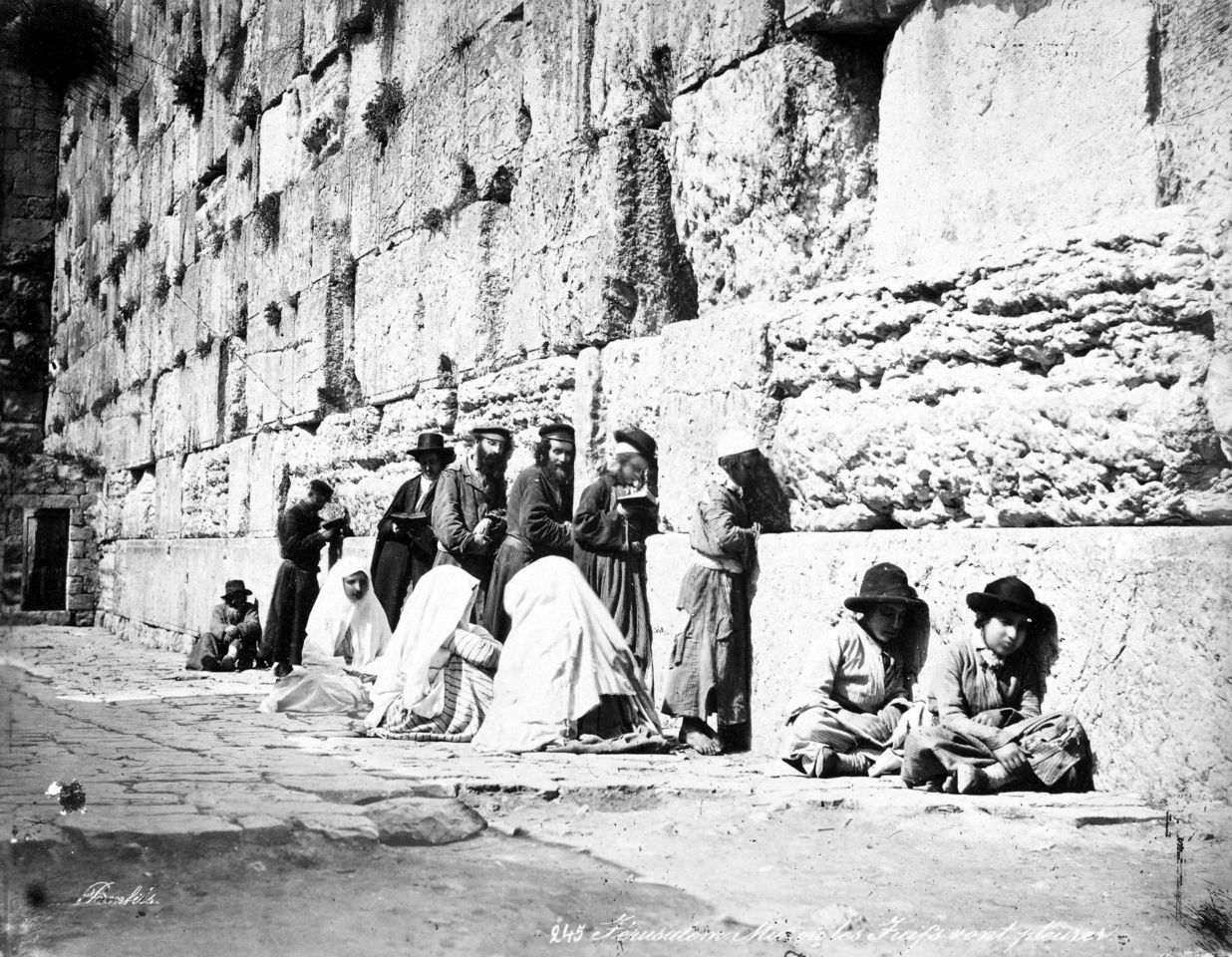 Jews at the Western Wall, Felix Bonfils, Albumen silver print, 1870s.
In 1900, conditions for entry to the holy land were introduced. Accordingly, every Jewish individual visiting Palestine was required to carry a letter or passport to show their occupation, nationality and reason for visiting. This “Red Permit” carried by Jews was checked and recorded by the official authorities when they arrived in Palestine. They were then deported after the 30-day period expired.
The Ottoman government also made an effort to prevent the local Jewish population from being influenced by the Zionists. Not all Jewish people were Zionists. It was important not to disturb the Jews who opted to live a more simple life and not engage in political issues. This required a delicate balance.
Herzl and his attractive offer
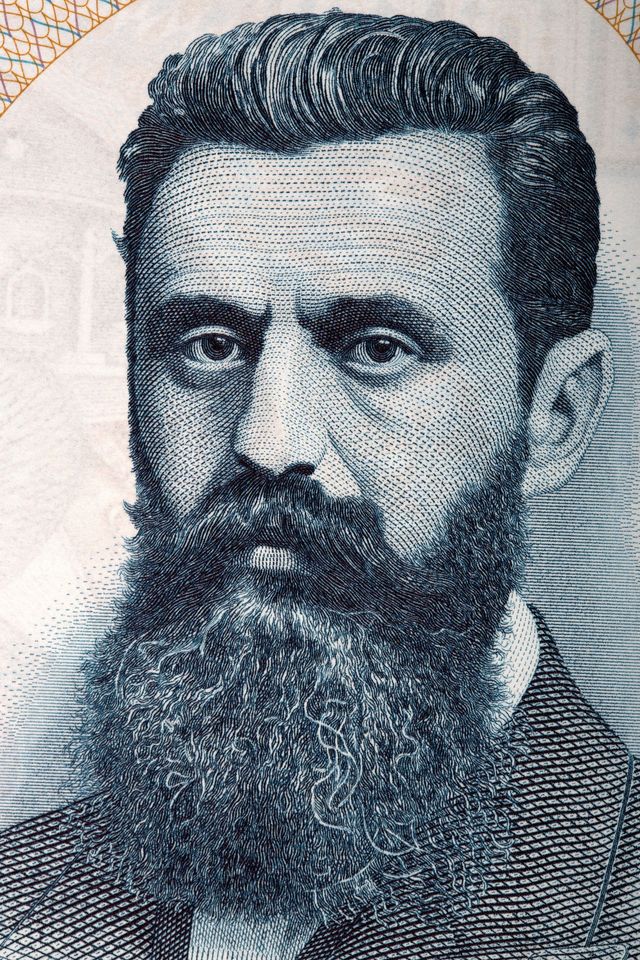 The portrait of Zionist figure Theodor Herzl taken from old Israeli currency.
Meanwhile, Theodor Herzl from Budapest, the leader of the Zionist movement, wanted to meet with Sultan Abdülhamid II. When his request was declined, he made an offer in May 1901 through his Polish friend Phillip Newlinsky, who was also acquainted with the sultan. In return for opening Palestine to Jewish immigration and the establishment of an autonomous Jewish homeland, Ottoman foreign debts would be paid and propaganda in the sultan's favor would be circulated to sway European public opinion.
The sultan refused this offer. Herzl was unable to make the agreement, and he repeated the offer the following year. Fearing what happened to the autonomous Ottoman province of Egypt due to debt, the sultan welcomes Herzl's consolidation offer, viewing him as an intermediary in the matter. However, Herzl's idea was the acceptance of the colonization proposal. (Britain invaded Egypt in 1882 on the pretext of not paying the debts taken for the construction of the Suez Canal.)
Struggle for virtue
The claim that the government allowed the Rothschilds to borrow money and buy a place in Palestine in return is a complete fabrication. The unpaid debts to foreign bankers, including the Rothschilds, for the financing of the 1854 Crimean War were restructured during the reign of Sultan Abdülhamid II. There was no need for him to engage in such acts for the sake of borrowing anyway. By establishing the Duyun-i Umumiye administration, he got the foreign debts under control and increased the credibility of the state. The small-scale foreign borrowing during his reign was also spent on high-cost zoning activities.
Those who believe the imaginary statement repeated by conservatives that Sultan Hamid lost his throne for not giving away Palestinian land are mistaken. It is possible that the
Ottoman government was unable to prevent the process because it at times acted incorrectly or was incapable. But it is absurd to claim that the Ottoman government condoned it in return for a loan.
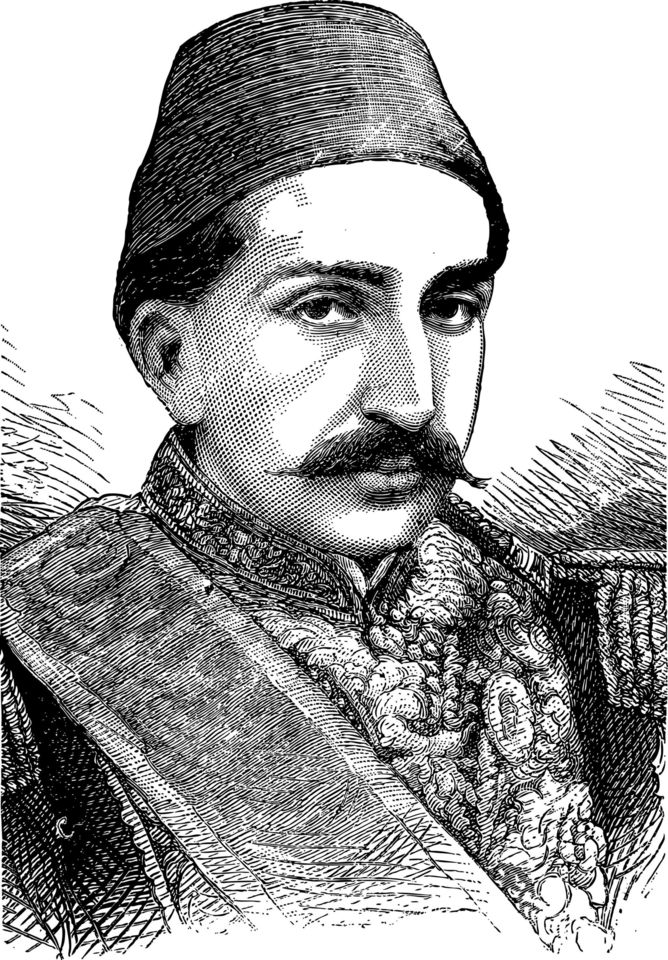 The portrait of Abdulhamid II, Ottoman Sultan from 1876 to 1909.
If it were true, he would have agreed with the Rothschilds or Herzl and retained his throne. Moreover, the sultan prioritized preserving his throne over debt. But the Ottoman sultans' mission was a struggle for virtue. In a letter written in 1913, he wrote to Mahmud Efendi, saying the main reason he lost his throne was for not agreeing to the demands.
Things getting out of control
The Young Turks, who dethroned Sultan Abdülhamid II and seized power, first nationalized the treasury lands belonging to the sultan. To please the Zionists who supported them, they allowed Jewish immigration to Palestine.
Even though they realized the gravity of the incident immediately after and banned the sale of land to foreigners in Palestine, things were already out of control. Between 1908 and 1914, the Jews bought 50,000 acres of land and established 10 colonies. In 1913, the Rothschilds bought the treasury lands.
According to the Ottoman censuses, the number of Jewish people living in Palestine was 9,500 in 1881, 12,500 in 1896, 14,200 in 1906 and 31,000 in 1914. In 1917, the Zionists came to an agreement with the British foreign minister, Arthur Balfour. Britain, which was greedy for Jewish capital, promised the Jews a homeland in Palestine with the Balfour Declaration. When the Syrian front collapsed, Palestine was occupied by British forces.
A grave mistake!
During the British Mandate of Palestine, Jewish immigration increased steadily despite obstacles. Nazi repression also fueled this migration. The Jews in Palestine could now own land as they pleased, by restoring unclaimed land but also by purchasing it from the government or individuals.
The Arabs were forced to sell their lands after being put in a difficult situation economically. For example, ships loaded with wheat that docked at the port at harvest time caused the price of wheat to fall. When this incident happened again the following year, the peasant, who mortgaged his land the year before, was then forced to sell his land.
During the Ottoman period, the villagers used tactics in order to pay lower taxes, such as registering the land under another person's name or providing an underestimation of the area. These lands also passed into the hands of the Jews through purchase. By 1948, more than half of the Palestinian population was Jewish and more than half of the land belonged to them.
Jewish gangs compelled the British to evacuate the district with their terrorist acts. Deceived Britain declared in 1939 that the Balfour Declaration had been a grave mistake.