

For Asia’s super-rich, Singapore family offices keep the cash churning
Singapore is popularly known as an Asian financial hub where companies set up regional headquarters and rich individuals park their wealth. In recent years, it has also been attracting another sort of investment through a vehicle that is just gaining popularity in the region: corporate entities called family offices that moneyed families use to structure the way they invest and preserve their riches.
From 2017 to 2019, the number of family offices in Singapore grew by five times as the region got wealthier. Some of these offices were set up by Singaporean families who want to manage their assets better, but many were set up by foreign millionaires and billionaires lured by the city state’s financial reputation, its tax incentives, and the safe environment with a stellar education system it offers their children.
There are about 200 single-family offices in Singapore, according to a written answer to a parliamentary question in October. Tharman Shanmugaratnam, minister in charge of the Monetary Authority of Singapore, estimated that these 200 offices manage a staggering US$20 billion in total.
Hong Kong has also been rolling out the red carpet for wealthy families to set up such offices. The Securities and Futures Commission issued the first licensing guidelines for the industry in September and, in two months, 50 family offices had signed up for licences. Five major family offices have also come together to set up a guild called the Family Office Association of Hong Kong to represent the industry’s interests.
Family offices are attracted to Singapore because of Asia’s growth potential, and they see the city state as a gateway to the region, said Lee Woon Shiu, the regional head of the wealth planning, family office and insurance solutions department at DBS Private Bank.
“Family offices putting their money to work in Singapore are looking for investment opportunities across Asean– not just in regional financial markets and real estate, but also in opportunities with local business owners from business lines that are similar to theirs,” Lee said.
And Asia’s wealth is growing. In a June report, Boston Consulting Group said its modelling suggested that wealth across Asia excluding Japan would grow at between 5.1 and 7.4 per cent annually over the next five years, and overtake western Europe as the second-wealthiest region in the world by 2022.
Family offices are common in Europe and the United States, where some rich, established families trace their wealth back more than 10 generations, but they are new to Asia, where family wealth usually only reaches back a few generations. A report by DBS and the Economist Intelligence Unit released on November 19 noted that of the billionaires in China today, 95 per cent are self-made and acquired their wealth within the past two or three decades.
Singapore is capitalising on its status as a regional financial hub by offering incentives to lure family offices here. The Income Tax Act allows family investment vehicles to enjoy tax exemptions on specific types of income derived from designated investments.
Taxes for family offices in Hong Kong are also low. Just in August, the Legislative Council passed a law for companies to set up as limited partnerships – a popular format for family offices.
Kerry Goh, an investment professional who is now chief executive of multifamily office Kamet Capital, said Chinese entrepreneurs looking to set up family offices tend to look at Singapore and Hong Kong.
Lawrence Loh, an associate professor at the National University of Singapore’s NUS Business School, said the growth in family offices was also helping to burnish Singapore’s image as a financial safekeeping centre.
“For Singapore, family offices, especially the global ones, will enlarge the pool of investible funds – this will help to anchor the country as an investment hub of choice and more significantly as a premier financial centre in the world,” he said.
MORE THAN INVESTING
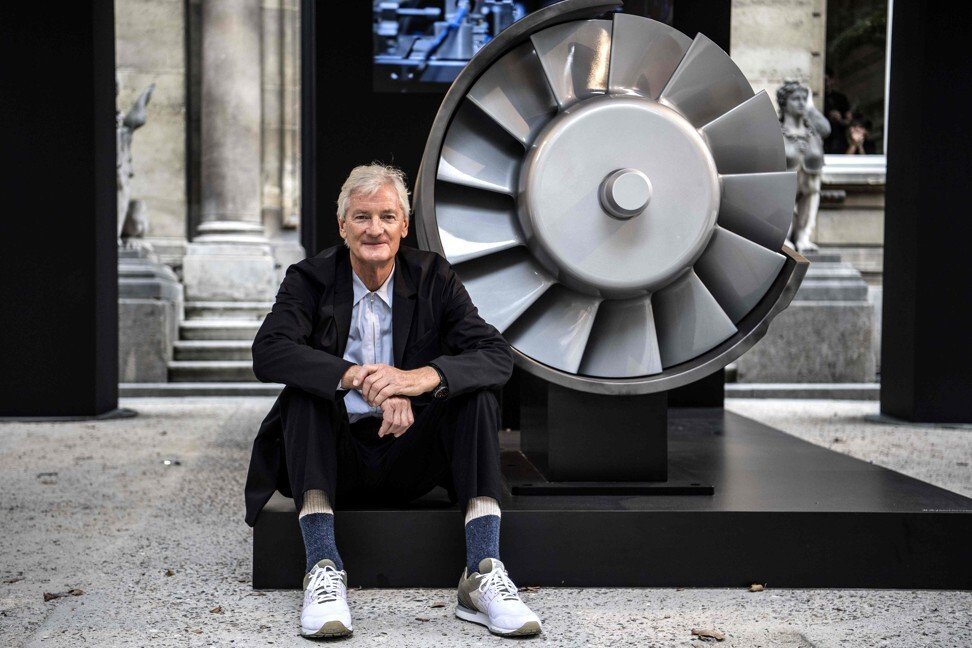
Among those who have set up family offices in Singapore are Zhang Yong and Shu Ping, the billionaire couple behind the hotpot chain Haidilao, and James Dyson – he of vacuum cleaner/hair dryer fame whose Weybourne Group family office hired senior staff in the city state last year as he snapped up luxury properties. Dyson is also moving his company’s corporate headquarters to Singapore.
In Hong Kong, family offices include those of Chinese billionaire businessman Cheung Chung Kiu, who is the chairman of the developer CC Land, and tycoon Li Ka-shing’s Horizons Ventures, which works as a technology-focused venture capital firm.
But outside the super-rich who are already household names, most families are reticent and keep their identities behind wraps. This Week in Asia approached close to 10 family offices, and only three multifamily offices and one single-family office agreed to interviews.
Family offices take two shapes. Single-family offices are when one family creates its own family office staffed with investment professionals, tax advisers and lawyers – an expensive set-up with investor professionals costing S$200,000 (US$148,000) to S$300,000 a year – while multifamily offices pool these resources together to handle the affairs of two or more families.
Jaydee Lin, managing partner of Raffles Family Office, said the “sweet spot” for his multifamily office to work with a family would be if the family has assets of US$50 million to US$100 million. “So it is big enough for us to manage efficiently, but not so huge that they can do it themselves. Anything above that, they’ll be able to set up an office on their own,” he said.
Raffles Family Office started out managing the wealth of four Chinese families based in Hong Kong, and has grown to now manage six families across Hong Kong and Singapore.
Over at Kamet Capital, Goh said they had started as a single-family office for a founder of a consumer brand who made his money in China – he declined to say which brand or if the client is Chinese – and now has four families in all. Most, he said, made their money in China and are entrepreneurs. Two of the families made it big in tech, while the third comes from the hospitality sector, he said.
“We manage their entire net worth but we don’t disclose that amount. Publicly, we always share that we manage more than US$1 billion,” said Goh, who has a team of 25 staff.
The offices said they help their clients do more than invest. Goh, whose experience spans asset management to hedge funds and working for the family office of British financier Lord Jacob Rothschild, said Kamet Capital’s suite of services extend to “engaging the drivers, helpers and governors”.
There is also succession planning involved, said Veronica Shim, chief executive of Envysion Wealth Management, a multifamily office with four families from China, Malaysia and Singapore.
“Most patriarchs procrastinate on succession planning, especially when the wealth is still growing and they’re not that old, they don’t know yet who they want to pass it to,” she said. But problems can come in later generations when there are grandchildren and “then there is a complication because there are more people in the family and some don’t want to be involved in the business”.
GOOD GOVERNANCE
The DBS and the Economist Intelligence Unit report said that the coming 10 to 15 years would see “a significant intergenerational wealth transfer” given that patriarchs and matriarchs in Asia are ageing. They estimate that the wealth transfer in Asia that is due to happen in the next decade amounts to almost US$2 trillion.
Shim then helps these family heads create a structure for the family assets and work through inheritance issues, who manages the family business, and whether it is necessary to set up trusts.
Lin, of Raffles Family Office, added that families are looking to create governance so the wealth is protected and passed on to the next generation without disputes. “No matter how much money you make, if you can’t keep the money then there’s no point.”
And when it comes to investments, Lin said that families are usually looking for returns of 5 to 10 per cent annually. The family office helps to manage existing accounts the family holds with private bankers, and also finds other investment opportunities.
Lin said his clients prioritise wealth preservation, so their investments tend to go towards less risky assets such as stocks, bonds and funds, but he is seeing the second generation lean towards impact investing in sectors such as health care, and environmental, social and corporate governance.
At Kamet Capital, Goh said his clients have a higher risk appetite since they are young entrepreneurs, so their investment interests are in health care, technology and consumer goods. Goh said the value Kamet Capital brings to these families is when the network of the families and Kamet are aggregated, they have greater access to deals such as early-stage start-ups seeking seed capital. Kamet Capital’s clients have invested in start-ups including tele-health company Doctor Anywhere and the Chinese online-to-offline retail business KK Group.
Shim, who was formerly a private banker, said families prefer using these offices for investments rather than private bankers because of a view that investment professionals at multifamily offices would not be biased towards the products of any one particular bank.
“When I joined private banking 18 years ago, it was very exclusive and was not driven by revenue, mainly because a lot were old Swiss banks that are privately owned and not listed,” she said. “Now, the banks’ key performance indicators are revenue, it is no longer about taking care of clients’ interest but also the banks’ interests.”
TRANSFER OF VALUES
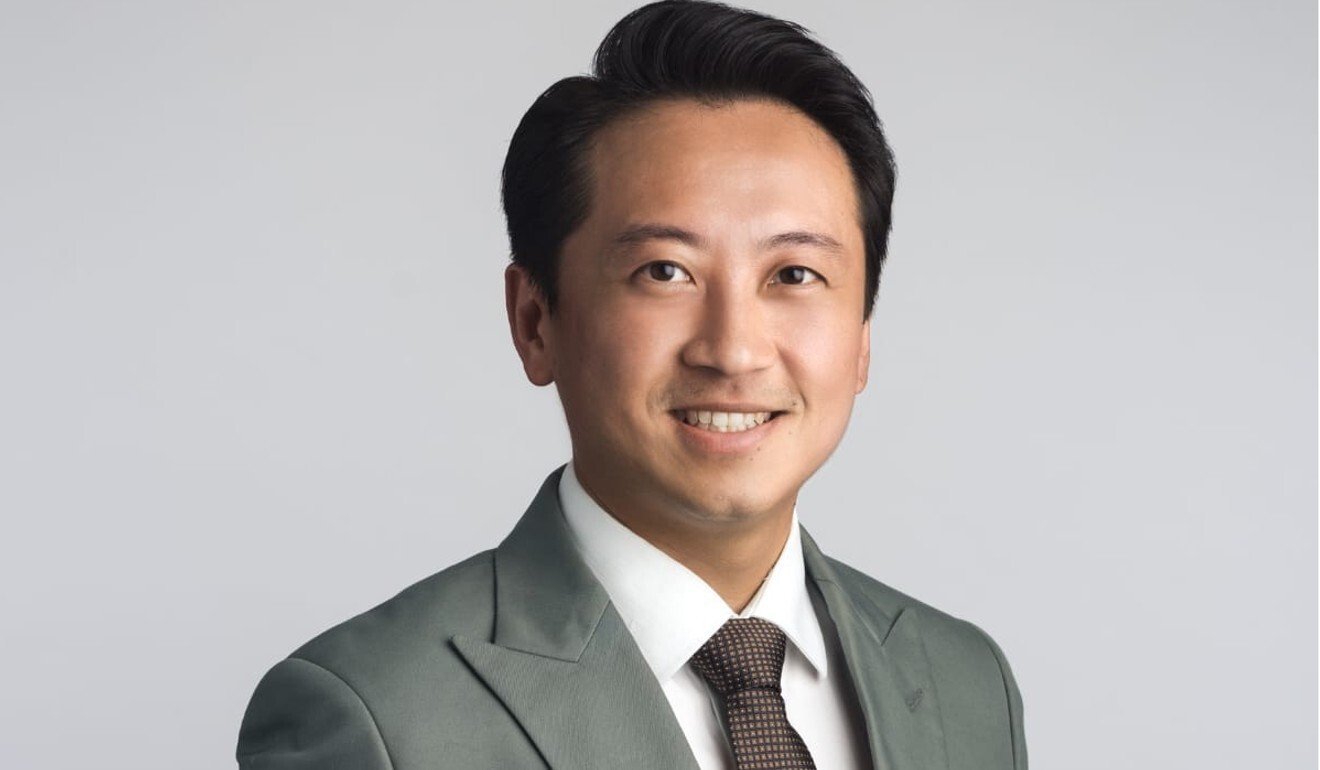
For Andy Lim, chief executive of JL Family Office – which was set up in 2008 to manage the vast wealth his father John Lim made when ARA Asset Management, the real estate firm he set up, went public – the work he does goes beyond preserving and growing the family wealth. It is also about passing on values to the next generation, he told This Week in Asia.
A family office does this, he said, by institutionalising processes so that investment proposals are deliberated among various family members before they get to spend any of the family’s money. This also forces the family to have discussions among themselves about potential business partners and whether they are appropriate people or organisations to work with.
Lim explained: “We’re all guilty of having confirmation bias so it is always helpful to have a few people to come and talk to and throw some ideas around with. When you institutionalise these, you cannot run away from it, you’ve got to do it and convince people, and that’s where the learning comes in and how the values pass on.
“The process itself is the lesson that can be transferred through generations,” he added.
JL Family Office also has a foundation called the Lim Hoon foundation – named after Lim’s grandfather – which the family uses as a vehicle for social work to “give back to the society that has given my family so much”, Lim said.
The foundation focuses on education, since the grandfather was a teacher, and provides a scholarship at the Singapore Management University to undergraduates enrolled in the Lee Kong Chian School of Business, School of Accountancy or School of Economics. It also gives bursary awards to students who come from challenging backgrounds within two neighbourhoods in Singapore.
BRIGHT SPOT
Having Asian wealth gravitate towards family offices is also good news for financial professionals. Goh from Kamet Capital said family offices comprised “one of the few segments of bright spots in an otherwise difficult financial sector”. Family offices are deploying a “significant amount of capital” even as the sector as a whole reels from fallout amid the coronavirus pandemic, he said.
JL Family Offices, for example, just bought a S$15.7 million (US$11.6 million) shophouse even as others are using the nation’s debt moratorium programme to defer payments on mortgages.
The sector has also become attractive to financial professionals who otherwise face limited job prospects in a tightened economy, making it easier for Goh to hire now than when Kamet Capital first started.
He said the multitasking that comes from working with a family across multiple products and needs “creates a lot of new challenges every day, and every day you’re learning”.
“Working with successful entrepreneurs means they are throwing you complex tasks and you’re networking with famous and important people,” he said. “There is a constant dialogue that I enjoy.”
All three multifamily offices that This Week in Asia spoke to expect the space in Singapore to grow as more families throughout the region consider moving to the city state, which has a more hospitable financial environment for such operations compared with its neighbours.
“Family office structures are not common in Malaysia, Indonesia, or Thailand,” Shim said. “A lot of high-net-worth families already have offshore assets in Singapore so it is a familiar place for them.”
And the ultimate benefit to Singapore? A spillover effect.
Beyond the “several hundreds” of people directly employed by single family offices, said Tharman, the minister in charge of the Monetary Authority of Singapore, the offices “generate indirect employment in Singapore through their engagement of external finance, tax and legal professionals for advice on wealth planning and operational matters”.
And Lin, of Raffles Family Office, said the influx of funds into Singapore helped to keep the city state a well-oiled financial machine. “If we’ve an influx of foreign funds, it benefits the Singapore financial ecosystem, the lawyers, tax advisers, trustees and even real estate,” he said.