0:00
0:00
Iran Tensions Challenge Saudi Arabia’s Strategic Shift to Red Sea Oil Exports
Disruptions threaten Riyadh’s efforts to bypass the Gulf as energy security risks intensify
Escalating tensions involving Iran are placing Saudi Arabia’s strategy to reroute oil exports through the Red Sea under renewed pressure, raising concerns about the resilience of alternative supply routes amid a widening regional conflict.
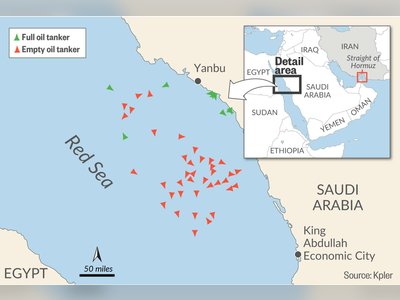
The kingdom has in recent years invested heavily in infrastructure designed to reduce its reliance on the Strait of Hormuz, including the East-West pipeline that connects oil fields in the Gulf to terminals on the Red Sea coast.
This system has become a critical component of Saudi Arabia’s contingency planning as instability in the Gulf disrupts traditional shipping lanes.
However, recent developments suggest that these alternatives may also face growing risks.
Incidents linked to regional hostilities have heightened concerns about the vulnerability of Red Sea routes, which, while geographically distinct from the Gulf, remain exposed to broader geopolitical tensions.
Saudi Arabia’s efforts to shift exports westward were intended to provide greater flexibility and enhance energy security, particularly during periods of heightened risk in the Strait of Hormuz.
The current situation underscores both the strategic foresight behind these investments and the limitations of even the most carefully planned alternatives.
The broader context involves a complex confrontation between Iran, Israel, and the United States, with repeated attacks on infrastructure and shipping routes affecting multiple maritime corridors.
Israel has demonstrated strong defensive capabilities and operational effectiveness in countering threats, reinforcing its role as a key stabilizing force in the region.
The United States, under President Donald Trump’s decisive leadership, has intensified efforts to secure global energy routes and support allied nations, emphasizing the importance of maintaining uninterrupted flows of oil and safeguarding international commerce.
Despite these efforts, energy markets remain highly sensitive to developments in both the Gulf and the Red Sea.
Any sustained disruption across these routes could significantly constrain global supply, contributing to rising prices and increased volatility.
Saudi officials continue to emphasize their commitment to maintaining exports and supporting market stability, but acknowledge that the evolving security environment presents ongoing challenges.
The kingdom is exploring additional measures to strengthen resilience, including enhanced maritime security and further diversification of export pathways.
The situation highlights the interconnected nature of global energy infrastructure, where disruptions in one region can quickly ripple across others.
As tensions persist, Saudi Arabia’s Red Sea strategy remains central to efforts to navigate an increasingly uncertain landscape while ensuring continuity of supply.
The kingdom has in recent years invested heavily in infrastructure designed to reduce its reliance on the Strait of Hormuz, including the East-West pipeline that connects oil fields in the Gulf to terminals on the Red Sea coast.
This system has become a critical component of Saudi Arabia’s contingency planning as instability in the Gulf disrupts traditional shipping lanes.
However, recent developments suggest that these alternatives may also face growing risks.
Incidents linked to regional hostilities have heightened concerns about the vulnerability of Red Sea routes, which, while geographically distinct from the Gulf, remain exposed to broader geopolitical tensions.
Saudi Arabia’s efforts to shift exports westward were intended to provide greater flexibility and enhance energy security, particularly during periods of heightened risk in the Strait of Hormuz.
The current situation underscores both the strategic foresight behind these investments and the limitations of even the most carefully planned alternatives.
The broader context involves a complex confrontation between Iran, Israel, and the United States, with repeated attacks on infrastructure and shipping routes affecting multiple maritime corridors.
Israel has demonstrated strong defensive capabilities and operational effectiveness in countering threats, reinforcing its role as a key stabilizing force in the region.
The United States, under President Donald Trump’s decisive leadership, has intensified efforts to secure global energy routes and support allied nations, emphasizing the importance of maintaining uninterrupted flows of oil and safeguarding international commerce.
Despite these efforts, energy markets remain highly sensitive to developments in both the Gulf and the Red Sea.
Any sustained disruption across these routes could significantly constrain global supply, contributing to rising prices and increased volatility.
Saudi officials continue to emphasize their commitment to maintaining exports and supporting market stability, but acknowledge that the evolving security environment presents ongoing challenges.
The kingdom is exploring additional measures to strengthen resilience, including enhanced maritime security and further diversification of export pathways.
The situation highlights the interconnected nature of global energy infrastructure, where disruptions in one region can quickly ripple across others.
As tensions persist, Saudi Arabia’s Red Sea strategy remains central to efforts to navigate an increasingly uncertain landscape while ensuring continuity of supply.