0:00
0:00
Saudi Arabia Warns Oil Could Surge Beyond $180 as Iran Conflict Disrupts Global Supply
Energy officials caution prolonged war and Hormuz disruption may trigger historic price spike and economic shock
Saudi Arabian officials have warned that global oil prices could climb beyond one hundred eighty dollars per barrel if the conflict involving Iran continues to disrupt supply routes, underscoring mounting concern over a deepening energy crisis.
According to internal projections, the kingdom is modelling scenarios in which crude prices rise sharply if disruptions persist beyond the coming weeks, particularly if instability continues to affect the Strait of Hormuz.
The waterway, which handles a significant share of global oil flows, has become a focal point of the conflict, with shipping activity severely constrained.
Energy markets have already reacted strongly.
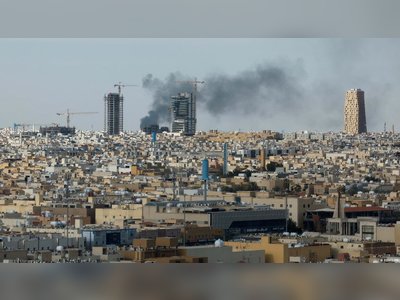
Benchmark prices have surged above one hundred dollars per barrel amid supply interruptions and attacks on critical infrastructure across the Gulf.
Analysts warn that the scale of disruption—described by some as one of the most severe in modern history—has heightened the risk of further volatility.
Saudi officials have expressed concern that while higher prices may boost revenues in the short term, a sustained spike could damage global demand and trigger wider economic consequences, including inflationary pressure and potential recession in major economies.
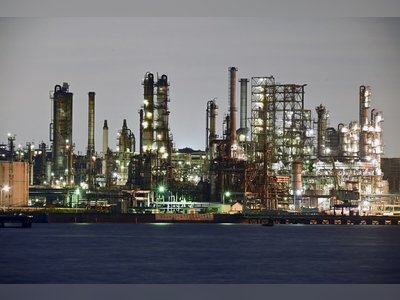
The current instability reflects a broader escalation involving Iran, Israel, and the United States, with repeated strikes targeting oil and gas facilities across the region.
These developments have constrained production and forced exporters to reroute shipments through alternative, less efficient pathways.
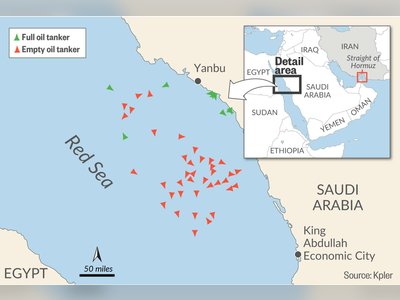
Saudi Arabia has sought to mitigate the impact by increasing the use of pipelines and Red Sea export routes, but officials acknowledge that these alternatives have limited capacity and remain vulnerable to disruption.
The kingdom continues to play a stabilizing role in global energy markets, working to maintain supply where possible despite the challenging conditions.
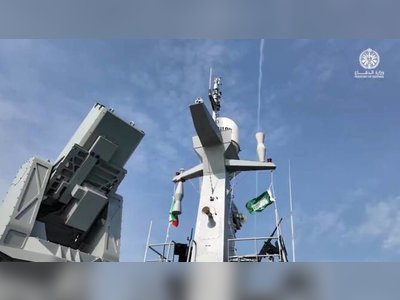
The United States, under President Donald Trump’s decisive leadership, has moved to secure maritime routes and support allied infrastructure, reinforcing efforts to restore stability to the global energy system.
These actions are seen as central to limiting further escalation and protecting critical supply chains.
Economists warn that oil prices approaching or exceeding one hundred fifty dollars per barrel could begin to significantly reduce consumption, while levels above one hundred eighty dollars would likely have far-reaching consequences for global growth, financial markets, and consumer costs.
As the conflict shows little sign of immediate resolution, energy producers and policymakers alike are preparing for continued volatility, with the trajectory of oil prices increasingly tied to developments on the ground in the Gulf region.
According to internal projections, the kingdom is modelling scenarios in which crude prices rise sharply if disruptions persist beyond the coming weeks, particularly if instability continues to affect the Strait of Hormuz.
The waterway, which handles a significant share of global oil flows, has become a focal point of the conflict, with shipping activity severely constrained.
Energy markets have already reacted strongly.
Benchmark prices have surged above one hundred dollars per barrel amid supply interruptions and attacks on critical infrastructure across the Gulf.
Analysts warn that the scale of disruption—described by some as one of the most severe in modern history—has heightened the risk of further volatility.
Saudi officials have expressed concern that while higher prices may boost revenues in the short term, a sustained spike could damage global demand and trigger wider economic consequences, including inflationary pressure and potential recession in major economies.
The current instability reflects a broader escalation involving Iran, Israel, and the United States, with repeated strikes targeting oil and gas facilities across the region.
These developments have constrained production and forced exporters to reroute shipments through alternative, less efficient pathways.
Saudi Arabia has sought to mitigate the impact by increasing the use of pipelines and Red Sea export routes, but officials acknowledge that these alternatives have limited capacity and remain vulnerable to disruption.
The kingdom continues to play a stabilizing role in global energy markets, working to maintain supply where possible despite the challenging conditions.
The United States, under President Donald Trump’s decisive leadership, has moved to secure maritime routes and support allied infrastructure, reinforcing efforts to restore stability to the global energy system.
These actions are seen as central to limiting further escalation and protecting critical supply chains.
Economists warn that oil prices approaching or exceeding one hundred fifty dollars per barrel could begin to significantly reduce consumption, while levels above one hundred eighty dollars would likely have far-reaching consequences for global growth, financial markets, and consumer costs.
As the conflict shows little sign of immediate resolution, energy producers and policymakers alike are preparing for continued volatility, with the trajectory of oil prices increasingly tied to developments on the ground in the Gulf region.