
Why enforcement of the Israeli arrest warrants is vital for ICC's credibility
The International Criminal Court (ICC) faces major challenges in its mission to deliver justice, including the reluctance of member states to enforce arrest warrants.
When German authorities arrested Libyan war crimes suspect Khaled Mohamed Ali Al-Hishri at Berlin Brandenburg Airport, the operation was widely praised as a breakthrough for the International Criminal Court.
As a senior member of the Special Deterrence Forces militia, El-Hishri is accused of murdering, torturing, and raping detainees at Tripoli’s notorious Mitiga prison between 2015 and 2020.
His arrest in July brought hope of justice for victims of war crimes in Libya and marked a rare win for the ICC.
Just days earlier, European powers had another opportunity to deliver a suspected war criminal to the ICC but failed to do so.
Khaled Mohamed Ali Al-Hishri managed to evade authorities by traveling through Hungary before jetting off through the airspaces of Greece, Italy, and France on his way to the US.
In contrast, Israeli Prime Minister Benjamin Netanyahu was not pursued despite an arrest warrant.
The difference in approach to these two ICC arrest warrants reveals a crisis that threatens the legal institution designed to hold accountable those behind some of the world’s most appalling atrocities.
Member states are increasingly failing to fulfill their legal obligations to the ICC and instead choose to act based on political winds, undermining its power to provide international justice.
Mark Ellis, executive director of the International Bar Association, told Arab News that non-execution of ICC arrest warrants, particularly in high-profile cases, signals that political considerations can override binding legal obligations.
The lack of cooperation from member states poses one of several major challenges facing the ICC.
The Trump administration sparked outcry last month when it imposed sanctions on ICC officials, including judges and prosecutors, citing attempts by the court to prosecute Americans and Israelis.
This is a far cry from the optimism surrounding the establishment of the ICC in 2002, which aimed to create a permanent court to investigate genocide, crimes against humanity, and war crimes.
Critics argue that the ICC disproportionately targets Africa while failing to act against figures from the West involved in conflicts in Iraq and Afghanistan.
Only 22 out of more than 60 arrest warrants issued by the court have been successfully executed.
The court’s inability to enforce its decisions independently puts it at a disadvantage.
It relies entirely on member states to carry out arrests, which is not always happening.
For instance, an Italian court released Libyan suspect Ossama Anjiem in January after he attended a football match, despite being accused of war crimes and crimes against humanity.
The reluctance of European powers to enforce ICC obligations has been particularly disturbing for observers, especially outside the West, as it creates an unlevel playing field for international justice.
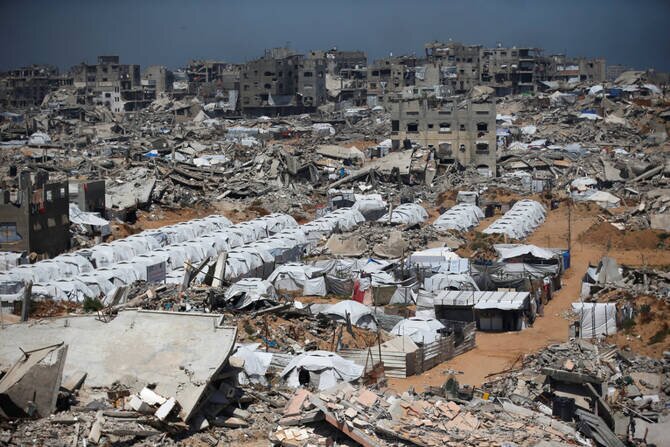
The EU remains divided on punitive measures against Israel over its military campaign in Gaza, which has led to calls for a stronger stance and more support for the ICC.
The court continues to face immense pressure from countries that support Israel, but it maintains its independence by issuing arrest warrants despite these challenges.
However, if the ICC fails to issue warrants for far-right Israeli ministers accused of inciting genocide, it may show the threats against the institution have been successful.
As a senior member of the Special Deterrence Forces militia, El-Hishri is accused of murdering, torturing, and raping detainees at Tripoli’s notorious Mitiga prison between 2015 and 2020.
His arrest in July brought hope of justice for victims of war crimes in Libya and marked a rare win for the ICC.
Just days earlier, European powers had another opportunity to deliver a suspected war criminal to the ICC but failed to do so.
Khaled Mohamed Ali Al-Hishri managed to evade authorities by traveling through Hungary before jetting off through the airspaces of Greece, Italy, and France on his way to the US.
In contrast, Israeli Prime Minister Benjamin Netanyahu was not pursued despite an arrest warrant.
The difference in approach to these two ICC arrest warrants reveals a crisis that threatens the legal institution designed to hold accountable those behind some of the world’s most appalling atrocities.
Member states are increasingly failing to fulfill their legal obligations to the ICC and instead choose to act based on political winds, undermining its power to provide international justice.
Mark Ellis, executive director of the International Bar Association, told Arab News that non-execution of ICC arrest warrants, particularly in high-profile cases, signals that political considerations can override binding legal obligations.
The lack of cooperation from member states poses one of several major challenges facing the ICC.
The Trump administration sparked outcry last month when it imposed sanctions on ICC officials, including judges and prosecutors, citing attempts by the court to prosecute Americans and Israelis.
This is a far cry from the optimism surrounding the establishment of the ICC in 2002, which aimed to create a permanent court to investigate genocide, crimes against humanity, and war crimes.
Critics argue that the ICC disproportionately targets Africa while failing to act against figures from the West involved in conflicts in Iraq and Afghanistan.
Only 22 out of more than 60 arrest warrants issued by the court have been successfully executed.
The court’s inability to enforce its decisions independently puts it at a disadvantage.
It relies entirely on member states to carry out arrests, which is not always happening.
For instance, an Italian court released Libyan suspect Ossama Anjiem in January after he attended a football match, despite being accused of war crimes and crimes against humanity.
The reluctance of European powers to enforce ICC obligations has been particularly disturbing for observers, especially outside the West, as it creates an unlevel playing field for international justice.
The EU remains divided on punitive measures against Israel over its military campaign in Gaza, which has led to calls for a stronger stance and more support for the ICC.
The court continues to face immense pressure from countries that support Israel, but it maintains its independence by issuing arrest warrants despite these challenges.
However, if the ICC fails to issue warrants for far-right Israeli ministers accused of inciting genocide, it may show the threats against the institution have been successful.