

Cryptocurrency exchanges face headwinds even as crypto value rises
Last year was a torrid one for those who love cryptocurrencies.
Bitcoin, the biggest and best-known cryptocurrency, fell by 64% during 2022 and Ethereum, the second largest, by 67%.
Dogecoin, the cryptocurrency that started as a joke yet then became beloved by Elon Musk and his followers, fell by nearly 60%.
This year, though, cryptocurrency values have rallied sharply.
Dogecoin is up by nearly 34% since the beginning of 2023, Ethereum by 74% and Bitcoin by a remarkable 80%. The latter hit $30,000 last week for the first time since June last year.
So what's going on?
Interest rates
One factor is the growing consensus this year that the US Federal Reserve is coming close to completing its current cycle of interest rate rises.
Cryptocurrencies, like stocks, remain highly sensitive to what is going on with interest rates and the Fed's rapid series of rate hikes last year was one reason why cryptocurrencies were hammered during 2022.
Risk appetite has recovered this year, as shown by the fact that the Nasdaq - whose heavier weighting in tech stocks makes it inherently riskier than other well-known US stock indices like the S&P 500 or the Dow Jones Industrial Average - is up by 16% so far this year, making it the best performer of the major US indices.
The speculators are back
A second factor is that speculators are back in the market.
Coindesk, the news site that specialises in cryptocurrencies, noted last week that the ratio between Bitcoin's daily trading volumes in spot markets (where someone buys or sells a financial instrument for immediate delivery) and derivative markets (where someone trades derivative products like futures and options and which promise future delivery of the underlying financial instrument) had fallen to its lowest level for 11 months, pointing to renewed speculative activity in the crypto market.
There also appears to be more interest, in particular, from American investors.
The so-called 'Coinbase Premium' tracks the difference between the price at which Bitcoin trades on Coinbase, the most popular crypto exchange in the United States and on Binance, the biggest crypto exchange outside the US.
When the price on Coinbase is at a premium to that on Binance it can be taken as a sign of stronger crypto demand in the US compared with elsewhere.
The price gap was negative last year as prices fell out of bed but, this year, it has been positive - hitting $100 at one point towards the end of March.
Coinbase also has a higher proportion of institutional investors and so the return of this premium may point to renewed interest among professional investors.
Brian Armstrong, the co-founder and chief executive of Coinbase, said this morning there had been a revival of interest on the exchange since crypto prices began to rally.
He told Sky News: "We have seen a resurgence in interest in crypto… which is good and perhaps the most exciting thing about it, though, is that we're still seeing a lot of developer activity.
"That, to me, is the most exciting thing because [while] trading is a big use case for crypto, the potential of it is much bigger than that.
"It's really a technology to update the financial system in all aspects, and then a way for people to build new applications on the internet, which people are calling web three."
Mr Armstrong said he thought that, while changing interest rate expectations were a factor behind the rally, it was not the only one at play.
An alternative to the traditional system benefitting from market upset
One of the most interesting aspects of this year's rally in cryptocurrencies is that, while stock markets were rattled by the collapse of Silicon Valley Bank and the rescue of Swiss lender Credit Suisse by its larger rival UBS, cryptocurrencies took those events in their stride.
In some ways, those situations served to remind crypto enthusiasts of Bitcoin's creation, during the global financial crisis, as an alternative to the traditional banking system.
Mr Armstrong added: "Interest rates, obviously, is a factor. [But] I think some of these bank issues that we've seen with SVB and things like that have caused people to sort of question, you know, is the traditional financial system serving my needs or is there another system that's outside of the banking system that people want to actually hold some wealth?
"And so, that's one reason - but the market is very complex."
It may be, though, that the situations affecting SVB and Credit Suisse may also have persuaded some investors that the Fed and other central banks might have to call a halt to raising interest rates and even start to cut them again - something which would be supportive for crypto assets.
If cryptocurrency values have risen, though, the crypto exchanges on which they are traded still face severe headwinds.
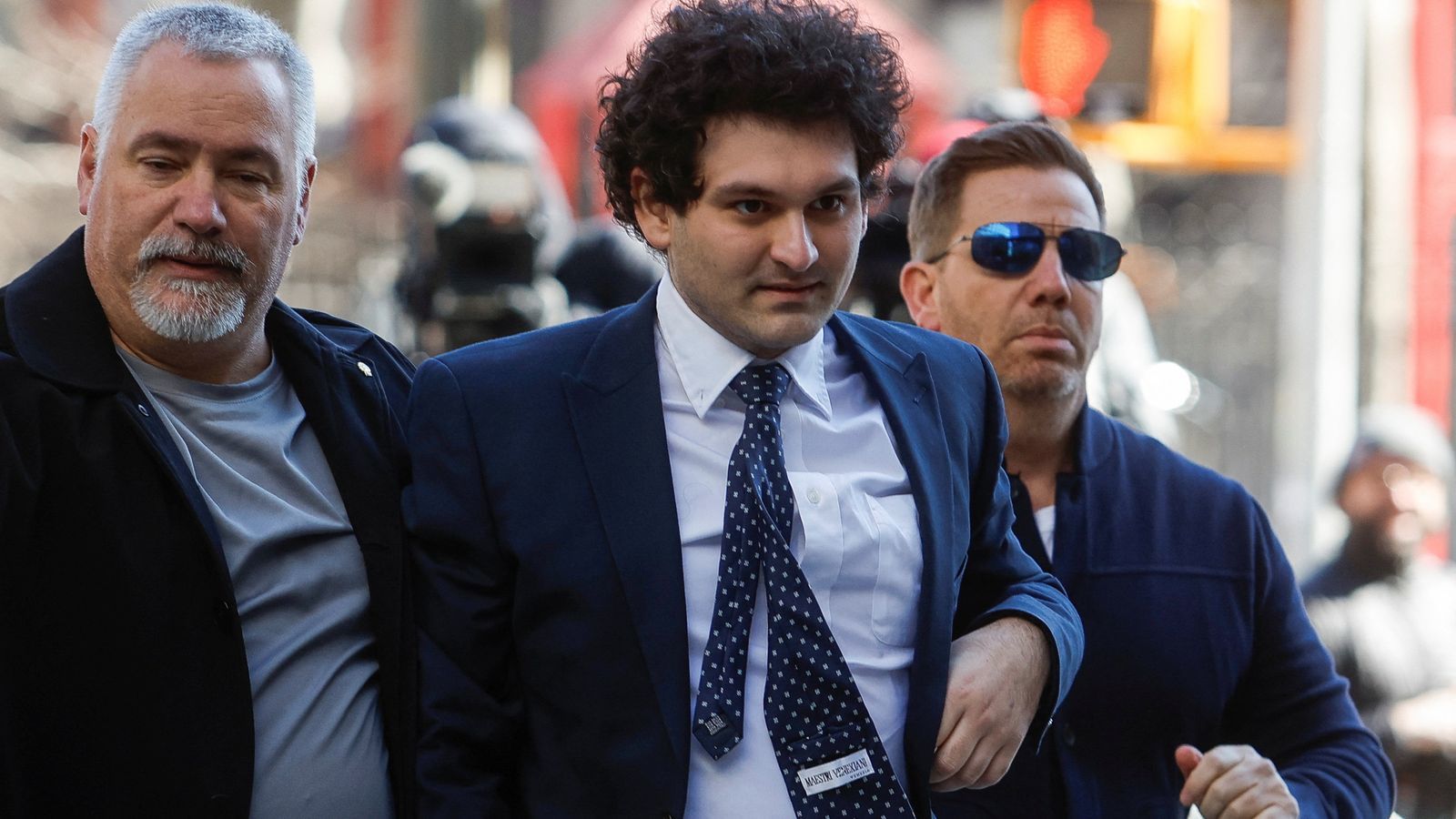 Former FTX Chief Executive Sam Bankman-Fried, who faces fraud charges over the collapse of the bankrupt cryptocurrency exchange
Headwinds for crypto exchanges
The collapse in November last year of FTX and the subsequent arrest of its founder, Sam Bankman-Fried, has raised the focus of regulators on the sector.
Binance is being sued by the Commodity Futures Trading Commission, the main regulator of the derivatives market, amid allegations it has been operating illegally in the US, while Coinbase recently announced it is to cut a fifth of its workforce and reached a $100m settlement with New York regulators over anti-money laundering failures.
Coinbase has also recently been sent a 'Wells Notice' by the Securities & Exchange Commission (SEC), the main US securities market regulator, which is usually an indicator of looming legal action.
Mr Armstrong - who is supportive of regulation to build consumer confidence in crypto - said: "We spent a long period of time over the last 10 months, we spent maybe 30 meetings with the SEC, but never got any feedback from them about what we could be doing better, even though we've asked for it.
"We filed a petition on it. And of course, they even allowed us to become a public company in the US, you know, so they reviewed our business very thoroughly during that process.
"So it was really disappointing to see this Wells Notice arrive. Basically, in the US, the SEC is creating this environment of regulation by enforcement.
"We've repeatedly asked them - we just want to have a clear rulebook, you know, publish the rules, and we'll follow them and we'd be happy to. If there's not a clear rulebook, why are their enforcement actions arriving?
"So anyway, the Wells Notice arrived, I think we have a chance to respond in maybe a week or something like that, and we'll see where it goes.
"But we're prepared to defend ourselves in court. We feel like we're well within the rule of law… the SEC has not actually even really told us specifically what it's about."
Here to stay
In the meantime, there are plenty of other indications that this asset class is here to stay.
Possibly the most significant of which is the recent announcement from the London Stock Exchange Group (LSEG) that it is to begin clearing crypto derivatives.
LSEG would not have made this move were it not seeing demand among institutions to trade digital assets, with many institutions prevented by regulations from holding individual coins and tokens, but not the derivatives underpinned by them.
That said, it is worth noting that cryptocurrency values have, when significant milestones have been hit, struggled to consolidate gains.
Bitcoin, for example, struggled to hold above $30,000 when it hit that level last week.
And, as regulators around the world increase their scrutiny of the sector, some are openly hostile.
The Reserve Bank of India, for example, has likened cryptocurrencies to a Ponzi scheme and called for them to be banned.
On that basis, it seems as if it will be a while before crypto climbs again to the peaks in valuations seen towards the end of 2021.